Plants
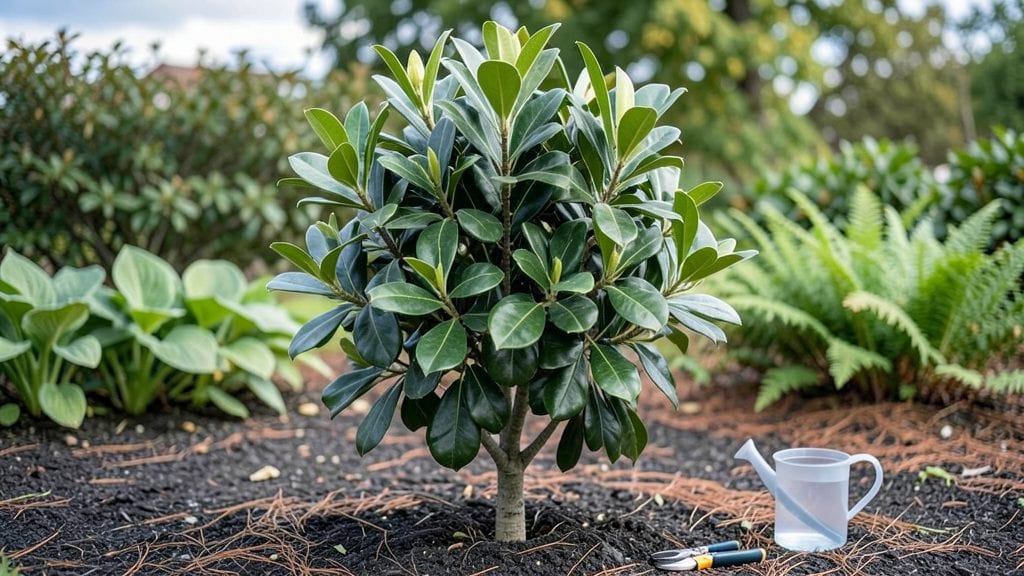
A young magnolia tree starts as a delicate sprout with glossy, oval leaves that look like tiny alligator skin. 🌱 The first year, it grows just 6-12 inches tall, with smooth gray bark and clusters of bright green leaves that smell faintly sweet when crushed.
Unlike mature magnolias, these seedlings have no flowers—just a compact, bushy shape that makes them easy to spot among weeds.
By year three, saplings develop thicker stems and larger leaves (now 3-5 inches long), with a slightly rougher bark texture. The leaves stay dark green on top but turn a soft silver-gray underneath—a dead giveaway when comparing them to similar trees like dogwood or redbud.
Look for the distinctive veiny pattern that runs parallel along each leaf, a signature of magnolias even at this early stage.
Mature magnolias have thick trunks and dramatic blooms, but young ones reveal their true identity in their growth habits. They grow slowly but steadily, forming a pyramidal shape that broadens as they age.
The key difference from other young trees? Magnolias never develop thorns, and their leaves stay leathery to the touch, unlike the softer foliage of maples or elms.
If you're still unsure, check the leaf arrangement—magnolias grow theirs alternately along the stem, not in opposite pairs like maples. With these clues, even a tiny sprout can't hide its magnolia roots. Now you're ready to spot them in your garden or nursery rows.
Understanding Young Magnolia Growth Stages
Young magnolia trees undergo dramatic transformations as they transition from seed to sapling, and their appearance changes drastically due to a mix of biological, environmental, and horticultural factors.
If you’re expecting a miniature version of a mature magnolia, you might be surprised—here’s why these trees look so different in their early years.
A young magnolia’s delicate, almost fragile look stems from its genetic hardwiring. Magnolias are ancient plant species, evolving over millions of years to prioritize survival over rapid growth. Their seeds contain dormancy mechanisms that delay germination until conditions are ideal, often leading to:
- Thin, wiry stems: Early magnolia seedlings allocate energy to root development rather than thick trunk growth. Their stems are soft and prone to bending, a trait that helps them avoid breaking in wind or storms.
- Small, simple leaves: Unlike mature magnolias with large, glossy leaves, young seedlings produce pinnate or lobed leaves (depending on the species) that maximize sunlight absorption while minimizing water loss.
- Delayed flowering: Some magnolias take 5–10 years to bloom because their energy is focused on establishing roots and structural integrity before reproductive efforts.
💡 Pro Tip: If your seedling’s leaves look more like those of a maple or sweet gum, don’t panic—this is normal! Compare it to magnolia leaf databases to confirm species-specific traits.
Magnolias are notoriously sensitive to their surroundings, and environmental factors can stunt growth or alter their form. Common culprits include:
| Factor | Effect on Young Magnolias | How to Mitigate |
|---|---|---|
| 🌞 Insufficient sunlight | Leads to etiolation—long, pale stems and sparse leaves as the tree stretches toward light. | Plant in partial shade to full sun (6+ hours of light). Avoid dense canopies. |
| 💧 Over/under-watering | Overwatering causes root rot (yellowing leaves, mushy stems), while drought triggers leaf drop and stunted growth. | Keep soil moist but well-draining. Mulch to retain humidity without waterlogging. |
| 🌡️ Temperature extremes | Frost can scorch new growth, while heatwaves cause leaf curl or wilting. | Acclimate seedlings gradually. Use burlap wraps in winter for young trees. |
| 🐛 Pests/disease | Scale insects, spider mites, or fungal infections (like Phytophthora) create stunted, deformed leaves or blackened stems. | Inspect leaves weekly. Treat with neem oil or horticultural soap if pests appear. |
⚠️ Warning: If your seedling’s leaves develop brown edges or black spots, it may be suffering from magnolia scale—a common issue in humid climates. Act fast with systemic insecticides.
How and where you plant a magnolia seedling directly impacts its early development. Common mistakes that alter its appearance include:
- Planting too deep: Burying the root collar (the swollen area where roots meet the stem) can strangle the tree, causing slow growth or a twisted trunk. Always plant with the collar just above soil level.
- Competition from weeds/grass: Young magnolias have shallow root systems and struggle to compete for nutrients. Weeds can steal water and sunlight, leading to pale, undersized leaves.
- Improper pruning: Cutting back new growth above a leaf node (rather than just above a bud) can deform the tree’s shape permanently. Prune only to remove dead or crossing branches.
- Poor soil quality: Magnolias thrive in acidic, well-draining soil (pH 4.5–6.0). Clay or alkaline soils cause nutrient deficiencies, leading to yellowing leaves (chlorosis) or stunted height.
🔥 Action Step: Test your soil’s pH with a home kit. If it’s too alkaline, amend with sulfur or peat moss before planting.
By understanding these root causes—whether genetic, environmental, or human-induced—you’ll recognize that a young magnolia’s delicate appearance is simply part of its survival strategy. With the right care, it’ll soon develop the iconic, robust structure of a mature tree.
Reviving Your Magnolia’s Growth
If your young magnolia isn’t thriving—or worse, looks more like a struggling sapling than a future garden star—don’t panic. With the right care, you can nurse it back to health and ensure it grows into the stunning tree you envisioned.
Below, we’ve mapped out practical solutions for common issues, from stunted growth to leaf problems, along with prevention tips to keep your magnolia flourishing.
Cause: Poor soil, lack of sunlight, or overcrowded roots.
Fix It: 🔥 Boost Nutrients with the Right Soil Magnolias love well-draining, slightly acidic soil (pH 5.0–6.0). If your tree isn’t growing, it may need richer soil.
- Test the soil with a home kit or send a sample to a local extension office.
- Amend the soil with compost or a slow-release fertilizer (like 10-10-10) in early spring.
- Avoid heavy clay—mix in perlite or sand to improve drainage.
🍳 Give It Space and Sun
- Ensure your magnolia gets at least 6 hours of sunlight daily—partial shade is okay, but too little light stunts growth.
- If planted too close to other trees or structures, transplant it carefully (best done in early spring or fall).
👨🍳 Encourage Root Growth
- Water deeply but infrequently—1–1.5 inches per week—to prevent shallow roots.
- Use a root stimulator (like mycorrhizal fungi) when planting to jumpstart growth.
💡 Pro Tip: If your magnolia is still in a container, gradually acclimate it to outdoor conditions before planting to avoid transplant shock.
Cause: Overwatering, underwatering, pests, or fungal diseases.
Fix It: 🌡️ Check the Watering Routine
- Overwatering? Let the top 2–3 inches of soil dry out between waterings. Yellow leaves with brown edges = too much water.
- Underwatering? Wilting or crispy leaves mean it’s thirsty. Water deeply until the soil is moist 6–8 inches down.
🔪 Inspect for Pests
- Look for aphids, spider mites, or scale insects on the undersides of leaves.
- Blast them off with a strong spray of water or use neem oil (mix 2 tbsp per gallon of water).
- For severe infestations, apply an insecticidal soap (follow label instructions).
✨ Treat Fungal Issues
- If leaves have black spots or powdery mildew, prune affected branches and dispose of them.
- Apply a copper fungicide or baking soda spray (1 tsp baking soda + 1 quart water + a drop of dish soap) to prevent spread.
🎯 Prevention Tips:
- Water at the base of the tree (not overhead) to reduce fungal risks.
- Mulch around the base (but keep it 3–4 inches away from the trunk) to retain moisture and deter weeds.
Cause: Environmental stress (wind, salt, or drought) or nutrient deficiencies.
Fix It: 🌡️ Adjust Care for Environmental Stress
- If your magnolia is near a salted road or sidewalk, flush the soil with water to remove excess salt.
- Protect young trees from strong winds with a temporary windbreak (like burlap or a lattice screen).
- In drought-prone areas, water consistently and use mulch to retain moisture.
💪 Fix Nutrient Deficiencies
- Brown edges with yellowing between veins? It’s likely a magnesium deficiency—apply Epsom salt (1 tbsp per gallon of water) every 2–3 weeks.
- Purple or red leaves? It may need phosphorus—use a bone meal fertilizer in early spring.
💡 Pro Tip: Avoid fertilizing in late summer or fall, as it can encourage tender new growth that’s vulnerable to frost damage.
Even the healthiest magnolias need a little TLC to stay strong. Here’s how to keep your young tree thriving:
- Prune in late winter or early spring to shape the tree and remove dead branches.
- Avoid heavy pruning—magnolias bloom on old wood, so cutting back too much can reduce flowers.
- Monitor for pests regularly—catching issues early makes treatment easier.
- Choose the right location—magnolias hate soggy roots, so pick a spot with good drainage.
With these fixes, your young magnolia should bounce back—and soon, you’ll be admiring its glossy leaves and fragrant blooms. Patience and consistency are key, so give it time to grow into the showstopper it’s meant to be! 🌸
Frequently asked questions
How can I tell if a tiny sprout is a magnolia vs. another tree?
Look for alternate leaf arrangement (not opposite pairs) and the silver-gray undersides of leaves. Young magnolias also have thin, wiry stems and no thorns—unlike dogwoods or hawthorns. Crush a leaf to check for the faint sweet scent, a classic magnolia trait.
Why does my young magnolia have small leaves?
Small leaves are normal for seedlings! Magnolias prioritize root growth over foliage in early stages. Leaves typically grow 3-5 inches long by year three. If they stay tiny beyond that, check for poor soil nutrients or lack of sunlight.
Can I grow a magnolia from a seed?
Yes, but it takes 1-3 years for germination. Scarify seeds first by nicking the shell with sandpaper, then soak in warm water for 24 hours. Plant 1/4 inch deep in moist, acidic soil. Expect only 50% success rate—nursery-grown saplings are more reliable.
What's the fastest way to identify a young magnolia?
Check these three clues: 1) Leaves with parallel veins and silver undersides, 2) Smooth gray bark on stems, and 3) No thorns. Compare with a leaf identification app if unsure. The pyramidal shape is another dead giveaway as they mature.
Will my young magnolia survive winter?
Most magnolias tolerate 10-15°F but need protection for first two winters. Wrap the trunk with burlap and mulch heavily (but not touching the trunk). Young trees are most vulnerable to frost cracking—water deeply before freeze to prevent damage.