Watering
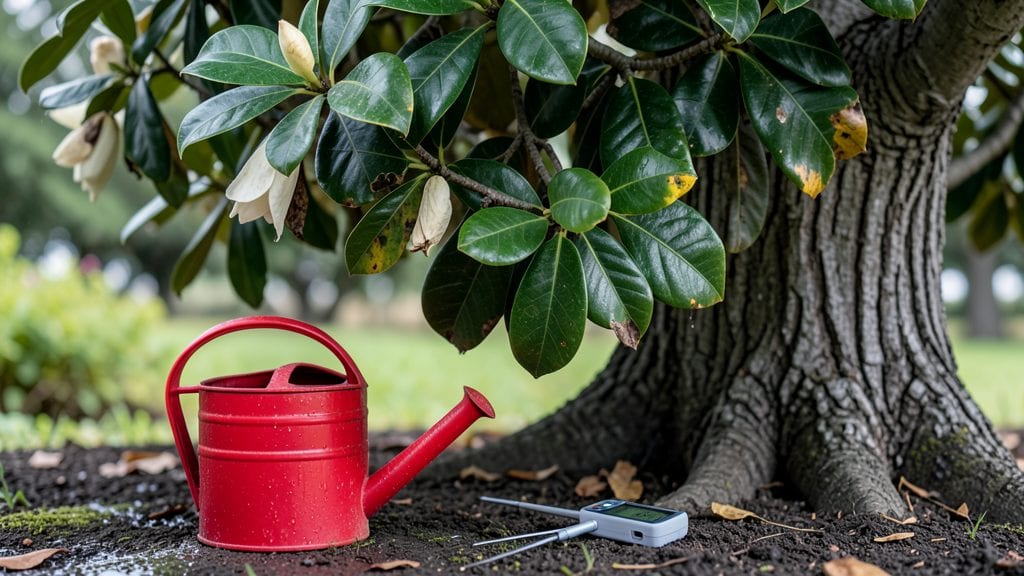
Overwatering magnolia trees turns their leaves yellow and stunts their growth, but I’ve revived more than a few with the right approach. 🌿 The key is recognizing the signs—soggy soil, wilting despite water, and roots that smell like rot—before it’s too late.
Most people assume magnolias need constant moisture, but they actually thrive in well-draining soil that stays slightly damp, not soaked.
First, stop watering until the top 2–3 inches of soil feel dry to the touch. Then, improve drainage by mixing in coarse sand or perlite to heavy clay soil, or even planting in a raised bed if your yard stays waterlogged.
Prune any mushy roots you find during inspection, and avoid mulch piled too close to the trunk—it traps moisture against the bark.
With consistent adjustments, your magnolia will bounce back in weeks, showing fresh green leaves and sturdy new growth. The secret is patience: magnolias recover faster from drought than from rot, so let the soil dry between waterings.
Once you’ve fixed the drainage, you’ll never overwater again—your tree will thank you with blooms for years.
This works for all magnolia types, from Southern magnolias to saucer magnolias, and even container-grown trees. The same principles apply whether you’re dealing with a young sapling or a mature specimen. Here’s how to keep it thriving long-term.
Common Causes of Overwatering
Overwatering a magnolia tree—especially in humid climates—can turn your lush, fragrant beauty into a sad, wilting mess. But why does this happen so often? The truth is, it’s usually a mix of well-intentioned mistakes and unseen soil dynamics that trick even experienced gardeners.
Let’s break down the real reasons behind the soggy soil syndrome. 🌧️🌳
Magnolias hate soggy feet—literally. If your tree’s roots sit in waterlogged soil for too long, they suffocate because oxygen can’t reach them. This happens when:
- Compacted or clay-heavy soil repels water instead of absorbing it, creating a puddle effect around roots. Clay soils, common in many regions, hold moisture like a sponge that won’t let go.
- No amendments (like sand, compost, or perlite) disrupt the soil’s natural drainage. Without these, water pools at the root zone instead of draining downward.
- Low-lying planting spots trap water after rain, especially if the ground slopes toward the tree. Even a slight dip can turn your yard into a swamp.
Pro Tip: Test your soil’s drainage by digging a 12-inch hole near the tree, filling it with water, and timing how long it takes to drain. If it’s still wet after 6 hours, your soil is too dense. 💡
You might think, “More water = happier tree!”—but magnolias are drought-tolerant once established (after 1–2 years). Overwatering often stems from:
- Ignoring the weather. Watering on a strict schedule (e.g., every Tuesday) ignores natural rainfall. A 1-inch rainstorm can meet a magnolia’s needs for weeks.
- Using the “finger test” incorrectly. Sticking your finger 2 inches into the soil and watering if it’s dry is fine, but don’t water if the top 4–6 inches are still moist—that’s overkill.
- Automatic sprinklers on high. These often deliver too much water too fast, leading to runoff that doesn’t soak in. Magnolias need deep, infrequent watering, not light misting.
Pro Tip: Use a rain gauge or a simple tuna can buried near the tree to track real water intake. If it’s already 1 inch from rain, skip the hose! ✨
Young magnolias or those in containers develop shallow, tangled roots that struggle to spread. When you water, the excess sits right where the roots are, creating a perfect storm for rot. This is common if:
- The tree was recently transplanted and hasn’t had time to establish deeper roots (takes 1–2 years).
- It’s planted in a too-small hole (dig a pit 3x wider than the root ball) or amended with too much organic matter, which breaks down and compacts over time.
- The roots are circumferential (girdling), wrapping around the trunk and restricting growth. This traps water against the stem.
Pro Tip: If your magnolia is young, water deeply but less often to encourage roots to grow downward. For mature trees, mulch 3 inches away from the trunk to protect roots without smothering them. 🌱
Magnolias thrive in humid climates—but too much humidity without airflow turns their leaves into a petri dish for fungal diseases like Phytophthora, which thrives in wet conditions. Overwatering worsens this by:
- Keeping foliage damp for extended periods, especially if the tree is planted near other dense plants or structures (like fences or walls).
- Creating a microclimate where water evaporates slowly, increasing humidity around the roots.
- Weakening the tree’s defenses, making it more susceptible to pests and diseases that love wet, stressed wood.
Pro Tip: Space your magnolia 10–15 feet from other plants and prune lower branches to improve airflow. If humidity is extreme, water in the early morning so leaves dry by evening. 🌡️
Most overwatering issues stem from good intentions gone wrong. The key is observation: check the soil, watch the weather, and give your magnolia room to breathe. Next up, we’ll cover how to fix the damage—because even soggy roots can recover! 🚿💦
Fixing Overwatered Magnolia Trees
If your magnolia tree is suffering from overwatering, don’t panic—it’s often reversible with the right steps. The key is to drain excess moisture, improve soil aeration, and adjust your watering habits to prevent future damage.
Below, we’ll break down solutions based on the root causes (literally!) of overwatering, from soggy soil to poor drainage, and show you how to turn things around—without losing your prized tree.
If your magnolia’s roots are sitting in waterlogged soil, the first step is to reduce moisture levels safely. Here’s how:
🔥 Step 1: Stop Watering Immediately
- Pause all watering for at least 1–2 weeks to let the soil dry out naturally.
- If rain is forecast, consider covering the tree with a tarp (secured loosely) to prevent additional moisture.
🍳 Step 2: Improve Drainage Around the Tree
- Create a drainage trench: Dig a shallow trench (6–8 inches deep) around the tree’s drip line (the outer edge of the canopy).
Fill it with gravel or small rocks to redirect water away from the roots. - Raise the soil level: If your yard has poor drainage, mound soil around the base of the tree (but avoid piling it against the trunk). This elevates the root zone slightly.
👨🍳 Step 3: Aerate Compacted Soil
- Use a garden fork or aerator to poke holes around the root zone (about 12–18 inches deep).
This helps oxygen reach the roots and speeds up drainage. - Pro tip: Mix in perlite or coarse sand (1 part to 3 parts soil) to improve texture and prevent future compaction.
Overwatering often starts with well-intentioned (but overzealous) care. Let’s fix that:
🌡️ Step 1: Check Soil Moisture Before Watering
- Stick your finger 2–3 inches into the soil. If it’s damp, wait. If it’s dry, water deeply but infrequently.
- Use a moisture meter for accuracy—aim for soil that’s 60–70% moisture at the root level.
⏰ Step 2: Water Deeply and Infrequently
- Water less often but more thoroughly: Magnolias prefer deep soakings (1–2 inches of water per session) every 7–10 days, depending on climate.
Shallow, frequent watering keeps roots wet and encourages rot. - Best time to water: Early morning (before 10 AM) to reduce evaporation and fungal risks.
🎯 Step 3: Mulch Correctly (Yes, Even for Overwatered Trees!)
- Apply 2–4 inches of organic mulch (wood chips, pine straw) around the base, but keep it 6 inches away from the trunk to prevent rot.
- Why? Mulch regulates soil temperature and slowly releases moisture—but only if the soil underneath isn’t already soggy.
If your magnolia shows signs of root rot (yellowing leaves, mushy roots, or a foul smell), act fast:
🔪 Step 1: Trim Affected Roots (If Necessary)
- Gently dig around the root ball (carefully!) and snip away any black, mushy roots with sterilized pruners.
Healthy roots are firm and white or tan. - Warning: Only do this if the tree is severely compromised. Minor overwatering may not require root pruning.
💡 Step 2: Apply Fungicide (For Root Rot)
- Use a copper-based or phosphite fungicide (like Copper Sulfate or Prosar) to treat fungal infections. Follow label instructions for dilution and application.
- Prevention tip: Reapply fungicide every 4–6 weeks during wet seasons.
✨ Step 3: Boost Tree Health with Fertilizer
- Once the soil is dry, feed your magnolia with a balanced, slow-release fertilizer (10-10-10 or 8-3-9) to help it recover.
- Avoid high-nitrogen fertilizers—they encourage leafy growth but weaken roots further.
Once your magnolia is back on track, these habits will keep it thriving:
- ✅ Install a French drain if your yard has chronic water pooling. - ✅ Plant magnolias on mounds in low-lying areas to improve drainage. - ✅ Avoid planting near downspouts or irrigation heads—redirect water flow away from the tree. - ✅ Monitor soil type: Sandy or loamy soil drains better than clay.
Amend heavy clay with compost or gypsum if needed.
With these fixes, your magnolia should bounce back in 4–8 weeks, depending on the severity of the damage. The key is patience—overwatered trees recover faster when you let the soil dry out and adjust care routines permanently. Now, go give that tree some space to breathe! 🌿
Frequently asked questions
How can I tell if my magnolia tree is overwatered?
Look for yellowing leaves, especially on lower branches, and check the soil—if it stays soggy for days or smells foul, that’s a red flag. Overwatered magnolias may also show wilting despite wet soil or develop mushy, black roots when inspected. Tap the trunk gently; if it feels hollow or spongy, rot may have set in.
Can I save my magnolia if the roots are rotting?
Yes, but act fast! Prune away any black, mushy roots with sterilized shears, then improve drainage by aerating the soil and adding perlite or sand. Apply a copper-based fungicide to prevent further spread, and avoid watering until the top 2–3 inches of soil dry out. With these steps, many trees recover within 4–8 weeks.
How often should I water a magnolia tree?
Once established (after 1–2 years), magnolias need water only when the top 4–6 inches of soil are dry. Water deeply—1–2 inches per session—every 7–10 days in dry climates, or less in humid areas. Always water in the early morning to reduce fungal risks.
What’s the best way to fix poor drainage for my magnolia?
Create a gravel-filled trench around the tree’s drip line to redirect water, or mound soil around the base (avoiding the trunk) to elevate roots. For heavy clay soil, mix in coarse sand or perlite (1 part to 3 parts soil). If your yard floods, consider a French drain or planting on a raised bed.
Will mulch help or hurt an overwatered magnolia?
Mulch can help—but only if applied correctly! Use 2–4 inches of organic mulch (like wood chips) and keep it 6 inches away from the trunk to prevent rot. Wait until the soil is dry before adding mulch, and avoid piling it against the stem, which traps moisture.