How To
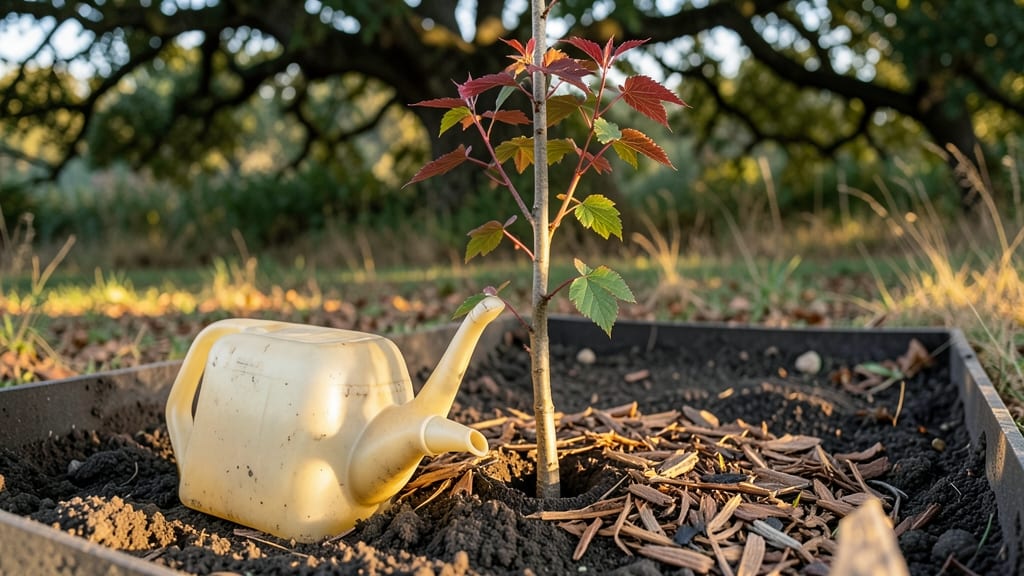
Learn how to fix transplant shock in trees when your newly planted one wilts despite your best care—the #1 reason trees fail after moving. I’ve nursed back more struggling transplants than I’d like to admit, and the key is acting fast with the right recovery steps.
The good news? Most trees bounce back within 4-6 weeks if you address the root issues (literally and figuratively).
Transplant shock happens when roots get damaged during moving, then struggle to absorb water and nutrients. You’ll spot it through yellowing leaves, wilting branches, or slow growth—even if the tree looks fine at first.
The fix starts with deep watering (2-3 gallons per inch of trunk diameter) every 3-4 days until new roots establish. Mulching helps retain moisture while protecting roots from temperature swings.
Pruning stressed branches might seem counterintuitive, but removing 10-20% of the canopy reduces water demands while the roots recover. Wind and direct sun can worsen shock, so temporary shade cloth or a windbreak gives roots time to heal.
Think of it as giving your tree a spa day—calm, hydrated, and stress-free until it’s back on its feet.
Long-term, focus on soil health and gradual acclimation for future transplants. Amend the soil with compost, avoid over-watering, and space out pruning to minimize stress. With these steps, your tree won’t just survive—it’ll thrive like it was planted yesterday. Let’s get those roots growing again.
Root Causes of Transplant Trauma
Transplant shock in trees isn’t just a random setback—it’s a stress response triggered by a cascade of physiological and environmental disruptions. Understanding why it happens is the first step to preventing or mitigating it.
Below, we break down the key stressors that leave trees vulnerable after relocation, from microscopic root damage to systemic metabolic shifts.
When a tree is uprooted, even the most careful handling can cause mechanical stress to its roots. Here’s what goes wrong:
- Root Pruning & Breakage:
- Roots absorb 90% of a tree’s water and nutrients, and even minor cuts or snapped roots (especially fine feeder roots) reduce uptake efficiency.
- Actionable insight: Larger roots (2"+ diameter) can regenerate, but fine roots (<2mm) rarely recover—prioritize minimal root disturbance during transplanting.
- Root Zone Compaction:
- Digging compresses soil around remaining roots, restricting oxygen flow (critical for root respiration).
- Science note: Compacted soil can reduce oxygen levels by 50%, suffocating roots and triggering anaerobic conditions (which produce toxic ethanol).
- Root Desiccation:
- Exposed roots dry out within hours, especially in wind or sun. A tree’s root system can lose water faster than its canopy can replace it.
- Pro tip: ⏳ Mulch immediately after transplanting to retain moisture and reduce evaporation.
Trees rely on a delicate water transport system—disrupt it, and shock sets in fast.
- Transpiration Mismatch:
- The canopy continues to lose water via leaves (transpiration) while damaged roots struggle to replenish it.
- Result: Leaves wilt, stomata close (to conserve water), and photosynthesis halts, starving the tree of energy.
- Soil Moisture Shock: - New soil often has different water-holding capacity than the original site.
Clay soil might retain too much water (leading to root rot), while sandy soil drains too quickly. - Data point: Trees lose 20–30% of their root function in the first week post-transplant if soil moisture isn’t managed.
- Osmotic Stress:
- Fertilizers or salts in new soil can disrupt root cell function, making it harder to absorb water.
- Fix: Avoid fertilizing for 6–12 weeks post-transplant; focus on hydration first.
Extreme or sudden changes in light, temperature, or humidity confuse a tree’s circadian rhythms and metabolic processes.
- Temperature Fluctuations:
- Moving a tree from shade to full sun (or vice versa) causes thermal stress. Leaves may scorch or freeze if the tree isn’t acclimated.
- Critical threshold: A 10°F+ difference between original and new site can trigger shock.
- Wind Exposure:
- High winds increase transpiration rates by up to 50%, drying out roots faster than they can recover.
- Solution: Use windbreaks (burlap, temporary fencing) for the first 4–6 weeks.
- Light Intensity Shock:
- Trees adapted to deep shade may suffer sunburn if transplanted to full sun, while sun-lovers can get light stress in shaded spots.
- Sign: Yellowing leaves (chlorosis) or crispy leaf edges signal light mismatches.
A tree’s internal chemistry takes a hit during transplanting, leading to delayed recovery.
- Hormonal Imbalance:
- Abscisic acid (ABA) spikes in response to stress, causing stomata to close (reducing photosynthesis).
- Cytokinins (growth hormones) drop, slowing root regrowth.
- Action: Apply rooting hormones (like IBA) to stimulate cell division in damaged roots.
- Carbohydrate Depletion:
- Roots store starches and sugars for energy. Uprooting depletes these reserves, leaving the tree energy-starved.
- Stat: A tree may take 3–6 months to rebuild carbohydrate stores post-transplant.
- Microbiome Disruption:
- Beneficial mycorrhizal fungi (which boost nutrient absorption) are often severely reduced during transplanting.
- Recovery time: It can take 1–2 years for new fungal networks to establish.
💡 Key Takeaway: Transplant shock is multifactorial—it’s not just one issue but a domino effect of root damage, hydration failure, environmental stress, and metabolic slowdowns. The good news? Mitigating even one of these factors (like proper watering or root protection) can drastically improve survival rates.
Next, we’ll dive into step-by-step fixes to help your transplanted tree bounce back.
Solutions That Work
Transplant shock in trees isn’t a death sentence—it’s a temporary setback with clear fixes. The key is acting fast, diagnosing the root cause (literally and figuratively), and giving your tree the right care.
Below, we map practical solutions to the most common causes, plus prevention tips to keep future transplants thriving.
Cause: Damaged roots, improper soil contact, or shallow planting.
How to Solve:
- 🔥 Prune damaged roots – Trim any broken, mushy, or blackened roots with sterilized pruners (cut at a 45° angle). Focus on the outer edges where damage is worst.
- 🍳 Amend the soil – Mix compost or organic matter (like coconut coir or peat moss) into the planting hole to improve drainage and aeration. Avoid heavy clay or compacted soil.
- 👨🍳 Secure the tree – Stake only if necessary (young/small trees or windy areas). Use soft ties (not wire) to avoid girdling. Remove stakes after 1–2 years.
- 🥘 Water deeply – Soak the root ball slowly (1–2 gallons per inch of trunk diameter) for the first 2–3 weeks. Use a drip irrigation system or soaker hose to keep moisture consistent.
💡 Pro Tip: If roots are severely damaged, consider root pruning (trimming roots before transplanting) to encourage new growth. Do this 6–12 months ahead of moving the tree.
Cause: Drought, flooding, or inconsistent watering.
How to Solve:
- 🌡️ Check soil moisture – Stick your finger 2–3 inches deep; if dry, water. If soggy, pause watering and improve drainage.
- ✨ Mulch like a pro – Apply 2–4 inches of mulch (wood chips, straw) around the base (but keep it 6 inches away from the trunk). Mulch retains moisture and regulates temperature.
- 🎯 Adjust watering schedule –
- First 2 weeks: Water every 2–3 days (deep soak).
- Weeks 3–6: Water every 5–7 days (less frequently but deeply).
- After 2 months: Gradually reduce to weekly deep watering (unless in extreme heat/drought).
- 🔥 Avoid wetting foliage – Use drip irrigation or water at the base to prevent fungal diseases.
💡 Pro Tip: Morning watering (before 10 AM) reduces evaporation and fungal risks. If your tree is in full sun, you may need to water daily during heatwaves.
Cause: Sudden heat, cold, or wind after transplanting.
How to Solve:
- 🍎 Shield from extreme sun/wind – Use shade cloth (30–50%) for the first 2–4 weeks if transplanting in hot weather. For cold snaps, wrap the root ball in burlap and cover with frost cloth.
- 💪 Acclimate gradually – If moving from shade to sun (or vice versa), harden off the tree over 7–10 days by slowly increasing exposure.
- 🔥 Avoid transplanting in extreme temps – Best times: Early spring or fall (when temps are 50–70°F). Avoid summer heatwaves or freezing conditions.
💡 Pro Tip: Mature trees handle stress better—transplant younger trees in spring and older trees in early fall when they’re dormant.
Cause: Wounded roots or foliage attract pathogens.
How to Solve:
- 🔪 Sterilize tools – Clean pruners with rubbing alcohol or a 10% bleach solution before and after trimming.
- 🌡️ Apply fungicide – Use a copper-based or neem oil spray on leaves and wounds if you spot black spots, mold, or oozing sap.
- 🎯 Improve airflow – Thin out crowded branches and avoid over-mulching (keep mulch 6+ inches from the trunk).
- 💦 Water at the base – Never spray water on leaves or bark to prevent fungal spores from spreading.
💡 Pro Tip: Healthy soil = fewer infections. Add mycorrhizal fungi (available at nurseries) to the planting hole to boost root health.
Cause: Nutrient deficiency or weak recovery.
How to Solve:
- 📊 Wait 4–6 weeks before fertilizing – New roots need time to establish. Use a balanced, slow-release fertilizer (10-10-10 or organic options like fish emulsion).
- 💪 Avoid high-nitrogen fertilizers – These promote leafy growth at the expense of roots. Opt for phosphorus-heavy fertilizers (like 5-10-5) to stimulate root development.
- 🍎 Monitor for nutrient deficiencies –
- Yellow leaves? → Likely nitrogen (but wait before fertilizing—could be root stress).
- Purple stems? → Phosphorus deficiency (use bone meal).
- Brown leaf edges? → Potassium (use greensand or wood ash).
💡 Pro Tip: Foliar sprays (like seaweed extract) can help stressed trees absorb nutrients faster.
- 🔥 Choose the right time – Spring or early fall (avoid summer droughts or winter freezes).
- 🌡️ Pick a permanent spot – Trees hate being moved again—plan for decades of growth.
- 🍳 Dig a wide, deep hole (2x wider than the root ball, same depth).
- 👨🍳 Use a root stimulator (like mycorrhizal inoculant) when planting.
- 🥘 Water before transplanting to reduce shock.
- 🎯 Prune 1/3 of the canopy to balance root loss (helps the tree focus on recovery).
Final Thought: Most trees recover from transplant shock within 3–6 months with the right care. Patience and consistency are key—don’t expect instant results, but with these steps, your tree will be thriving in no time! 🌳💚
Frequently asked questions
Why does my transplanted tree look fine at first but then suddenly wilt?
This is classic transplant shock! While the top of the tree may appear healthy initially, damaged roots can't absorb enough water to support the canopy. The tree’s leaves continue to transpire (release moisture) while roots struggle to replenish it, leading to wilting within days or weeks. The fix starts with deep watering and reducing stress on the canopy.
How long should I wait before fertilizing a tree showing transplant shock?
Wait at least 6-12 weeks before applying fertilizer. New roots need time to establish without competing with the tree’s energy demands. High-nitrogen fertilizers can actually worsen shock by promoting leaf growth while roots remain weak. Instead, focus on phosphorus-rich amendments to stimulate root development.
Can I use rooting hormones to help my tree recover faster?
Yes! Applying a rooting hormone (like IBA) to damaged roots during transplanting can significantly boost recovery. These hormones stimulate cell division at the root tips, helping establish new feeder roots faster. Dip pruned roots in the powder or gel before replanting for best results.
What's the best way to tell if my tree is recovering from transplant shock?
Look for new leaf growth at the tips of branches and firm, white root tips when you gently dig around the base. A healthy tree will also show consistent water uptake (soil should stay evenly moist) and gradual canopy expansion. Most trees show significant improvement within 4-6 weeks of proper care.
Is it too late to save my tree if it's been showing shock symptoms for 2 months?
Not necessarily! While recovery takes longer, many trees can still bounce back with persistent care. Focus on deep watering, mulching, and protecting from environmental stress. If the tree has any green leaves or new growth, it’s likely still viable. For severely stressed trees, consult an arborist about possible root treatments.