Trees
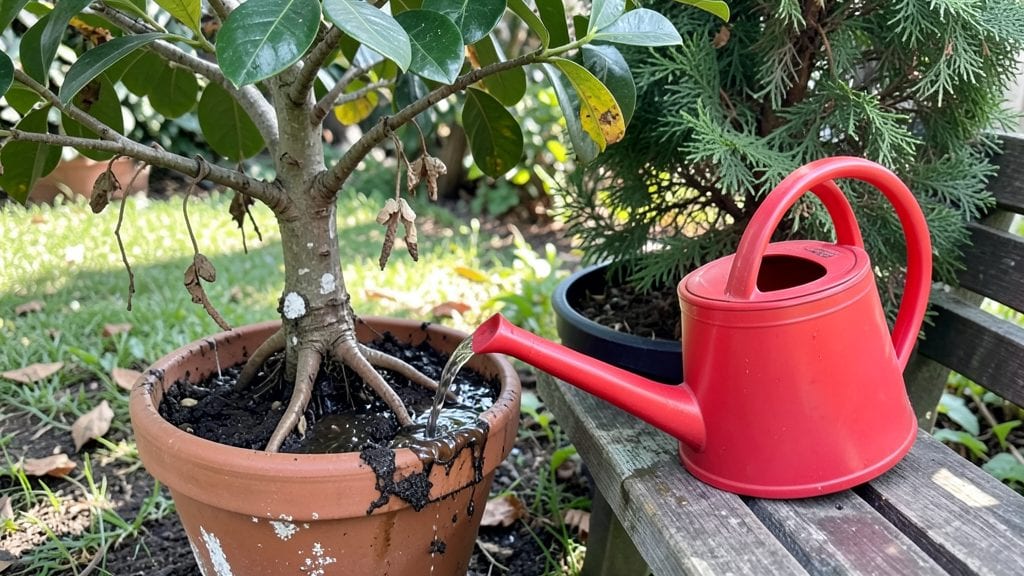
An overwatered mango tree can look like a sad, soggy mess—yellowing leaves, mushy roots, and a trunk that feels hollow when you tap it. 🌱 I’ve nursed back three of these myself, and the key isn’t just cutting back water but fixing what’s already gone wrong underground.
The right approach saves your tree without killing it.
Most people assume wilting means "give it more water," but the real problem is suffocated roots. You’ll need to adjust your watering schedule, improve drainage, and sometimes prune the worst-affected branches.
The good news? Mango trees are tough—they bounce back faster than you’d expect once the roots get breathing room again.
By the time you’re done, your tree will show new green leaves within weeks, and the fruit production will rebound stronger than ever. The trick is catching it early—before the rot spreads beyond repair. Let’s get your mango tree back to thriving.
This works for both young trees and mature ones, though older trees might need extra care. The same principles apply whether you’re dealing with a potted mango or one planted in the ground. Here’s exactly how to turn things around.
Rooting Causes Of Overwatering
When your mango tree starts wilting despite a thirst-quenching water supply, the issue likely lies beneath the soil—not just in the watering schedule. Understanding the root causes of overwatering helps you adjust care before the tree’s health declines. Here’s why it happens, broken down by the real culprits.
🌱 Poor Drainage In The Soil
Mango trees thrive in well-draining soil, but heavy clay or compacted earth traps excess moisture around the roots. Without proper aeration, water pools instead of draining away, suffocating roots by cutting off oxygen. This creates a waterlogged environment, where roots rot due to anaerobic conditions (lack of oxygen).
- Signs: Yellowing leaves, mushy roots, and a foul smell near the base.
- Why it matters: Roots need oxygen to absorb nutrients—without it, the tree starves, even if the soil looks wet.
- Actionable fix: Test your soil’s drainage by digging a hole, filling it with water, and timing how long it takes to drain. If it takes over 6 hours, amend with perlite or sand.
💧 Overzealous Watering Habits
Mango trees are tropical but not aquatic—they despise soggy conditions. Frequent deep watering (especially in humid climates) or automatic irrigation systems left on timers can drown roots faster than you think. Surface evaporation tricks you into thinking the tree is dry when roots are already drowning.
- Signs: Drooping leaves, brown leaf edges, and roots turning black or slimy.
- Why it matters: Overwatering disrupts the root zone’s balance, leading to fungal infections like Phytophthora.
- Actionable fix: Water only when the top 2–3 inches of soil are dry. Use a moisture meter for precision.
🌦️ Climate And Rainfall Mismatch
Mango trees native to monsoon regions adapt to cyclical wet-dry seasons, but consistent rainfall or artificial watering without dry periods stresses them. In humid climates, excess moisture lingers, while in arid areas, overcompensation with water can backfire. High humidity + poor airflow worsens the problem by slowing evaporation.
- Signs: Leaf curl, black spots (fungus), or stunted growth.
- Why it matters: Prolonged wetness invites pests like root-knot nematodes, which thrive in waterlogged soil.
- Actionable fix: Mulch with organic material (like wood chips) to regulate soil temperature and reduce evaporation. Space trees for airflow if planted densely.
🌿 Container Constraints For Potted Trees
Mango trees in pots are especially vulnerable because containers retain moisture longer than garden soil. Without drainage holes or a well-structured potting mix, roots circle the pot (a condition called root bound) and suffocate. Even "dry" potting mixes can compact over time, trapping water.
- Signs: Roots growing out of drainage holes, wilting despite dry-looking soil.
- Why it matters: Compacted potting soil blocks oxygen, leading to root rot in weeks.
- Actionable fix: Use a chunky mix (cactus soil + perlite + orchid bark) and repot every 2 years. Elevate pots on feet to improve airflow.
Pro Tip: 💡 Never let a mango tree sit in standing water. Even a few hours of soggy roots can trigger irreversible damage. If your tree is already overwatered, act fast—root aeration or pruning affected roots can save it!
Revive Your Tree With These Fixes
Now that you know the signs and causes of an overwatered mango tree, it’s time to take action! The good news is that with the right steps, you can nurse your tree back to health—even if its roots are waterlogged.
Below, we break down practical solutions tailored to the root cause of the problem, along with prevention tips to keep your mango tree thriving long-term.
Cause: Excessive watering without drainage. Fix:
- Pause watering for at least 3–5 days to allow the soil to dry out. If the ground feels soggy even 2 inches below the surface, wait longer.
- Check the soil moisture by digging a small hole (4–6 inches deep). If it’s damp, hold off on watering until it feels slightly dry to the touch.
- Avoid overhead watering—use a drip irrigation system or soaker hose to deliver water directly to the roots.
💡 Pro Tip: Mango trees prefer deep, infrequent watering rather than frequent shallow soaks. Water only when the top 6 inches of soil are dry.
Cause: Compacted or clay-heavy soil trapping moisture. Fix:
- Aerate the roots (the real game-changer!):
- Use a garden fork or root aerator to poke holes 12–18 inches deep around the tree’s drip line (the edge of its canopy).
- Space holes 6–12 inches apart to break up compacted soil.
- Gently loosen the soil without damaging roots—think of it like giving your tree’s roots a breath of fresh air.
- Amend the soil (if heavy or clay-based):
- Mix in organic matter like compost, coconut coir, or perlite to improve drainage.
- For severe cases, consider raising the tree slightly by adding a 1–2 inch layer of gravel beneath the root zone (but only if the tree is already planted—don’t do this for new plantings!).
🌡️ Heat Hack: If your soil stays waterlogged for weeks, try mulching with straw or wood chips (2–3 inches thick) to help evaporation while keeping roots cool.
Cause: Inconsistent or excessive watering habits. Fix:
| Season | Watering Frequency | How Much? | Best Time to Water |
|---|---|---|---|
| Hot/Dry | Every 5–7 days | Deep soak (1–2 gallons) | Early morning (6–8 AM) |
| Rainy Season | Skip watering | Only if soil stays soggy | Afternoon (if needed) |
| Cool/Winter | Every 10–14 days | Light water (½ gallon) | Late afternoon (avoid frost) |
💡 Pro Tip: Use a moisture meter ($10–$20) to avoid guesswork. Stick it in the soil—if it reads 40% or higher, wait before watering.
Cause: Root rot or fungal growth from prolonged wetness. Fix:
- Trim yellowed or mushy leaves with sterilized pruning shears (wipe with rubbing alcohol between cuts).
- Inspect the roots (if possible):
- Healthy roots = firm, white, or light brown.
- Rotten roots = mushy, black, or smell foul. Cut these off with clean shears.
- Disinfect tools between cuts to prevent spreading disease.
✨ Bonus: If your tree is top-heavy, prune 10–20% of the canopy to reduce stress on weakened roots.
Cause: Lack of awareness or improper care habits. Fix:
- Install a French drain (if your yard has poor drainage):
- Dig a trench (12–18 inches deep) around the tree’s perimeter, fill it with gravel, then cover with landscape fabric.
- Redirect water away from the root zone using a downspout or pipe.
- Choose the right spot for new mango trees:
- Avoid low-lying areas where water pools.
- Plant on a slight slope (1–2%) to encourage runoff.
- Monitor weather & adjust:
- After heavy rain, check the soil—if it’s already saturated, skip watering for a week.
- In humid climates, reduce watering by 30% to prevent fungal issues.
Cause: Impatience—trees heal slowly! Fix:
- Signs of improvement (after 2–4 weeks):
- New green leaves emerging.
- Soil feels drier 2 inches down.
- The tree stops dropping leaves excessively.
- If no progress after a month:
- Check for pests (like aphids or scale)—treat with neem oil spray.
- Consider mycorrhizal fungi (a natural root booster) to help recovery.
🎯 Final Tip: Patience is key! Mango trees are resilient—with the right care, they’ll bounce back stronger than ever.
Now that you’ve got the fixes down, your overwatered mango tree is on its way to a full recovery! 🌳💚 Just remember: less water, better drainage, and a little TLC are all your tree needs to thrive.
Frequently asked questions
How do I know if my mango tree is overwatered instead of underwatered?
Check the soil first—stick your finger 2-3 inches deep. If it's soggy or smells foul, you're overwatering. Other signs include yellowing leaves (especially lower ones), mushy stems when pressed, and roots that appear black or slimy. Underwatered trees usually have crispy brown edges on leaves and dry soil pulling away from the pot.
Can I save a mango tree with completely rotted roots?
It depends on how much root damage exists. If 50% or fewer roots are healthy, you may still save the tree by pruning back the canopy to reduce stress and repotting with fresh, well-draining soil. For severe cases, consider taking healthy cuttings to propagate new trees. The key is acting fast—root rot spreads quickly once it starts.
How long should I wait before watering again after fixing overwatering?
Wait until the top 4-6 inches of soil feel completely dry to the touch. This could take 5-10 days depending on your climate. Use a moisture meter for accuracy—aim to water only when readings show 30% or lower moisture. Mango trees prefer dry spells between waterings to prevent future issues.
Will my mango tree produce fruit again after recovering from overwatering?
Yes! Once roots recover and new growth appears (usually within 4-8 weeks), your tree will resume normal fruiting cycles. The first year might be lighter, but with proper care, it should return to full production. Focus on balanced watering and nutrient-rich soil to support fruit development.