How To
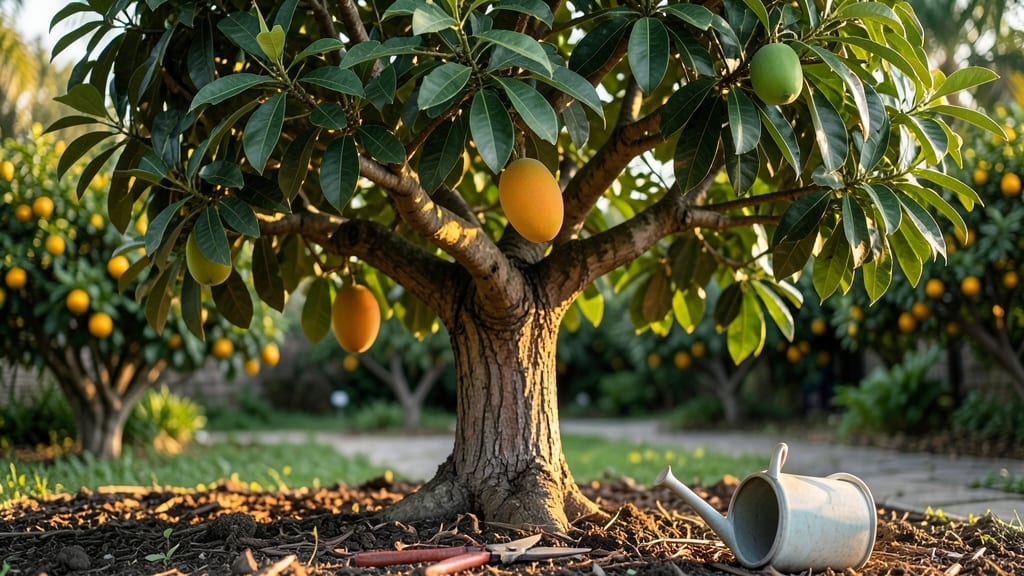
A mango tree can grow up to 100 feet tall—taller than most backyard fences—if left unchecked, but dwarf varieties stay as small as a shrub.
Dreaming of a lush 🥭 in your backyard but unsure how tall it can grow? The answer depends on the variety, climate, and growing conditions—some dwarf varieties stay manageable, while others tower like skyscrapers.
For most home gardeners in USDA zones 10-11, choosing the right variety is the key to keeping your mango tree at a practical height.
A standard tree can reach 40-100 feet, but grafted dwarf varieties top out at just 10-20 feet, making them perfect for containers or small yards.
In this guide, I’ll break down how climate, pruning, and sunlight shape your tree’s height—and how to keep it from outgrowing your space.


Mango tree height by variety: from dwarf to giant growth potential
Choosing the right mango tree variety is key if you want a manageable size for your garden. Some varieties grow as tall as a 3-story building, while others stay compact enough for containers or small yards. The difference often comes down to grafting techniques and natural growth habits.
For example, the 'Cogshall' variety stays under 20 feet, making it perfect for urban gardens, while the 'Haden' can reach 80 feet in ideal conditions.
If you're limited by space, dwarf grafted mango trees are your best bet. These are created by grafting a small-fruited variety onto a dwarfing rootstock, controlling height while maintaining fruit quality.
Even in containers, these varieties can thrive with proper care. Let’s break down the most popular options and their mature heights to help you decide which fits your space and goals.
⚠️ Important Note: Height ranges are estimates—climate, pruning, and soil can significantly alter growth. In cooler regions, even standard varieties may grow slower and stay shorter.
For small-space gardeners, dwarf grafted varieties like 'Cogshall' on a dwarfing rootstock are game-changers. These trees can produce full-sized fruit while staying under 15 feet. Just ensure your container has drainage holes and you’re using a well-draining potting mix.
In my own backyard, a dwarf 'Julie' mango tree thrives in a 15-gallon pot and has already fruited after just 3 years!
If you’re in a warmer climate like Florida or Hawaii, standard varieties like
How climate and growing conditions affect mango tree height
If you're wondering how tall mango trees grow, the answer isn't one-size-fits-all. Your local climate, sunlight exposure, and even your soil type play massive roles in determining whether your tree will reach skyscraper heights or stay compact enough for your backyard.
In Florida's warm, humid zones, mango trees often grow wildly tall—sometimes over 80 feet—while in California's coastal regions, they may max out at 30-40 feet due to cooler nights.
Mango trees thrive in USDA zones 10-11, where frost is rare and temperatures stay above 60°F year-round. Outside these zones, growth slows dramatically, and trees may never reach their full height potential.
For example, a 'Haden' mango—naturally a standard-sized variety—can grow 60+ feet in Miami but barely 20 feet in Zone 9 with cooler winters. Even dwarf varieties, like 'Cogshall', need ideal conditions to stay under 15 feet.
Sunlight is non-negotiable for mango trees. They demand 6+ hours of direct sun daily, and even partial shade can stunt growth by 30-50%. In shady backyards, trees may grow leggy and weak, with fewer branches and smaller leaves. Meanwhile, in full sun, they develop a strong central trunk and dense canopy, accelerating vertical growth. My 'Keitt' mango in San Diego grows 2 feet per year in full sun but only 6 inches in a partially shaded spot.
key-takeaway
🌱 Zone 10-11: 60-100 ft (ideal) | 🌿 Zone 9: 20-30 ft (stunted) | ☀️ Full Sun: +30% growth rate | 🌧️ Partial Shade: -50% height potential
✂️ Pruning: Heavy pruning = bushier (shorter) | Light pruning = taller
Dwarf: 10-20 ft
Semi-Dwarf: 20-30 ft
Standard: 40-100 ft
Soil type also determines how much your mango tree stretches toward the sky. Well-draining, slightly acidic soil (pH 5.5-6.5) encourages strong root systems, which support taller growth. In clay-heavy soils, roots suffocate, leading to shorter, weaker trees prone to disease.
Amending soil with compost and sand can boost height by 20-30% over time. My neighbor’s 'Kent' mango in Houston hit 40 feet in 8 years because he amended his clay soil with organic matter annually.
Pruning is another game-changer for controlling height. Heavy structural pruning in early spring can reduce a standard mango's height by 30-40%, while light maintenance pruning (removing only dead branches) lets it grow unrestricted.
In container gardens, regular pruning keeps dwarf varieties under 10 feet, but skip pruning, and even dwarf trees can bolt upward unexpectedly. I once saw a 5-foot 'Cogshall' in a pot shoot to 12 feet in two years because the owner avoided pruning.
Regional microclimates also matter. Coastal areas with mild winters (like Southern California) produce taller, faster-growing mango trees compared to inland deserts with hot days and cold nights.
For example, 'Ataulfo' mangoes in Tucson max out at 25 feet due to temperature fluctuations, while the same variety in Hawaii can hit 50 feet.
Even wind exposure plays a role—trees in open, windy areas grow lean and tall to escape gusts, while sheltered trees develop stocky, compact shapes.
If you're growing mangoes in containers, height control becomes even more critical. Root-bound trees compete for space, often growing taller and leggier to access sunlight. To keep them under 8 feet, prune aggressively in spring and rotate the pot monthly for even growth.
My container-grown 'Julie' mango stays 6 feet tall thanks to annual pruning and large pots (20+ gallons). Without these steps, it would’ve outgrown its space in just three years.