Pruning
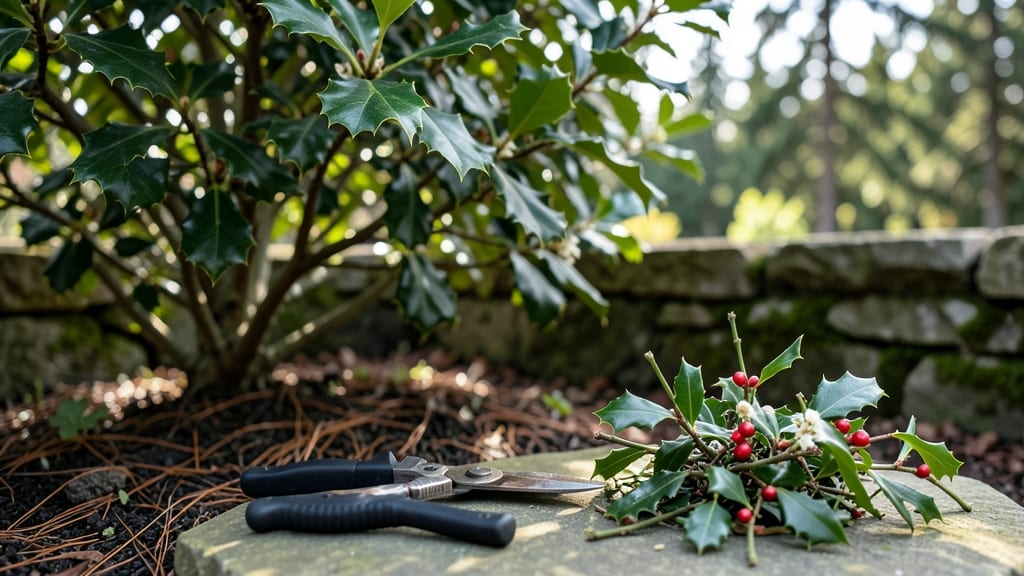
You can cut off the top of a holly tree, but it requires precision and timing to preserve the plant's health. The best time is late winter or early spring before new growth starts, using sterilized tools to prevent disease while avoiding excessive pruning that harms berry production.
Holly trees are resilient but sensitive to aggressive pruning, so the key is working with their natural growth patterns.
Trimming the top stimulates new shoots, but improper cuts can lead to weak regrowth or even dieback. 🌿 I always recommend removing no more than 25-30% of the tree's height in one session to avoid shocking the plant.
The dormant season is ideal because the tree's energy is stored, making recovery faster and reducing stress.
For best results, use bypass pruners or a hand saw for thicker branches, and always disinfect tools with rubbing alcohol to prevent bacterial infections. After pruning, monitor the tree for signs of stress—yellowing leaves or slow regrowth—and consider applying a balanced fertilizer to support recovery.
The goal is to shape the tree while maintaining its natural beauty and fruit-bearing potential.
💡 In This Article
- How Proper Holly Tree Topping Affects Growth and Health
- Step-by-Step Guide to Pruning a Holly Tree Safely
How proper holly tree topping affects growth and health
When you cut off the top of a holly tree, you're essentially triggering a biological response called apical dominance suppression. Holly trees, like many evergreens, rely on their central leader (main upward-growing branch) to regulate growth hormones.
Removing this leader forces the tree to redirect energy to dormant side buds, which then sprout into new shoots. This process is called epinasty, where lateral branches grow more vigorously.
However, the intensity of regrowth depends on how aggressively you prune—cutting 10-15% of the canopy stimulates moderate growth, while removing 30% or more can lead to chaotic, weak regrowth.
The timing of your cut is critical because it directly impacts the tree's recovery rate. Holly trees are most resilient during their dormant season (late winter to early spring), when they're not actively photosynthesizing.
This is when their stored energy reserves are at their peak, allowing them to heal faster and resist stress.
Cutting during active growth (spring to fall) forces the tree to divert energy to new shoots while still supporting existing foliage, which can lead to nutrient depletion and increased susceptibility to pests.
Think of it like getting a haircut right before a big exam—your body is already stressed, so recovery takes longer.
One of the biggest risks of improper topping is dieback, where new growth fails to establish properly and branches dry out. This often happens when cuts are made too close to the trunk or at awkward angles, exposing the wood to disease.
Holly trees are also prone to holly leaf miner infestations after stress, where larvae burrow into leaves, causing them to curl and drop prematurely. The good news? Proper pruning actually enhances berry production in the long run.
By opening up the canopy, you improve air circulation and sunlight penetration, which boosts fruit development. Just avoid heavy pruning in years when you expect berries, as the tree will prioritize regrowth over fruit production.
Here’s how to compare mild vs. aggressive pruning techniques:
- Mild Pruning (10-15% of canopy): Removes only the very top 3-6 inches of the leader, shaping the tree while maintaining its natural form. Regrowth is controlled and produces strong, upright branches. Ideal for maintaining height without stressing the plant.
- Moderate Pruning (15-25% of canopy): Cuts back the leader by 6-12 inches, encouraging bushier growth. Requires more frequent monitoring for pests and diseases. Best for trees that need significant height reduction but still need to retain berry production.
- Aggressive Pruning (30%+ of canopy): Severely shortens the leader by 12+ inches, leading to rapid but often weak regrowth. High risk of dieback and pest infestations. Only recommended for severely overgrown trees or when reshaping for safety (e.g., near power lines).
What most people don’t realize is how holly trees store energy in their roots. Even after aggressive pruning, a healthy holly can recover if the root system remains intact. The key is to prune in stages—never remove more than 25% of the canopy in a single year.
For example, if your holly is 10 feet tall and you need to reduce it to 6 feet, spread the cuts over 2-3 years to avoid shocking the tree. This gradual approach mimics natural dieback and gives the plant time to adjust its hormonal balance.
After pruning, keep an eye out for these signs of stress: yellowing leaves, wilting branches, or a sudden drop in berry production. If you notice any of these, apply a balanced 10-10-10 fertilizer (equal parts nitrogen, phosphorus, and potassium) to support recovery.
Mulching with 2-3 inches of organic mulch (like shredded bark) helps retain moisture and regulates soil temperature, which is especially important in the first 6-8 weeks post-pruning. With the right technique, your holly can bounce back stronger—and even produce more vibrant berries in the following seasons. 🌟