Watering
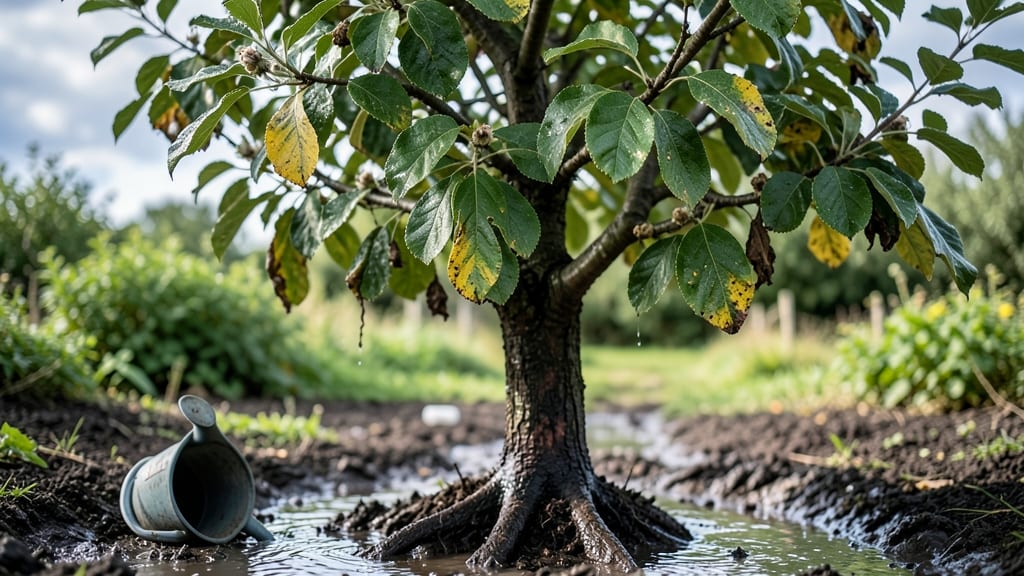
An overwatered apple tree with yellowing leaves and mushy roots isn’t a death sentence—it’s a call to action. 🌱 I’ve nursed back trees that looked hopeless, and the key starts with recognizing the subtle signs before they become irreversible.
That soggy soil smell and wilting branches? Those are your tree’s SOS signals.
The problem usually boils down to two things: too much water sitting in the roots and soil that can’t drain fast enough. My first fix is always adjusting the watering schedule—switching to deep, infrequent soakings instead of daily sprinkles.
Then comes the soil: amending it with compost or sand to improve drainage makes all the difference.
Within weeks, you’ll see fresh green leaves pushing out as the roots recover. The tree won’t just survive—it’ll rebound with stronger growth and next year’s blossoms will be more abundant. The secret is catching it early and giving your tree the right conditions to heal.
This works for backyard trees, container-grown dwarfs, or even community orchard plants. The principles stay the same—just scale the supplies to your tree’s size. Let’s get that soil breathing again.
Root Causes of Overwatering Trees
An overwatered apple tree isn’t just a result of too much love—it’s often a mix of well-meaning habits, environmental factors, and soil science gone awry. Understanding why this happens is the first step to fixing it. Let’s dig into the key culprits and the science behind them.
Apple trees thrive in well-draining soil, but if your soil is heavy with clay, compacted, or lacks organic matter, water pools around the roots instead of draining away. This creates a soggy, oxygen-deprived environment where Phytophthora (a fungus-like pathogen) and root rot thrive.
- Clay-heavy soil: Holds water like a sponge, suffocating roots. A simple jar test can reveal drainage issues—fill a jar with soil and water, then time how long it takes to drain. If it’s slower than 30 minutes, your soil is too dense.
- Compacted soil: Foot traffic, machinery, or even natural settling can compress soil, reducing pore space for air and water flow. Roots struggle to breathe, leading to waterlogged conditions.
- Lack of organic matter: Sandy or peaty soils drain too quickly, but without compost or mulch, they can’t retain moisture or nutrients. The fix? Amend with 3–4 inches of compost or aged manure annually.
Many gardeners assume "more water = better growth," but apple trees have deep roots that need consistent moisture, not constant soaking. Overwatering—especially on a rigid schedule—disrupts the tree’s natural drought resistance and encourages weak, waterlogged roots.
- Automatic irrigation: Timers or drip systems left on too long can drown roots, especially in hot climates where evaporation is high. Rule of thumb: Water deeply 1–2 times per week (adjust for rain) rather than daily shallow sprinkles.
- Ignoring weather conditions: Watering during heavy rain or after storms is a common mistake. Check soil moisture with your finger—if the top 1–2 inches are dry, it’s time to water. If it’s still damp, wait.
- Newly planted trees: While young trees need frequent watering, overdoing it can delay root establishment. Focus on deep, infrequent watering to encourage roots to grow downward.
Where you plant your apple tree matters just as much as how you water it. Trees planted in depressions, near downspouts, or in areas where water pools after rain are prime candidates for chronic overwatering.
- Depressions or slopes: Low spots act as natural catch basins, trapping runoff. If your tree sits in a dip, grade the soil to create a slight slope (1–2 inches per foot) away from the trunk.
- Poor drainage layers: If the planting hole wasn’t backfilled with a mix of native soil and permeable amendments (like perlite or coarse sand), water sits instead of draining. Always loosen the bottom of the hole and mix in compost.
- Improper mulching: Mulch is a gardener’s best friend—but only if used correctly. A 3-inch layer around the base (kept away from the trunk) helps retain moisture. Piling mulch against the trunk traps moisture and invites rot.
Apple trees are adapted to seasonal dry periods, but modern gardening practices—like year-round watering in drought-prone areas—can confuse their natural rhythms. Sudden shifts in temperature or humidity also play a role.
- Drought followed by heavy rain: Prolonged dry spells cause roots to seek deep moisture. When rain finally comes, the soil can’t absorb it fast enough, leading to flash flooding at the root zone.
- Humid climates: High humidity slows evaporation, making the soil stay wet longer. In these areas, reduce watering frequency and ensure airflow around the tree.
- Winter watering mistakes: While apple trees need less water in winter, some gardeners overcompensate for cold stress by overwatering. Stop watering entirely once the ground freezes to prevent root suffocation.
Now that you know why your apple tree might be drowning, the next step is diagnosing the damage and fixing it. Stay tuned for signs of root rot and actionable solutions!
How to Fix an Overwatered Tree
An overwatered apple tree can feel like a slow-motion disaster—wilting leaves, yellowing foliage, and a soggy root system that’s struggling to breathe. But don’t panic! With the right steps, you can nurse your tree back to health and prevent future waterlogging.
Below, we’ll break down how to diagnose the problem and what to do next, tailored to the root cause.
Before making any other moves, halt the excess watering. Keep these tips in mind: - Skip watering for 3–5 days to let the soil dry out slightly. This prevents further root suffocation. - Check your irrigation system (if applicable).
If you’re using drip lines or sprinklers, adjust the schedule to water deeply but infrequently (e.g., 1–2 times per week, depending on climate). - Avoid watering in the evening—wet foliage at night encourages fungal diseases like apple scab.
> 💡 Pro Tip: If your tree is in a container, move it to a well-draining spot (like a raised bed or gravel tray) to prevent water pooling.
Poor drainage is often the culprit behind an overwatered tree. Here’s how to fix it:
🔧 For In-Ground Trees:
- Test your soil’s drainage by digging a 1-foot hole near the tree. Fill it with water—if it drains in less than 4 hours, your soil is okay.
If it takes longer than 6 hours, you’ve got a drainage issue. - Amend the soil with organic matter (compost, aged manure, or coconut coir) to improve aeration.
Mix it into the top 6–12 inches of soil around the root zone. - Consider a French drain if your yard has heavy clay soil. A perforated pipe buried near the tree’s roots can redirect excess water away.
🏺 For Potted Apple Trees:
- Repot if necessary into a container with drainage holes and a fast-draining potting mix (like a blend of peat moss, perlite, and sand).
- Add a layer of gravel at the bottom of the pot to prevent compaction and improve airflow.
> ✨ Quick Fix: If repotting isn’t an option, top-dress with coarse sand or bark chips to help break up compacted soil.
If your tree has root rot (common in chronically soggy conditions), act fast with these steps:
🔥 Emergency Care for Root Rot:
- Trim affected roots (if visible) with sterilized pruners—cut away any black, mushy, or foul-smelling roots.
- Apply a fungicide (like copper-based or phosphite-based treatments) to combat fungal infections.
Follow label instructions carefully. 3. Reduce humidity around the base by mulching with straw or wood chips (but keep it 3–4 inches away from the trunk to prevent rot).
🌿 Long-Term Prevention:
- Avoid over-mulching—too much mulch can trap moisture. Aim for a 2–3 inch layer.
- Plant companion plants that improve soil structure, like clover or deep-rooted perennials, which help aerate the soil naturally.
Overwatered trees often suffer from poor circulation, which slows recovery. Prune strategically to:
- Remove dead or diseased branches (sterilize tools with rubbing alcohol between cuts).
- Thin out dense foliage to allow sunlight and air to reach the inner canopy.
- Avoid heavy pruning during stress—focus on light shaping to reduce shock.
> 🎯 Targeted Trimming Tip: If branches are yellowing or drooping, they may be suffering from waterlogged roots. Prune them back to encourage new, healthier growth.
Now that your tree is on the mend, rewrite your watering rules: - Water deeply but less often—aim for 1–1.5 inches per week (including rain). - Use a moisture meter to check soil dampness before watering.
If the top 2 inches are dry, it’s time to water. - Water at the base, not the leaves, to prevent fungal diseases.
> 🌡️ Climate Check: In hot, dry summers, water in the early morning to reduce evaporation. In cool, wet seasons, cut back significantly.
Once your apple tree is back in shape, keep these habits to avoid repeat overwatering: ✅ Monitor weather patterns—adjust watering during prolonged rain or drought. ✅ Upgrade to smart irrigation (like soaker hoses or drip systems) for precise control. ✅ Choose the right location—apple trees thrive in well-draining soil with partial sun. ✅ Mulch correctly—use organic mulch but keep it away from the trunk to prevent rot.
By following these steps, your apple tree should bounce back stronger—and you’ll be the hero it needs! 🌳💦🍏
Frequently asked questions
How can I tell if my apple tree is overwatered instead of underwatered?
Check the soil first—stick your finger 2 inches deep. If it's soggy and smells musty, that's overwatering. Look for yellowing leaves (especially lower branches) and mushy brown roots when you dig gently. Underwatered trees show crispy brown edges on leaves and dry, pulling soil.
Can I save my apple tree if the roots are already rotting?
Yes, but act fast! Trim away any black, mushy roots with sterilized pruners, then improve drainage by adding compost or sand to the soil. Apply a copper fungicide to stop rot spread. With proper care, new roots will grow in 4-6 weeks. The key is catching it early—don't wait until the tree is completely wilting!
What's the best way to adjust my watering schedule for an apple tree?
Switch to deep, infrequent watering: 1-2 times per week (adjust for rain) instead of daily light sprinkles. Water early morning so leaves dry quickly. Use a moisture meter—if the top 2 inches are dry, it's time. In winter, reduce watering by 50% since trees need less.
Will mulch help or hurt an overwatered apple tree?
Mulch can help if used correctly—apply a 2-3 inch layer around the base (keep it away from the trunk to prevent rot). Organic mulch like wood chips improves soil structure over time. But avoid piling it up against the trunk—this traps moisture and worsens waterlogging.
How long does it take for an apple tree to recover from overwatering?
With proper care, you'll see improvement in 2-4 weeks—new green leaves will appear as roots recover. Full recovery may take 3-6 months, depending on how severe the damage was. Be patient and maintain consistent watering (not too much, not too little) during this time.