Trees
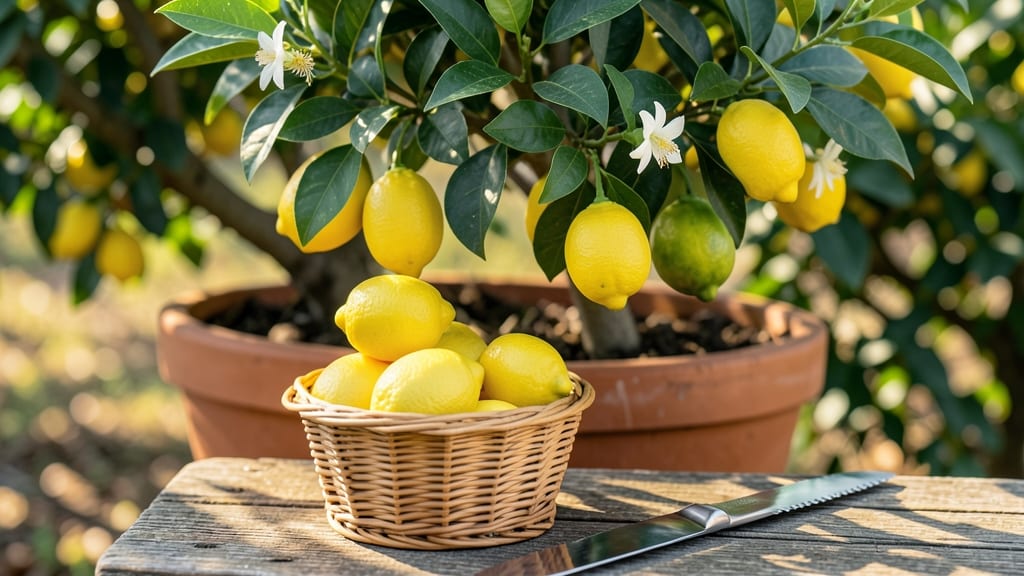
Lemon tree leaves have countless practical uses beyond cooking—from organic pest control to soil enrichment and natural cleaning solutions. Their potent citrus compounds disrupt insect behavior while adding valuable nutrients to gardens and homes.
These leaves pack a punch thanks to their natural oils like limonene and citronellal, which act as powerful insect repellents while also breaking down organic matter in compost. 🌿 For instance, crushed leaves placed near garden beds deter ants and aphids, while dried leaves make excellent mulch that retains moisture and suppresses weeds.
The same oils that repel pests also make them perfect for cleaning—simply steep in hot water to create a fresh-smelling all-purpose cleaner that cuts through grease.
💡 In This Article
- Natural Pest Control with Lemon Tree Leaves
- Organic Gardening Hacks Using Lemon Tree Foliage
Natural pest control with lemon tree leaves
The secret weapon in lemon tree leaves is their volatile oils—particularly limonene and citronellal—which act like chemical disruptors for insects. These compounds interfere with an insect's ability to detect pheromones, the chemical signals they use to find food, mates, and nest sites.
For example, ants rely on scent trails to navigate, but limonene scrambles these signals, causing them to lose their way and abandon foraging paths. 🔥 The strong citrus aroma alone masks other scents that attract pests like aphids and whiteflies, creating a natural barrier.
Scientific studies show that limonene concentrations in lemon leaves can reach 0.5-1.5% by weight, making them 2-3 times more effective than commercial citrus-based repellents. When crushed, the oils are released more aggressively, creating a 3-5 foot protective zone around treated areas.
For mosquitoes, the citronellal content (found in 0.2-0.5% of leaf mass) mimics their natural avoidance behaviors—similar to how commercial citronella candles work, but with a longer-lasting effect since the oils evaporate slowly from dried leaves.
To maximize effectiveness, place fresh or dried leaves near problem areas: tuck whole leaves into ant trails, scatter them around plant bases, or create sachets for closets and drawers.
A DIY spray works too—simply steep 1 cup of chopped leaves in 2 cups of boiling water for 30 minutes, strain, and transfer to a spray bottle. This concentrate can be diluted with water (1:1 ratio) and reapplied every 7-10 days for continuous protection.
The spray's potency lasts longer than commercial products because the oils bind to surfaces rather than evaporating instantly.
What most people don't realize is that these oils work differently on different pests. For example, while limonene repels ants through pheromone disruption, it also acts as a mild irritant to aphids by clogging their respiratory pores.
Meanwhile, the terpenes in the leaves create a physical barrier that mosquitoes avoid due to their sensitivity to hydrophobic surfaces.
This dual-action makes lemon leaves more versatile than single-purpose repellents. ✨ The key is consistency—fresh leaves work best, but dried leaves retain 60-70% of their repellent properties for up to 6 months when stored in airtight containers.
For indoor use, place leaves near windows, doors, and pet food bowls where pests are most likely to enter. In gardens, create a leaf barrier around vulnerable plants by laying a 1-inch layer of crushed leaves at the base—this deters crawling insects while slowly releasing nutrients into the soil.
The leaves' natural decomposition also introduces beneficial microbes that further suppress pest populations by outcompeting harmful organisms.
Pro tip: Combine lemon leaves with other pest-repelling herbs like rosemary or lavender for enhanced effects. The combined oils create a stronger aromatic shield while providing a broader spectrum of protection against different insect types.
This synergy is why many organic gardeners swear by "citrus-herb blends" for all-season pest control. 🌟
Remember, the fresher the leaves, the more potent the oils—but even dried leaves deliver results. The beauty of this method is its chemical-free nature; you're simply harnessing what the plant already produces to protect your home and garden naturally. 💫