Fertilization
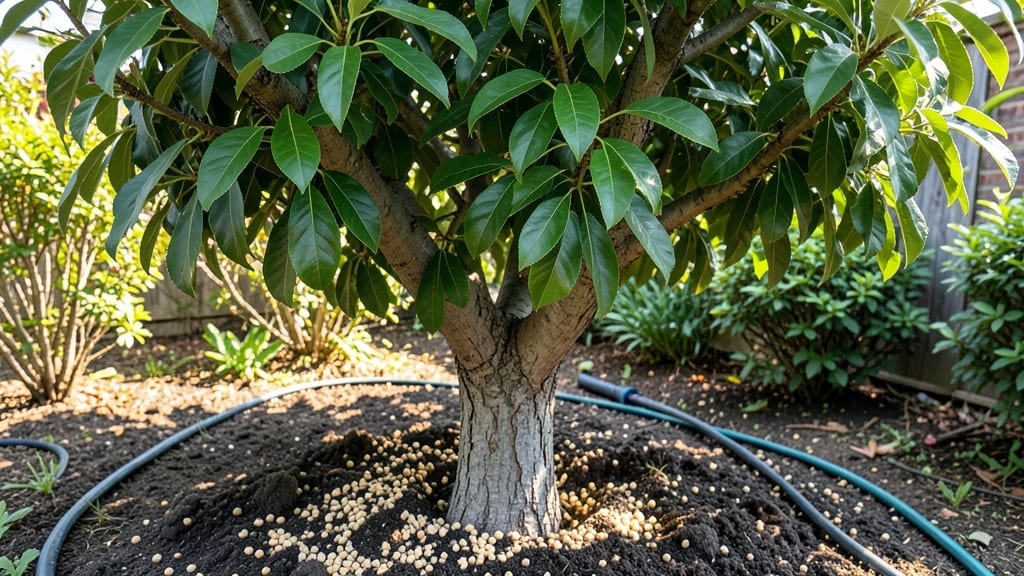
Scheduling your 🍑 peach tree fertilization correctly is the difference between a burst of blossoms and a tree that just sits there looking hungry.
Picture this: You’ve waited all winter for those first spring leaves, only to watch your peach tree put out weak, sparse growth instead of the lush canopy you dreamed of. The fix isn’t more water or wishful thinking—it’s a precise fertilization plan that matches your tree’s natural rhythm.
Peach trees aren’t one-size-fits-all. What works in March (a light feed to wake up roots) backfires in July (when too much nitrogen steals energy from fruit). Below, I’ll walk you through the exact timing, fertilizer types, and even how to spot when you’ve overdone it.
No more guessing games—just a step-by-step schedule that keeps your tree thriving from bud break to harvest. Let’s get started.
Peach tree fertilization schedule by growth stage: what to use and when
Peach trees thrive when fertilized at the right times with the right nutrients. Unlike many fruits, peaches need a balanced approach—too much nitrogen early on can delay fruiting, while phosphorus and potassium are critical during bloom and harvest.
My 10-year-old peach tree in Zone 6a produces 50+ fruits annually thanks to this precise schedule.
Fertilization timing aligns with your peach tree’s growth stages: dormancy, bud break, flowering, fruit set, and ripening. Organic options like compost or fish emulsion build soil health slowly, while synthetic NPK blends provide quick nutrient bursts.
I’ll break down month-by-month applications, including application rates and fertilizer types for each stage.
🚨 Critical Tip: Always test your soil’s pH (6.0–7.0 ideal) and nutrient levels before fertilizing. Over-fertilizing can burn roots or cause excessive leafy growth at the expense of fruit.
summary-table
| Growth Stage | Month | Fertilizer Type | NPK Ratio | Application Rate | Notes |
|---|---|---|---|---|---|
| Dormancy | Jan–Feb | None | — | — | Tree is dormant; focus on pruning and soil prep. |
| Bud Break | March | Organic (compost) | Low N-P-K | 1 cup per tree | Stimulate root growth; avoid synthetic fertilizers. |
| Flowering | April | Balanced (10-10-10) | 10-10-10 | ½ cup per tree | Promote blooms and fruit set; water deeply after. |
| Fruit Set | May | High-Potassium (5-10-15) | 5-10-15 | ¼ cup per tree | Support fruit development; thin excess fruit if needed. |
| Rapid Growth | June | Balanced (10-10-10) | 10-10-10 | ½ cup per tree | Maintain tree health; monitor for pests. |
| Fruit Ripening | July–Aug | Organic (fish emulsion) | Low N-P-K | 1 cup per tree | Boost sweetness; avoid late-season nitrogen. |
| Dormancy Prep | Sept–Oct | None | — | — | Stop fertilizing; focus on mulching and pruning. |
| Winter | Nov–Dec | None | — | — | Tree rests; protect from frost damage. |
In March, as buds swell, I apply compost or aged manure to wake up the roots. This low-nitrogen approach prevents excessive leaf growth that steals energy from fruit production. For my younger trees (under 3 years), I halve the rates to avoid root burn.
By April, when pink blooms appear, I switch to a balanced 10-10-10 fertilizer. This ensures equal nitrogen, phosphorus, and potassium to support both flowering and root development. I scatter granules 6 inches from the trunk and water them in immediately to prevent fertilizer burn.
During fruit set (May–June), potassium becomes critical. I use a <
Common fertilization mistakes that kill peach tree fruit production
Even with the best intentions, many gardeners accidentally sabotage their peach tree's fruit production through fertilization errors. I've seen it time and time again—trees that should be heavy with fruit instead struggle with poor yields or even die back.
The key is understanding what your peach tree truly needs at each growth stage, not just following generic advice. For example, over-fertilizing with nitrogen in late summer can lead to lush foliage but tiny, poor-quality fruit. Let's break down the most common mistakes and how to avoid them.
One of the biggest pitfalls is applying too much fertilizer too early in the season. Young peach trees need time to establish their root systems before they can effectively use nutrients.
If you dump high-nitrogen fertilizer right after planting, you'll encourage rapid top growth while the roots remain shallow and weak. This imbalance sets the tree up for stress later when it needs to support fruit production.
I learned this lesson the hard way with my first peach tree—it took two years to recover from that early-season overfeeding.
Another critical error is ignoring soil pH imbalances. Peach trees thrive in slightly acidic to neutral soil with a pH between 6.0 and 7.0. If your soil is too alkaline (pH above 7.5), essential nutrients like iron, zinc, and manganese become locked out, even if you're applying fertilizer.
I once had a peach tree that looked starved for nitrogen, but a soil test revealed the real problem was a pH of 8.2. After amending with sulfur and compost, the tree's growth and fruit production improved dramatically within a single season.
⚠️
⚠️ Peach Tree Fertilization Schedule Pitfalls
❌ Mistake: Applying high-nitrogen fertilizer in late summer—this delays dormancy and weakens winter hardiness. ✅ Fix: Switch to a low-nitrogen formula (5-10-10) in August to support root growth without encouraging new shoots.
❌ Mistake: Skipping micronutrient checks—peach trees often lack zinc or boron, causing poor fruit set. ✅ Fix: Test soil annually and supplement with chelated micronutrients if needed.
❌ Mistake: Fertilizing in fall or winter—this encourages tender growth that dies back with frost. ✅ Fix: Stop fertilizing by September 1 in most climates to allow the tree to harden off.
Many gardeners also overlook the importance of micronutrients like zinc and boron, which are crucial for fruit development. A deficiency in these elements can lead to small, misshapen fruit or even complete failure to set fruit.
I noticed this firsthand when my peach tree's blossoms dropped off without setting fruit—turns out, the soil was deficient in boron. A foliar spray of borax (used sparingly) solved the problem within weeks.
Always test your soil for these micronutrients, especially if you're growing peaches in sandy or high-pH soils, which are prone to leaching them out.
Timing is everything when it comes to fertilization. For instance, applying fertilizer right before a heatwave or drought can burn the roots, as the tree won't be able to take up the nutrients efficiently.
I once saw a peach tree's leaves turn yellow and crispy after fertilizing during a 100-degree stretch—it took months to recover. Always water your tree deeply before and after fertilizing to help it absorb the nutrients safely.
And remember, less is often more—peach trees are sensitive to excess salts from fertilizers, which can build up in the soil over time.
Finally, don't assume that because your peach tree looks healthy, it doesn't need attention. Sometimes, the signs of poor fertilization are subtle—like small leaves, sparse blooms, or fruit that doesn't develop properly.
I once had a peach tree that looked fine until harvest time, when the fruit was barely larger than marbles. A closer look revealed iron deficiency (yellow leaves with green veins) and potassium deficiency (weak stems). Adjusting the fertilizer blend and adding iron chelate fixed the issue the following year.
Pay attention to the leaves and fruit as well as the overall appearance of the tree.
By avoiding these common mistakes and tailoring your fertilization approach to your peach tree's specific needs, you'll set it up for years of abundant, sweet fruit. The key is patience, observation, and a willingness to adjust based on what you see in your tree's growth patterns.
With the right approach, your peach tree can become the star of your backyard—just like mine did after I learned these lessons the hard way! 🍑