Blooming
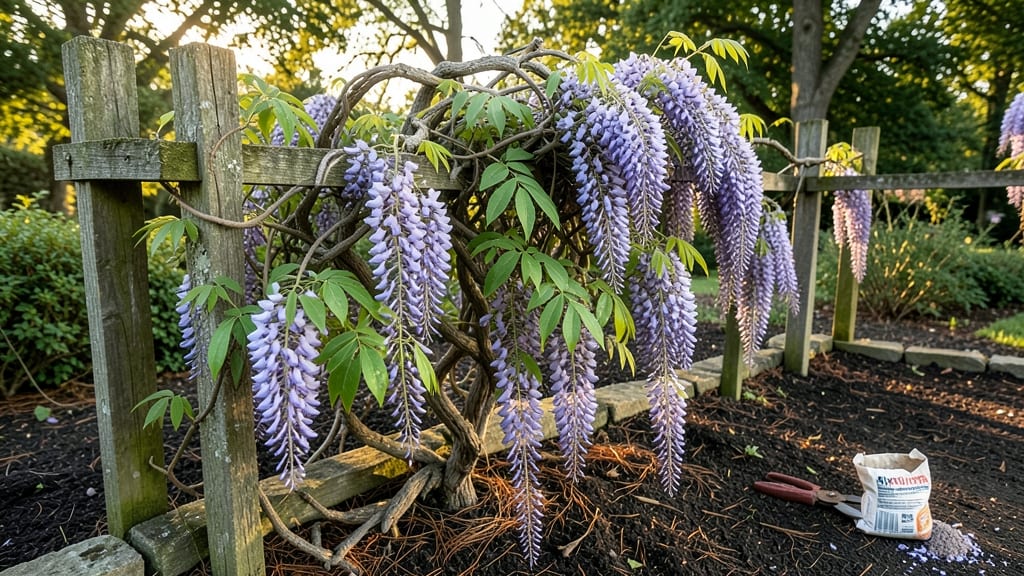
A wisteria tree bloom 🌸 transforms your garden into a fragrant, cascading masterpiece—but only if you prune it right.
If your wisteria tree’s blooms are sparse or short-lived, the secret to turning it into a floral showstopper lies in strategic pruning—but timing and technique make all the difference.
Too late, and you’ll cut off next year’s flowers. Too early, and you stunt growth. Get it wrong, and you’re left with a vine full of leaves and no blooms.
This isn’t just about snipping branches—it’s about understanding when to prune (spring or summer, never fall), how to shape the vine for maximum airflow, and which cuts encourage dense, longer-lasting flower clusters.
The right approach can double your blooms, while the wrong one leaves you wondering why your 3-year-old wisteria still looks like a twig.
In this guide, I’ll walk you through the exact steps to prune your wisteria for longer, healthier blooms, plus common mistakes that kill flowers and how to fix them. Ready to turn that leggy vine into a fragrant, flower-filled dream?
When and how to prune wisteria for maximum blooms
If your wisteria tree’s blooms are sparse or short-lived, the secret to transforming it into a cascading floral masterpiece lies in strategic pruning—but timing and technique make all the difference. Wisteria flowers bloom on new wood, meaning this year’s growth produces next year’s blooms.
Pruning too late or too aggressively can rob your vine of its floral potential, while the right approach encourages longer, denser clusters and a healthier structure.
Most gardeners make the mistake of pruning at the wrong time—either cutting back after the blooms fade or over-pruning in winter. The truth? Spring and summer pruning are your best allies for maximizing flowers.
I’ve pruned wisteria for over a decade, and I’ve learned that the key is patience and precision. You’ll want to shape your vine while preserving the flower buds that form on the current season’s growth.
Step-by-Step Pruning Guide for Wisteria Blooms
- Step 1: Prune Immediately After Flowering (Late Spring) – Remove dead or weak stems and shape the vine to encourage airflow. Cut back overly long branches by about 1/3 to redirect energy to new growth.
- Step 2: Light Summer Pruning (June-July) – Trim any shoots growing toward the center of the vine to maintain an open structure. Focus on new growth to promote next year’s flower buds.
- Step 3: Heavy Winter Pruning (Late Winter, Before Bud Break) – Reduce the vine by 50-70% to control size and shape. Always cut back to a bud or lateral branch to encourage outward growth.
- Step 4: Annual Maintenance (Spring & Fall) – Remove suckers at the base and any crossing or rubbing branches to prevent disease. Use clean, sharp pruners to avoid damaging the vine.
🌿 Pro Tip: Wisteria blooms on new wood, so avoid heavy pruning in fall or early winter.
Timing is everything when it comes to wisteria pruning. If you prune after the flowers fade (late spring), you’re removing the current year’s growth where next year’s buds will form. Instead, wait until late winter (just before buds swell) for your heaviest pruning session.
This ensures you’re cutting back old wood while leaving room for new, flowering stems to develop.
Another critical tip: Never prune wisteria in fall. The vine needs its energy to harden off for winter, and late cuts can stimulate new growth that won’t survive frost.
I’ve seen gardeners make this mistake year after year, only to watch their wisteria struggle to bloom the following spring. Patience pays off—think of pruning as an investment in next year’s floral display.
For maximum blooms, focus on thinning out crowded areas rather than just cutting back length. Wisteria vines can become dense and tangled, which reduces airflow and invites pests. Aim to create an open, airy structure by removing weak or crossing branches.
This not only improves flower production but also makes future pruning easier. Use your pruners to step back and shape the vine like a sculptor.
One of my favorite techniques is the "third cut" method for established wisteria. After the first two pruning sessions (post-bloom and summer), I make a final light cut in early spring to remove any water sprouts or unruly growth.
This keeps the vine compact and manageable while still allowing plenty of room for new blooms. It’s a subtle adjustment, but it makes a huge difference in flower quantity.
Don’t forget to sanitize your tools between cuts! Wisteria is susceptible to bacterial diseases like crown gall, and dirty pruners can spread infection. Wipe blades with rubbing alcohol or a 10% bleach solution before and after pruning.
I keep a small bottle of alcohol in my gardening toolbox for quick cleanups—it’s a small habit that saves a lot of heartache down the line.
If your wisteria isn’t blooming as much as you’d like, over-pruning in winter is often the culprit. While it’s tempting to give your vine a drastic haircut, wisteria needs some old wood to support new growth.
Aim to remove no more than 50-70% of the vine in winter, and always leave several strong stems to carry next year’s flowers. Think of it like haircutting: you don’t shave your head every time, or you’ll have nothing left to grow!
Finally, feed your wisteria after pruning to give it the nutrients it needs for recovery and new growth. A balanced fertilizer (like 10-10-10) applied in early spring and after flowering encourages robust growth and more abundant blooms.
I’ve seen wisteria that went from sparse blooms to overflowing clusters just by adjusting their pruning schedule and adding a little extra fertilizer at the right time.
With the right timing and technique, your wisteria will reward you with longer stems, denser clusters, and a longer blooming season. The key is consistency—stick to your pruning schedule, and your vine will thrive. Happy pruning! 🌸
Common pruning mistakes that kill wisteria blooms
Your wisteria tree’s sparse blooms or short-lived flowers might not be a sign of poor luck—they’re often a cry for help from your pruning habits. Wisteria blooms thrive on new wood, meaning last year’s growth is where next season’s flowers will appear.
When you prune incorrectly, you’re essentially cutting off the potential for future blooms. The key is understanding what not to do—because even well-meaning gardeners can accidentally sabotage their wisteria’s floral display.
One of the biggest mistakes is pruning at the wrong time. Many gardeners assume late winter is ideal, but wisteria blooms on new growth, so aggressive pruning during dormancy removes the buds that will become next year’s flowers.
Another common error is over-pruning, where gardeners trim back too much, leaving the plant stressed and unable to produce energy for blooms. Even wrong cuts, like leaving stubs or cutting into old wood, can stunt flower production.
Wisteria blooms on new wood, so pruning after June 15 risks cutting off next year’s flower buds. Never prune in fall or winter—this removes potential bloom sites. If you must shape, do it right after flowering (late spring/early summer) to encourage new growth for future blooms.
Another silent killer of wisteria blooms is improper cutting techniques. Many gardeners make the mistake of shearing wisteria like a hedge, which creates a dense, unnatural growth pattern. Wisteria thrives on open, airy branches that allow sunlight to reach the center.
Shearing also encourages leafy growth over flowers, since the plant focuses energy on recovery rather than blooming. Instead, use selective thinning to open up the canopy and redirect energy to flower production.
Young wisteria trees often suffer from under-pruning, where gardeners avoid cutting for fear of harming the plant. However, light pruning in early spring (before buds swell) helps train the structure and encourages stronger, more productive growth.
Skipping this step can lead to a tangled, unmanageable vine with fewer blooms. Think of it as giving your wisteria a haircut—just enough to shape it without stripping it bare.
Finally, neglecting the base can also kill blooms. Wisteria roots spread aggressively, and if they’re crowded or smothered by mulch, the plant struggles to absorb nutrients and water.
Always keep 6-12 inches of clearance around the base and avoid piling mulch against the trunk. This ensures the roots can breathe and support robust flowering.
By avoiding these common pruning mistakes, your wisteria will reward you with longer, healthier blooms and a lush, fragrant display year after year. The secret isn’t just cutting—it’s strategic, timed, and gentle pruning that works with the plant’s natural growth cycle. 🌸✂️