Blooming
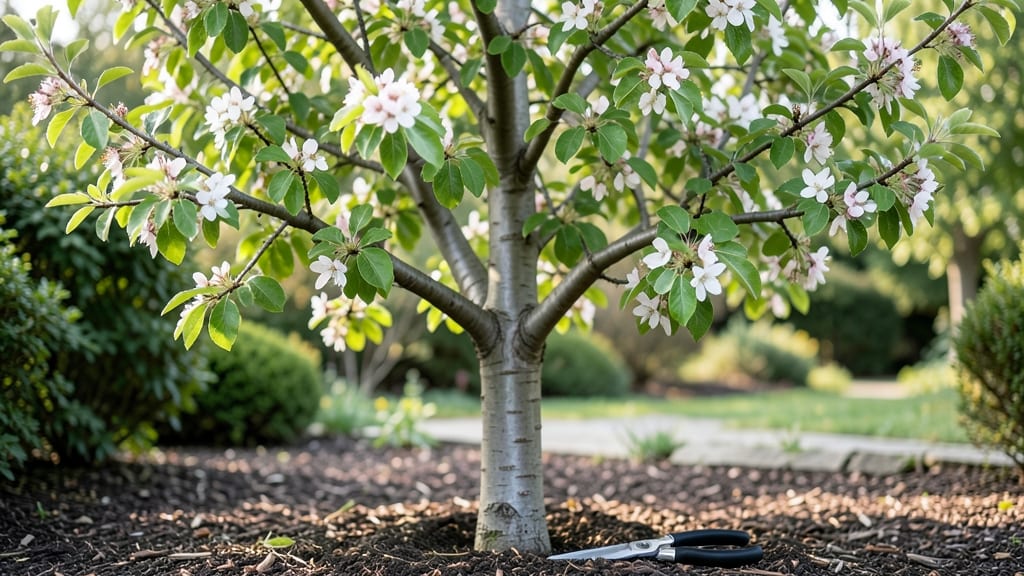
Pear trees flower in late winter to early spring, typically between February and April, with blooming time varying by variety and climate zone. Cold dormancy requirements trigger bud break, ensuring optimal pollination for fruit production.
Understanding when pear trees flower helps gardeners plan for pollination and fruit production.
The blooming window depends heavily on your region's chill hours—most varieties need 500-1,000 hours below 45°F during winter to break dormancy. 🌸 For example, early-blooming cultivars like Bartlett often open buds in late February, while late varieties such as Anjou may wait until April.
This timing difference affects harvest schedules and pollinator availability, so choosing the right varieties for your climate zone is key to maximizing fruit yield.
Climate plays a critical role beyond just temperature. Warmer winter regions might see delayed blooming, while northern zones may experience earlier bud break due to shorter daylight. This variability means gardeners in USDA Zones 5-8 should monitor local frost dates to protect blossoms, which are highly sensitive to late freezes.
Planning for staggered blooming varieties can also help mitigate risks from unpredictable weather patterns.
💡 In This Article
- Factors Affecting Pear Tree Bloom Timing
- Best Pear Varieties for Early or Late Flowering
Factors affecting pear tree bloom timing
Here's what's actually happening during winter dormancy: pear trees undergo a biological process called endodormancy, where metabolic activity slows dramatically to survive freezing temperatures. This state is triggered by consistent exposure to cold, typically 32-45°F for extended periods.
The key factor is chill hours—most commercial varieties require between 500-1,000 hours below 45°F to satisfy their dormancy requirements. Without enough chill hours, buds may fail to open properly or produce weak flowers that won't set fruit effectively.
Climate zones play a crucial role in this timing. Trees in USDA Zone 5 (like Minnesota) often bloom earlier—sometimes as early as late February—because their winters provide ample chill hours. In contrast, Zone 8 regions (like Southern California) may see delayed blooming until March or April due to milder winters.
What most people don't realize is that even within a zone, microclimates can shift bloom windows by 1-2 weeks. For instance, a tree in a sheltered valley might bloom 7-10 days earlier than one on a wind-exposed hillside.
The science behind this involves hormonal changes. As chill hours accumulate, the tree's buds produce higher levels of gibberellins and auxins, hormones that signal the transition from dormancy to active growth. This process is temperature-dependent—buds won't respond until they've received sufficient cold exposure.
For example, Bartlett pears, which bloom early, typically need around 600 chill hours, while Anjou pears may require 800+ hours. This explains why Anjou trees often bloom later in the season.
Variety-specific traits also create significant variations. Early bloomers like Seckel pears prioritize quick bud break to capitalize on early spring pollinators, while late bloomers such as Bosc delay flowering to reduce frost damage risks.
Some modern cultivars are even bred for partial chill requirements, making them suitable for warmer climates where traditional varieties would struggle. This adaptability allows gardeners in Zone 9 to grow pears at all, despite historically limited chill hours.
Another critical factor is the interaction between temperature and daylight. Pear trees are short-day plants, meaning they respond to decreasing daylight hours in late fall. However, the actual bloom trigger comes from the cumulative chill hours rather than just daylight length.
This is why you might see two trees of the same variety bloom at different times in the same yard—one might have been exposed to more consistent cold snaps, while the other experienced warmer spells that interrupted chill accumulation.
Understanding these factors helps gardeners make informed choices. For example, pairing an early bloomer like Moonglow (which needs 500 chill hours) with a late bloomer like Kieffer (requiring 700+ hours) can create a staggered harvest window.
This strategy not only extends your fruit-picking season but also increases the chances of successful pollination, as different varieties often have compatible bloom periods. 🌿