Planting
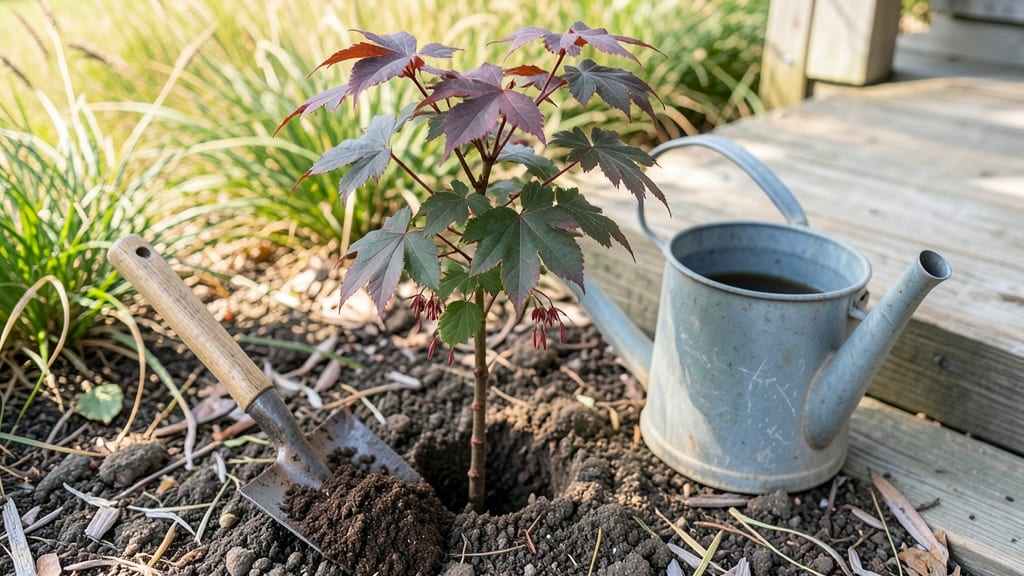
Tree transplant shock recovery time varies by species, size, and care but typically spans 4 weeks to 2 years, with critical early stages (first 2–4 weeks) being most vulnerable. Proper watering, mulching, and pruning accelerate healing while minimizing stress factors like over-fertilization or root disturbance.
The first 2–4 weeks after transplanting are the most critical—this is when trees experience acute shock as their root systems struggle to absorb water efficiently. 🌳 During this phase, even well-established trees can wilt or drop leaves if not cared for properly.
The good news is that with consistent moisture and proper support, most trees begin showing signs of recovery within 4–8 weeks, though larger specimens may take months to fully stabilize.
Recovery duration also depends on the species: fast-growing trees like willows often bounce back in 8–12 weeks, while slow-growing oaks may need 1–2 years to fully regenerate their root systems.
The key is mimicking natural conditions—mulching helps retain moisture, while strategic pruning reduces stress on the canopy during the most vulnerable period.
💡 In This Article
- Tree Transplant Shock Phases Explained
- Speeding Up Tree Recovery After Transplanting
Tree transplant shock phases explained
When you transplant a tree, it enters a three-phase recovery process that begins with acute shock—a physiological crisis where the root system's ability to transport water and nutrients is severely disrupted.
This stage lasts 1-4 weeks and is marked by xylem blockages (air pockets forming in the water-conducting vessels), which can cause wilting even if soil moisture appears adequate.
The tree's hormonal balance shifts dramatically, with ethylene levels spiking—a stress hormone that triggers leaf drop as the plant prioritizes root recovery over foliage maintenance. 🌱
During acute shock, roots lose 50-70% of their fine root tips during excavation, which are the most active absorptive zones. These delicate roots take 4-8 weeks to regenerate, and without proper care, the tree may develop hydraulic failure—a condition where water transport stalls completely.
Environmental factors like soil temperature below 50°F or above 90°F exacerbate this phase, as root respiration slows dramatically in cold and overheats in extreme heat, both impairing recovery.
The second phase, adaptation, spans 4-12 weeks and is where new root growth begins.
Here's what's actually happening: the tree initiates secondary root development from remaining root collars, while mycorrhizal fungi (beneficial soil microbes) form symbiotic relationships with the roots, boosting water and nutrient uptake by up to 80%.
You'll notice new shoots emerging as the tree redirects energy from survival mode to regrowth. This phase is most sensitive to over-fertilization, which can burn delicate new roots—think of it as giving a recovering athlete protein shakes too soon.
Full recovery occurs in the third phase, lasting 6 months to 2 years for mature trees, as the root system rebuilds to 80-90% of its original capacity. The key physiological marker is when the tree's photosynthetic rate stabilizes, indicating restored water transport efficiency.
Evergreens like pines may take longer (1.5-2 years) because their needle foliage maintains high transpiration demands year-round, while deciduous trees like maples often recover faster (6-12 months) as they enter dormancy periods. 🌿
What most people don't realize is how seasonal timing affects these phases.
Transplanting in early spring (when soil temperatures reach 55°F) gives roots 8-12 weeks of warm-season growth to recover before winter dormancy, while fall transplants (6-8 weeks before first frost) allow roots to establish before cold stress sets in.
The science behind this involves cambial activity—the tree's growth layer—which is most active when soil temperatures are consistently between 60-75°F.
Consider these critical factors that influence each phase:
- Acute Shock: Root disturbance (excavation depth) and watering frequency (daily deep watering vs. shallow sprinkling)
- Adaptation: Mulch depth (3-4 inches of organic mulch) and pruning strategy (removing no more than 25% of canopy)
- Full Recovery: Soil aeration (avoiding compaction) and nutrient balance (avoiding high nitrogen early on)
The most common mistake gardeners make is assuming visible leaf regrowth means full recovery—this often only signals completion of the adaptation phase. True recovery requires root biomass restoration, which can't be seen above ground.
For example, a 10-year-old oak might look healthy after 6 months but may still have 30% reduced root density until 18 months post-transplant. 🌳