Diseases
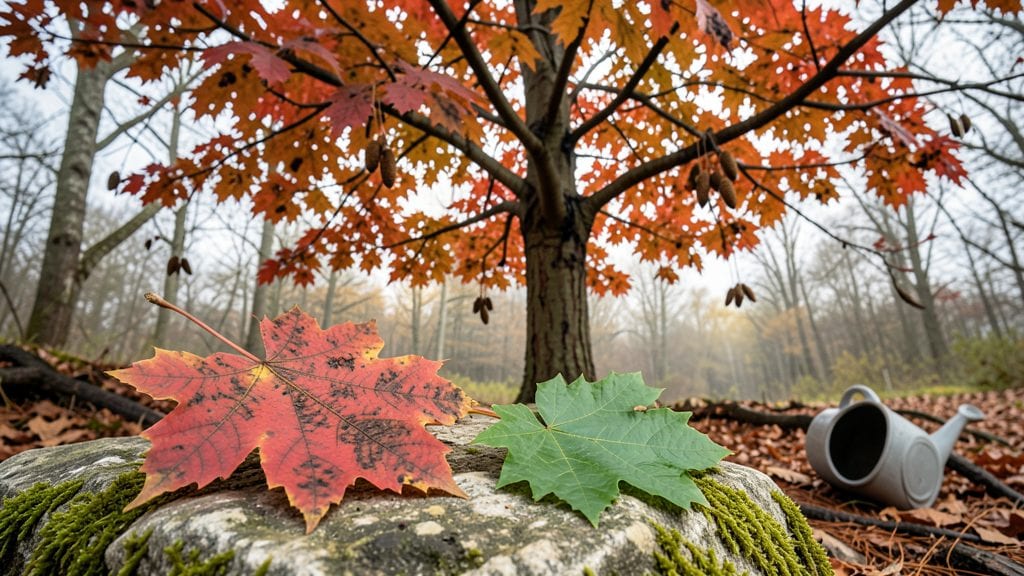
One of the most destructive maple tree diseases, anthracnose, isn’t just ugly—it’s the reason your tree’s leaves turn into brown lace curtains by summer. 🌿 I’ve seen this fungus strip a healthy sugar maple of its canopy in just two seasons, and the good news is you can stop it before it spreads.
The key lies in catching those first tiny black spots early, when a few sprays and some smart pruning can save your tree.
This fungus thrives in wet springs, but it doesn’t need a downpour—just lingering dampness on leaves. The moment you see those speckled, sunken patches or twigs with black streaks, you’re already behind.
My first mistake was waiting until the leaves were half-dead; now I check trees in April and treat at the first sign of trouble. Organic options like copper fungicide or neem oil work, but timing matters more than the spray itself.
You’ll see new green leaves by midsummer if you act fast, and the tree will bounce back stronger. The secret isn’t just spraying—it’s cleaning up fallen leaves, pruning infected branches (sterilize your tools!), and giving the canopy room to dry out.
Even old, established trees respond well when you combine prevention with quick action.
Works for sugar, red, and silver maples alike, though silver maples get hit harder. The difference between a skeleton tree and a thriving one? Knowing when to spray, how to prune, and what to watch for next spring. Let’s get your maple back to full, vibrant life.
Fungal Pathogens Behind The Problem
Anthracnose in maple trees is primarily triggered by three key fungal culprits, each with distinct behaviors and environmental triggers. Understanding why these pathogens take hold helps you prevent outbreaks before they devastate your trees. Here’s the science behind the spread:
Anthracnose thrives in dense, poorly ventilated foliage—a common issue in maple trees with thick, overlapping branches. The fungus Apiognomonia veneta (the primary cause) spreads via splashing rain or wind, but it latches onto leaves and twigs where moisture lingers.
Why it happens:
- Limited airflow: Stagnant air traps humidity, keeping spores damp for days. Maple leaves are thin and delicate, making them ideal fungal "landing pads."
- Wet foliage: Rain or dew lasting more than 9–12 hours activates spores. The fungus produces pinkish spore masses on undersides of leaves, which then spread to new growth.
- Nutrient stress: Trees under drought or poor soil health produce weaker leaves, making them more susceptible to infection.
💡 Pro Tip: Prune in late winter to open the canopy and improve airflow. Remove 30–50% of lower branches to reduce humidity hotspots.
The fungus Gloeosporium (another anthracnose strain) lies dormant in fallen leaves and bark debris until triggered by:
| Factor | Why It Matters | Actionable Fix |
|---|---|---|
| 🌧️ Prolonged leaf wetness | Spores germinate in 48–72 hours of moisture. Ideal conditions: 60–90°F and 90%+ humidity. | Install drip irrigation (avoids leaf wetting) or use fungicide sprays before rain. |
| 🍃 Leaf litter buildup | Infected debris releases spores for 2+ years. Maple trees are especially vulnerable if mulch piles up against trunks. | Rake and compost or burn fallen leaves in fall. Keep mulch 3–4 inches deep. |
| 🌡️ Cool, wet springs | Anthracnose peaks in April–May when temps hover around 50–70°F with frequent rain. | Monitor forecasts and apply copper fungicide at first sign of leaf spotting. |
Healthy maple trees resist anthracnose, but stress from poor care makes them prime targets. Common stressors:
- ⚡ Compaction or poor drainage: Roots suffocate, weakening the tree’s defenses. Anthracnose exploits this by rapidly colonizing stressed tissue.
- ✂️ Improper pruning: Cutting too late in the season (after June) leaves fresh wounds vulnerable to fungal entry.
- 🍄 Competitive fungi/bacteria: Maple trees often host Verticillium wilt or canker diseases, which compromise immunity and make anthracnose worse.
🔥 Key Insight: A single anthracnose outbreak can reduce photosynthesis by 30–50% if left unchecked. Early intervention (like neem oil sprays) can halt spread before the tree’s health spirals.
Next up: Learn how to spot anthracnose before it turns your maple’s leaves into a fungal buffet. 🍁🛡️
Fixing Anthracnose in Maple Trees
Anthracnose may sound intimidating, but with the right approach, you can restore your maple tree’s health—naturally and effectively. Below are targeted solutions for each stage of infection, paired with prevention tips to keep your tree thriving long-term.
If you catch the disease early (small brown spots, yellowing leaves, or minor leaf curling), act fast to prevent further damage.
🔥 Prune Infected Leaves and Branches
- How to do it: Use sterilized pruners (wipe with rubbing alcohol or a 10% bleach solution) to remove all infected leaves, twigs, and branches—even if they look just slightly off.
Dispose of them in a sealed trash bag (do not compost). - When to prune: Early spring (before buds swell) or late fall (after leaves drop).
Avoid pruning during wet weather to prevent spores from spreading. - Pro tip: 💡 Focus on lower branches first, as moisture lingers there longer.
🍳 Apply Organic Fungicides
- Best options:
- Neem oil (1% solution): Spray on both sides of leaves and stems.
Reapply every 7–10 days until new growth appears. - Baking soda spray (1 tsp baking soda + 1 quart water + a few drops of dish soap): Safe, cheap, and effective for mild cases. - Copper fungicide (organic-certified): Use only as a last resort—it’s strong but can harm soil microbes if overused. - When to apply: Early morning or late evening to avoid leaf burn.
Cover the entire tree, including the ground beneath it.
🌡️ Improve Airflow and Reduce Moisture
- Thin out dense branches to allow sunlight and air to circulate.
- Rake up fallen leaves regularly to prevent spore buildup.
- Water at the base (not overhead) and avoid late-day watering to let foliage dry quickly.
If your maple tree has large dead patches, defoliation, or cankers, it needs aggressive treatment.
👨🍳 Deep Cleaning and Soil Health
- Remove all debris: Clear fallen leaves, twigs, and mulch within a 10-foot radius of the tree.
Burn or bag them (do not compost). - Aerate the soil: If compacted, use a garden fork to loosen the top 6 inches to improve drainage. - Add organic matter: Mix compost or well-rotted manure into the soil to boost the tree’s immunity.
🔪 Surgical Pruning for Cankers
- Identify cankers: Look for sunken, discolored patches on branches or the trunk.
- Prune 6–12 inches beyond the canker using sterilized tools.
Seal the cut with pruning paint (optional but helpful for large wounds). - Warning: ⚠️ If multiple cankers appear on the trunk, consult an arborist—your tree may be beyond organic salvage.
🥘 Strengthen the Tree’s Defenses
- Fertilize with organic nutrients: Use a balanced organic fertilizer (like fish emulsion or kelp meal) in early spring to support new growth.
- Beneficial microbes: Apply mycorrhizal fungi or Trichoderma (a natural fungus-fighter) to the root zone.
- Mulch properly: Use 2–4 inches of wood chips, keeping it 6 inches away from the trunk to prevent rot.
The best cure? Stopping it before it starts. Follow these habits to protect your maple tree year-round.
🌡️ Seasonal Care Calendar
| Season | Task | Why It Works |
|---|---|---|
| Early Spring | Prune before buds swell + apply neem oil | Removes overwintering spores and strengthens new growth. |
| Late Spring | Monitor daily for new spots + reapply fungicide if needed | Catches outbreaks early when leaves are most vulnerable. |
| Summer | Water deeply but infrequently + mulch | Reduces leaf wetness and soil-borne spores. |
| Fall | Rake and remove ALL leaves + prune weak branches | Eliminates spore sources before winter. |
| Winter | Inspect bark for cankers + avoid heavy mulch | Prevents moisture buildup that fuels spores. |
🎯 Pro Tips for Resilient Maple Trees
- Choose resistant varieties: If replanting, opt for Norway maples (more resistant than silver or red maples).
- Avoid overhead irrigation: Use drip systems or soaker hoses to keep leaves dry.
- Test your soil: If pH is below 6.0, amend with lime—anthracnose thrives in acidic conditions.
- Plant companions wisely: Avoid dense shrubs near your maple, as they trap moisture.
Final Note: 🌟 With consistent care, most maple trees fully recover from anthracnose within 1–2 seasons. The key is speed—act at the first sign of trouble, and your tree will bounce back stronger than ever!
Frequently asked questions about maple tree anthracnose
What do anthracnose spots look like on maple leaves?
Anthracnose spots start as tiny, dark brown or black specks with yellow halos around them. As they grow, they develop concentric rings and may merge into larger, irregular patches. Check the leaf undersides too—you’ll often see pinkish spore masses in severe cases.
Can anthracnose kill my maple tree?
While anthracnose rarely kills mature maples outright, it can cause severe defoliation that weakens the tree over time. Repeated outbreaks may lead to twig dieback or even trunk cankers in extreme cases. The good news? Early treatment with neem oil or copper fungicide can stop it before major damage occurs.
How often should I spray fungicide for prevention?
For prevention, apply fungicide every 7–14 days during spring leaf-out (April–May) when conditions are most favorable for spores. If your tree already shows signs, switch to weekly applications until new growth appears. Always spray early morning or late evening to avoid leaf burn.
Is anthracnose contagious to other trees?
Yes, anthracnose spores can spread to nearby shade trees like oaks, elms, and other maples through wind or water splash. The fungus survives in fallen leaves and debris, so always remove and dispose of infected plant material. Keep a 3-foot clearance between susceptible trees to improve airflow.
Why does my maple get anthracnose every year?
Recurring anthracnose usually means spores persist in your yard from last year’s fallen leaves or poor airflow around the tree. To break the cycle:
- Rake and remove all leaves in fall,
- Prune to improve circulation, and
- Apply preventive fungicide before buds swell. A soil test can also reveal if acidity (pH <6.0) is making your tree more vulnerable.