Fertilization
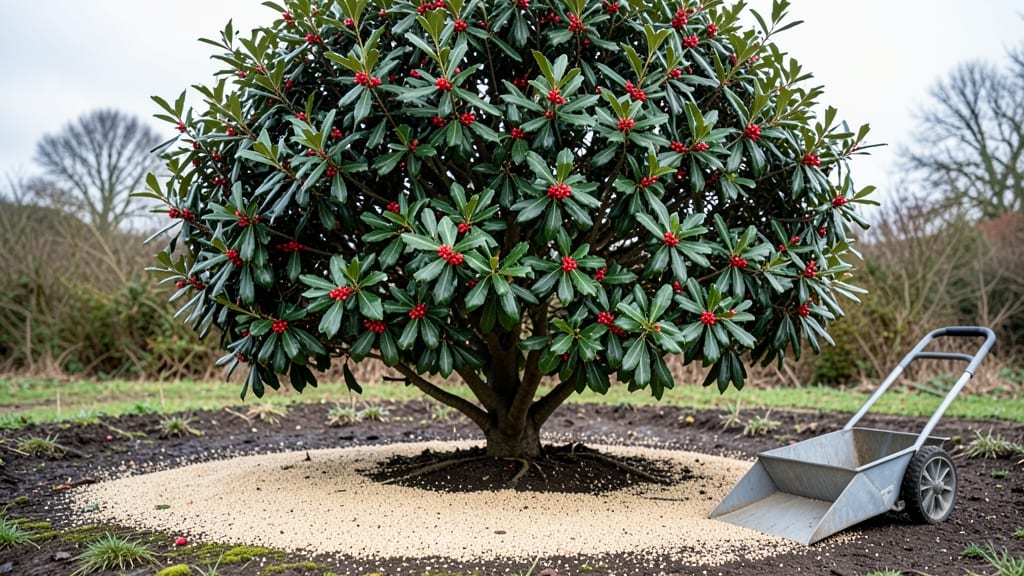
The right holly tree fertilizer—packed with nitrogen, phosphorus, and potassium—is the key to unlocking those lush leaves and vibrant red berries you’ve always admired.
Struggling to keep your holly tree lush and thriving? The right nitrogen-phosphorus-potassium (NPK) fertilizer can transform its growth—from sparse branches to vibrant, berry-laden foliage—but choosing the wrong blend can do more harm than good.
Holly trees thrive in acidic soil with a balanced NPK ratio, like 10-10-10, but too much nitrogen can burn roots, while too little phosphorus stunts berry production. The key is timing: feed in early spring and after planting, then light applications in summer.
In this guide, I’ll break down the best organic and synthetic fertilizers, how to avoid common mistakes, and the signs your holly tree is either starving or drowning in nutrients.

Optimal nitrogen-phosphorus-potassium ratios for holly tree growth
Holly trees thrive with precise NPK ratios, but their needs shift dramatically from seedlings to mature trees producing berries. A 10-10-10 balanced fertilizer is a safe starting point, but holly trees—especially those bearing fruit—often demand higher phosphorus for root development and moderate potassium for disease resistance.
The key lies in adjusting ratios based on your tree’s growth stage and soil acidity, which holly trees prefer between pH 4.5-6.0.
For newly planted holly seedlings, focus on root establishment with a 5-10-10 ratio. This lower nitrogen content prevents top-heavy growth while phosphorus and potassium strengthen roots. Mature holly trees, particularly those producing berries, benefit from a 7-9-7 ratio to support flowering and fruiting.
Over time, I’ve seen holly trees with dense foliage and abundant berries when fertilized with these tailored ratios during their active growing seasons.
Soil type plays a crucial role too. In sandy soils, which drain quickly, holly trees need more frequent fertilization (every 4-6 weeks) with a 10-10-10 blend to maintain nutrient levels. Conversely, clay soils retain nutrients longer, so a 5-10-5 ratio applied bi-annually (spring and fall) suffices.
Always conduct a soil test before committing to a fertilization schedule—this ensures you’re not overloading your holly with unnecessary salts or pH imbalances.
Here’s a quick reference for holly tree NPK needs at different stages, tailored to soil types and growth goals:
Timing your fertilizer applications is just as critical as the ratios themselves. For spring fertilization (March-April), use a balanced 10-10-10 to kickstart growth after dormancy. In early summer (June), switch to a lower-nitrogen blend like 5-10-10 to encourage root growth over leafy top growth.
Avoid fertilizing in late summer or fall, as this can stimulate new growth that won’t harden off before winter, leaving your holly vulnerable to freeze damage.
When applying fertilizer, always water deeply before and after to prevent root burn. I recommend using a slow-release fertilizer for holly trees, as it mimics natural nutrient availability and reduces the risk of over-fertilization
Best organic vs synthetic fertilizers for holly trees
Choosing the right fertilizer for holly trees can make the difference between sparse, dull foliage and a lush, berry-producing powerhouse. Holly trees thrive on acidic soil with a balanced NPK ratio, but the debate between organic vs synthetic fertilizers often leaves gardeners confused.
Both options have unique benefits, and your choice depends on your priorities—whether it's long-term soil health, immediate growth, or environmental sustainability.
Organic fertilizers like compost, bone meal, and fish emulsion feed holly trees gradually, improving soil structure and microbial life over time. On the other hand, synthetic fertilizers—such as granular or slow-release blends—provide quick, precise nutrition but can disrupt soil ecology if overused.
Let’s break down the pros and cons to help you decide which aligns best with your holly tree’s needs.
Organic Fertilizers for Holly Trees
- Improves soil health over time
- Slow-release nutrients reduce burn risk
- Supports microbial activity in roots
- Environmentally friendly and sustainable
- Slower growth results compared to synthetics
- Requires frequent reapplication for consistent results
- May contain weeds/seeds if not properly composted
- Higher upfront cost for quality organic blends
Synthetic Fertilizers for Holly Trees
- Fast-acting nutrient delivery for quick growth
- Precise NPK ratios tailored to holly needs
- Long-lasting slow-release options available
- Lower application frequency for convenience
- Can burn roots if overapplied
- Disrupts soil microbial balance over time
- Environmental runoff risk if not used carefully
- Less soil structure improvement than organics
For young holly trees or those planted in poor soil, I recommend starting with a mix of both. Use organic compost in the planting hole to build a healthy foundation, then top-dress with a balanced synthetic fertilizer (like 10-10-10) in early spring.
This combo gives your holly the best of both worlds: immediate nutrition and long-term soil health.
If you’re committed to 100% organic gardening, focus on acid-loving plant fertilizers like cottonseed meal or pine bark fines. These boost phosphorus and nitrogen while keeping the soil pH in the ideal 4.5–6.0 range for holly trees.
Just remember to reapply every 6–8 weeks during the growing season for consistent results.
Synthetic fertilizers shine when you need rapid growth, such as after transplanting or if your holly’s foliage looks pale and sparse. Look for slow-release granules labeled for acid-loving plants, and always follow the application rate to avoid over-fertilizing.
A little goes a long way—holly trees are sensitive to salt buildup from synthetic fertilizers.
Environmental impact is another key factor. Organic fertilizers decompose naturally and feed beneficial soil organisms, while synthetics can leach into groundwater if overused. If sustainability is your goal, prioritize composted manure or worm castings, but always test your soil’s pH first—holly trees hate alkaline soil.