Watering
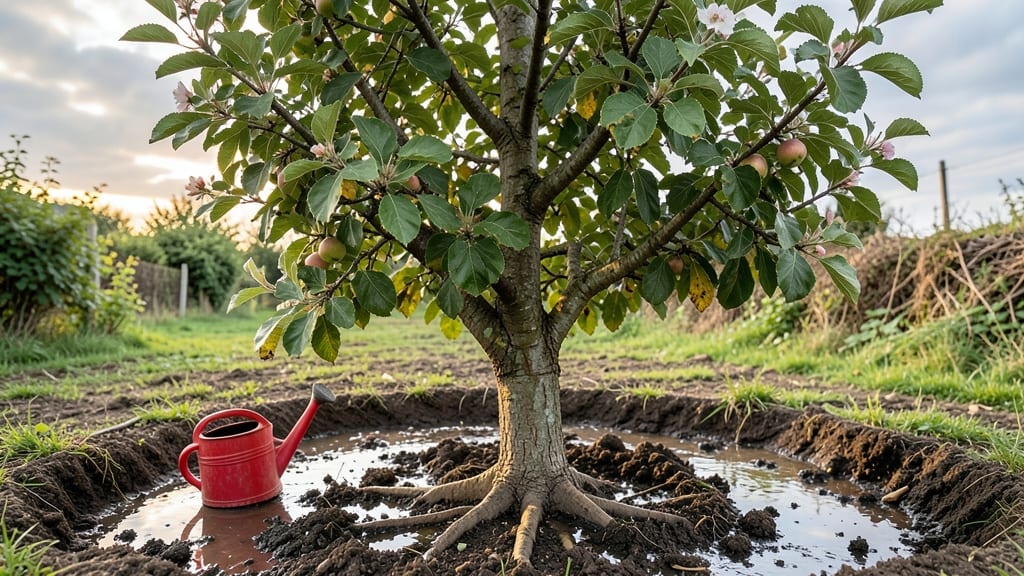
Your apple tree’s yellowing leaves and soggy roots from apple tree overwatering aren’t a death sentence—this is a root rot rescue you can handle in just three straightforward steps. 🌱 I’ve pulled back two trees from the brink by cutting water, fixing drainage, and pruning the damage, and you can too.
The key isn’t guesswork—it’s checking soil moisture, aerating compacted roots, and giving your tree room to breathe again.
Overwatering happens when roots suffocate in wet soil, starving for oxygen. You’ll spot it in wilting despite damp ground, mushrooms sprouting at the base, or leaves turning yellow while staying attached.
Most gardeners overcorrect by watering less, but the real fix starts with amending the soil—adding gritty materials like perlite or coarse sand to break up clay. A simple soil test tells you exactly what your tree’s roots need to recover.
Within weeks, you’ll see new green growth as roots reclaim their strength. The tree won’t just survive—it’ll rebound with stronger branches and better fruit production next season.
Start with a shovel and some gravel, and watch your apple tree come back to life. The worst part is already behind you.
This works for young saplings and mature trees alike, though larger roots may need deeper drainage adjustments. Once you’ve fixed the immediate crisis, a mulch layer keeps moisture steady without smothering roots. Your tree’s future starts with these simple corrections—no fancy tools required.
The Hidden Triggers Behind Wet Roots
Overwatering an apple tree isn’t just about giving it too much water—it’s often a cascade of unseen factors that create the perfect storm for root stress. Understanding these triggers can help you adjust your watering habits before root rot sets in.
Let’s break down the most common causes, backed by science and practical insights.
Apple trees thrive in well-draining soil, but many gardeners unknowingly plant them in heavy clay or compacted ground. When water can’t escape, it pools around the roots, suffocating them. Here’s why it happens:
- Clay Soil: Tiny particles pack tightly, creating air pockets that fill with water instead of oxygen. A simple percolation test—digging a 6-inch hole, filling it with water, and timing how long it drains—can reveal if your soil is guilty. If it takes more than 6 hours, drainage is poor. 💡 Fix: Amend with compost or sand to loosen the soil.
- Compacted Ground: Foot traffic, construction, or machinery can compress soil, reducing pore space. Roots struggle to absorb oxygen, making them vulnerable to rot. Fix: Aerate the soil annually with a garden fork or till in organic matter.
- Low-Grade Slopes: Even a slight incline can cause water to pool at the tree’s base. Fix: Create a slight berm (raised mound) around the trunk to redirect water away.
Apple trees don’t need daily drinks—most varieties prefer deep, infrequent watering. Yet, many gardeners fall into the trap of light, frequent watering, which mimics a swampy environment. Here’s the science:
- Surface-Level Watering: Light watering (e.g., a sprinkle every day) keeps the topsoil wet but leaves deeper roots thirsty. This encourages shallow root growth, which is more prone to rot. Fix: Water deeply (1–2 inches per week) but less often, ensuring moisture reaches 6–12 inches down.
- Ignoring Weather Patterns: Rainy seasons or humid climates can make soil retain moisture longer than expected. Overwatering on top of natural rainfall doubles the risk of root suffocation. Fix: Check soil moisture with your finger—if the top 2 inches are damp, skip watering.
- Automatic Irrigation Mishaps: Drip systems or sprinklers left on timers can deliver excess water, especially if they’re poorly calibrated. Fix: Adjust timers based on rainfall and soil type, or use a soil moisture sensor to automate smarter.
Apple trees need airflow to dry excess moisture around roots and foliage. Stagnant air traps humidity, creating a breeding ground for fungal pathogens like Phytophthora, which thrives in waterlogged conditions. Key triggers:
- Dense Planting: Crowding apple trees with other plants or structures (like fences) restricts airflow. Fix: Space trees 20–25 feet apart and prune nearby vegetation to improve circulation.
- Mulch Overload: Mulch is great for moisture retention, but a layer thicker than 3–4 inches can smother roots and trap humidity. Fix: Keep mulch 6 inches away from the trunk and limit depth.
- Low-Lying Areas: Planting in depressions or valleys causes water to linger. Fix: Choose elevated spots or create gentle slopes to encourage runoff.
Stressed roots—whether from transplant shock, girdling roots, or physical damage—are far more susceptible to rot when overwatered. Here’s how it happens:
- Transplant Shock: Newly planted apple trees take time to establish roots. Overwatering during this phase can drown them before they adapt. Fix: Water lightly for the first 2 weeks, then gradually increase depth.
- Girdling Roots: Roots that circle the trunk (often from container-grown trees) restrict water flow and create pockets where rot can fester. Fix: Prune girdling roots carefully with sterilized tools.
- Physical Damage: Digging, mowing, or construction near roots can create wounds that invite pathogens. Fix: Keep a 3-foot radius around the trunk free of disturbances.
Some soils harbor microscopic invaders like Pythium or Armillaria (shaggy root fungus), which lie dormant until conditions are perfect—i.e., soggy soil. These pathogens multiply rapidly in waterlogged environments, attacking weakened roots.
- Signs of Infection: Mushrooms at the base, dark lesions on roots, or sudden wilting despite adequate water. Fix: Remove infected roots, treat with copper fungicide, and improve drainage.
- Prevention: Solarize soil in spring (cover with clear plastic for 4–6 weeks) to kill pathogens before planting.
By identifying these triggers, you can preemptively adjust your care routine. The key is balance: keep soil moist but never soggy, and give roots the airflow they crave. Next, we’ll dive into how to rescue an overwatered apple tree before it’s too late. 🚀
Fixing Overwatered Apple Trees
Overwatering can turn your thriving apple tree into a soggy mess, but the good news is that with the right steps, you can nurse it back to health—even if it’s already showing signs of distress.
Below, we’ve matched common causes of overwatering to practical fixes, plus prevention tips to keep your tree happy and productive.
If your apple tree’s roots are waterlogged, root rot may already be setting in. This fungal disease thrives in soggy soil and can kill roots within weeks. Here’s how to tackle it:
🍳 Step 1: Stop Watering Immediately
- Why? More water = more rot. Let the soil dry out before taking further action.
- How? Skip irrigation for at least 3–5 days, even if the ground looks dry at the surface.
Use a moisture meter or stick your finger 4–6 inches deep—if it’s damp, wait longer.
👨🍳 Step 2: Improve Drainage
Poor drainage is often the root (pun intended) of overwatering. Fix it with these tweaks: - Raise the soil level around the tree’s base by mounding compost or well-draining soil mix (avoid clay-heavy soil).
Aim for a 2–3 inch slope away from the trunk. - Install drainage pipes if your yard floods.
Bury perforated pipes at the tree’s drip line, angled downward to divert excess water. - Add organic matter: Mix compost or coconut coir into the top 12 inches of soil to loosen compacted areas.
🥘 Step 3: Prune Damaged Roots (If Needed)
If roots are black, mushy, or smelly, they’re beyond saving. Carefully trim them with sterilized pruners (wipe with rubbing alcohol between cuts) to prevent spreading rot.
Focus on: - Outer, waterlogged roots (they’re most vulnerable). - Any roots circling the trunk (girdling roots weaken the tree). - Pro tip: 💡 If more than 30% of roots are rotten, consult an arborist—the tree may need a more aggressive rescue plan.
Even if root rot isn’t severe, overwatering weakens your apple tree. Help it recover with these care adjustments:
⏰ Adjust Your Watering Schedule
- Water deeply but infrequently: Aim for 1–1.5 inches of water per week (including rain), delivered in one long soak (e.g., 2–3 hours with a drip system) rather than daily light sprinkles.
- Best time to water: Early morning (6–9 AM) so foliage dries quickly, reducing fungal risks.
- Test soil moisture: Stick a wooden skewer into the soil—if it comes out clean, water again.
If it’s wet, wait.
🌡️ Boost Soil Health Healthy soil = resilient roots.
Try these amendments: - Perlite or vermiculite: Mix into the top 6 inches of soil to improve aeration (use 1 part amendment to 3 parts soil). - Mycorrhizal fungi: These beneficial microbes help roots absorb water and nutrients.
Sprinkle mycorrhizal powder around the base (follow package instructions). - Mulch properly: Apply 2–4 inches of organic mulch (wood chips, straw) 3–4 inches away from the trunk. This retains moisture without suffocating roots.
🎯 Prevent Future Overwatering
- Upgrade your irrigation: Switch to drip irrigation or soaker hoses for precise watering.
Avoid sprinklers, which waste water and encourage fungal growth. - Check your yard’s slope: If water pools near the tree, create a swale (a shallow trench) to redirect runoff. - Monitor weather: Use a rain gauge to track rainfall—adjust watering if your area gets heavy rain.
Once your apple tree is back on track, keep these habits to avoid future overwatering: - 🔥 Plant in the right spot: Choose a location with well-draining soil and full sun (6+ hours/day).
Avoid low-lying areas where water collects. - 💪 Choose drought-tolerant varieties: Some apple cultivars (like ‘Liberty’ or ‘Enterprise’) handle moisture stress better than others. - 🍎 Prune for airflow: Thin out dense branches to improve air circulation, reducing humidity around the tree (which slows rot). - 🌡️ Mulch lightly in winter: A thin layer (1–2 inches) of mulch insulates roots in cold months but doesn’t trap excess moisture.
By addressing drainage, adjusting watering habits, and giving your tree’s roots room to breathe, you’ll help it bounce back stronger—and set it up for years of bountiful harvests. 🍏🌿
Frequently asked questions
Why do my apple tree leaves turn yellow when the soil is wet?
Yellowing leaves in damp soil signal root suffocation—roots deprived of oxygen can't absorb nutrients. This often happens in clay soil or when water pools around the base. Check for mushy roots or mushrooms at the trunk, which indicate root rot. The fix starts with improving drainage and reducing water.
How often should I water an apple tree to avoid overwatering?
Apple trees need 1–1.5 inches of water weekly (including rain), delivered deeply but infrequently. Water when the top 2 inches of soil are dry, and always water in the early morning to prevent fungal growth. Avoid daily light watering—it encourages shallow roots that rot easily.
Can I save an apple tree with root rot?
Yes, but act fast! Stop watering immediately, improve drainage by mounding compost or sand around the base, and prune any black/mushy roots. For severe cases, consult an arborist—trees with over 30% rotten roots may need professional care. With proper recovery steps, many trees bounce back within weeks.
What’s the best mulch to use without smothering roots?
Use 2–4 inches of organic mulch (wood chips or straw) but keep it 3–4 inches away from the trunk. Too much mulch traps moisture, while too little leaves roots exposed. In winter, reduce to 1–2 inches to prevent excess dampness.
How do I know if my soil drains too slowly?
Dig a 6-inch hole, fill it with water, and time how long it drains. If it takes more than 6 hours, your soil is too dense. Fix it by mixing in compost or perlite to loosen it. A simple test saves your tree from future waterlogging!