Plants
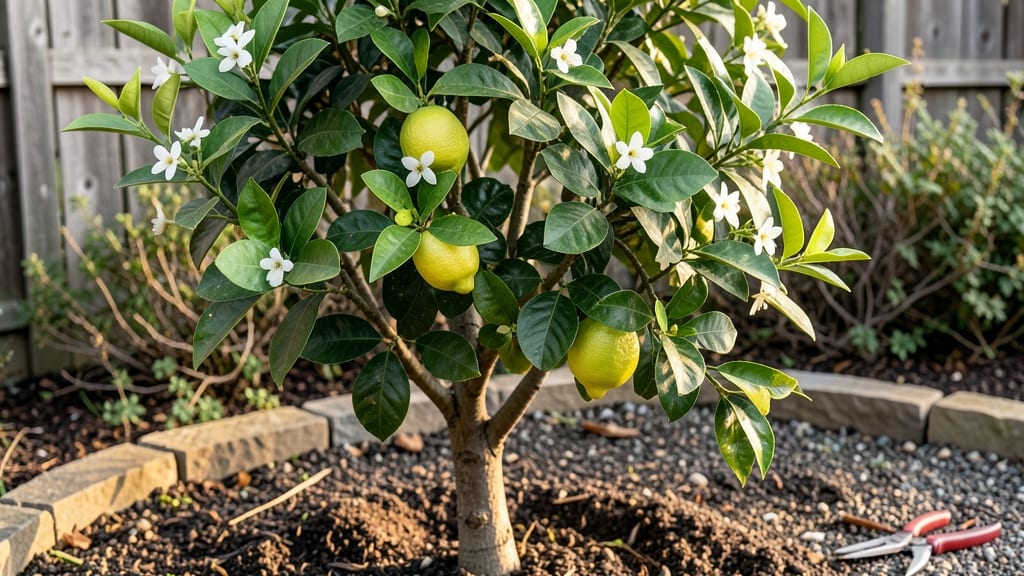
A lemon tree leaf looks like an elongated oval with a shiny, vibrant green surface, measuring between 2-4 inches and featuring finely serrated edges. Its slightly leathery, smooth texture and alternating stem arrangement help identify it, plus the fresh citrus scent when crushed.
A lemon tree leaf's elliptical shape and pointed tip make it instantly recognizable among citrus varieties.
The prominent midrib running down the center adds to its distinctive look, while the bright green color remains consistent year-round unless nutrient deficiencies cause yellowing or spotting. 🌿 These visual cues aren't just for identification—they also signal when your plant needs attention, like adjusting sunlight or fertilizer levels.
What's fascinating is how these leaves change with seasons. In cooler months, you might notice a slightly deeper green hue, while summer leaves tend to be slightly softer. This natural variation helps gardeners monitor their plant's health without needing complex tests.
The alternating leaf arrangement along stems is another key feature—unlike grapefruit trees, which often have clustered leaves.
💡 In This Article
- Identifying Lemon Tree Leaves vs Other Citrus Leaves
- How to Use Lemon Tree Leaf Features for Gardening
Identifying lemon tree leaves vs other citrus leaves
The key to distinguishing lemon tree leaves lies in their elliptical shape with a gradual taper to a sharp point, measuring 2-4 inches long and 1-1.5 inches wide. This contrasts sharply with lime leaves, which are more narrow and lance-shaped (typically 1-3 inches long) with a more pronounced central vein.
The lemon's edges feature fine serrations along the entire perimeter, while grapefruit leaves often have coarser, more spaced-out teeth near the tip.
Orange tree leaves share a similar elliptical shape but lack the lemon's distinct pointed tip—they tend to have a more rounded apex. The midrib of lemon leaves is particularly prominent, creating a noticeable ridge when running your finger along it.
This central vein is less dominant in orange leaves and almost absent in grapefruit leaves, which often appear slightly thicker and more waxy to the touch. The leaf arrangement also differs: lemon leaves grow alternately along stems, while grapefruit leaves frequently appear in clusters.
Aroma plays a crucial role in identification. Crush a lemon leaf between your fingers and you'll experience a bright, intense citrus scent that's more pronounced than other citrus varieties. Lime leaves emit a tart, almost grassy aroma, while orange leaves produce a milder, sweeter fragrance.
This scent difference stems from varying concentrations of limonene and citral compounds—lemon leaves contain about 30-40% more limonene than oranges, giving them their signature punch.
Color provides another clue. Healthy lemon leaves maintain a uniform bright green hue year-round, though they may develop slight yellowing at the edges in winter due to cooler temperatures.
In contrast, grapefruit leaves often show paler green or even bluish-green tones, while lime leaves can appear darker green with purple undertones when exposed to full sun. These color variations occur because different citrus trees have evolved unique chlorophyll structures to optimize photosynthesis in their native climates.
Texture offers the final distinguishing factor. Lemon leaves feel smooth and slightly leathery—almost like touching a well-waxed surface. Orange leaves are softer, while grapefruit leaves often feel thicker and more rigid.
This texture difference comes from the cuticle layer thickness: lemon leaves have a 20-30% thicker cuticle than oranges, helping them retain moisture in dry conditions. 🌿
For gardeners, recognizing these differences is essential. A lemon tree's leaves will always grow alternately along stems with 1-2 inches between each leaf, while grapefruit trees often have 3-4 leaves clustered at each node.
This pattern helps prevent cross-pollination between different citrus varieties, ensuring fruit purity. The lemon's serrated edges also provide more surface area for photosynthesis, contributing to its vigorous growth.