
Pruning
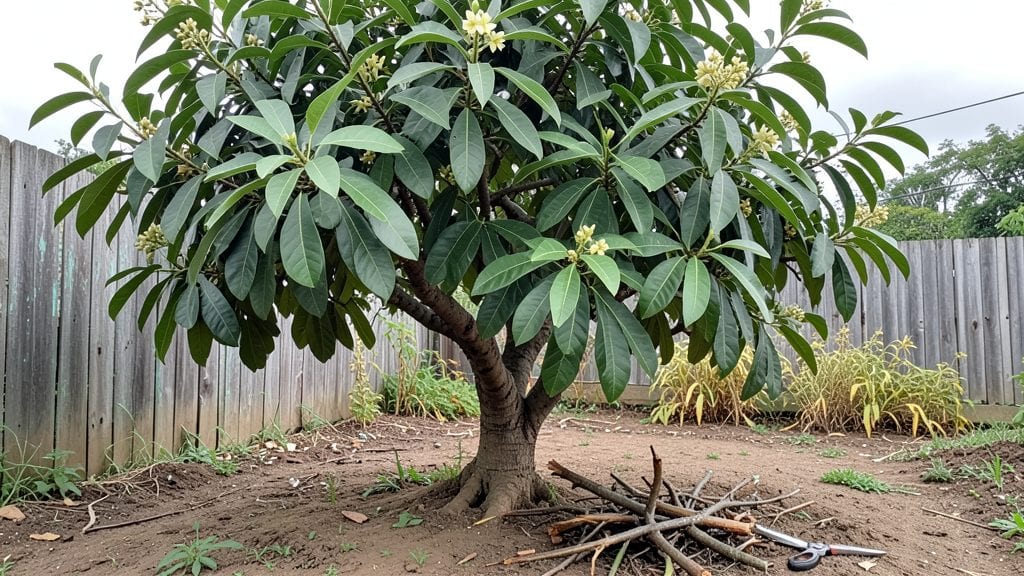
Trimming mango trees isn't just about shaping—it's the secret to bigger fruit and fewer empty branches. I've learned the hard way that skipping this step means smaller harvests and more disease trouble.
The right cuts at the right time make all the difference, and I'll show you exactly how to do it without stressing the tree.
You'll need just three basic tools: sharp pruning shears for small branches, loppers for thicker limbs, and a saw for anything over 2 inches thick. Timing matters too—prune during the dormant season (late winter to early spring) when the tree isn't actively growing.
This gives it time to heal before summer heat sets in.
By focusing on open-center shaping, you'll improve air flow and sunlight penetration, which means healthier branches and sweeter fruit. The goal isn't to turn your tree into a perfect topiary—it's about encouraging strong growth where it counts. You'll see the difference in just one growing season.
This method works for both young trees and mature ones, though the cuts will look different. Whether you're dealing with a backyard sapling or a full-sized tree, the same principles apply. Let's get those branches looking intentional!
📚 In This Guide
- What you need
- Instructions
- Tips and common mistakes
- Wrapping up and next steps
What you need
- ● Pruning shears (bypass or anvil type): Sharp, clean blades (10–12" length for medium-sized branches)
- ● Bypass shears for clean cuts (avoid crushing branches)
- ● Loppers: Long-handled (24–36") for thicker branches (1–2" diameter)
- ● Bypass-style preferred for precision
- ● Pruning saw: For branches larger than 2" (curved or folding blade)
- ● Gloves: Heavy-duty, cut-resistant (gardening or pruning-specific)
- ● Disinfectant (70% isopropyl alcohol or bleach solution): To sterilize tools between cuts and prevent disease spread
- ○ Rope or tarps: For securing branches or collecting debris (optional but helpful!)
- ● Extension pole: For high branches (10–15 ft reach)
- ● Ladder: Sturdy, non-slip (if tree is over 8 ft tall)
- ● Sealant (pruning paint): For large cuts (>2" diameter) to prevent disease
- ● Notebook/pencil: To sketch your trimming plan or track progress
- ● Safety glasses: Protect your eyes from debris
Step-by-Step guide to trimming mango trees for better fruit production
Healthy mango trees produce more fruit when you prune strategically—here’s how to do it right.
Identify the Right Time to Prune
Prune mango trees during their dormant season, which is typically late winter or early spring before new growth begins. This timing ensures the tree focuses energy on developing fruit rather than recovering from pruning wounds. In warmer climates, you can prune lightly after harvest to improve air circulation, but avoid heavy cuts during peak growing months.
Look for signs of dormancy: the tree will have shed most of its leaves, and new buds will start forming. If your tree is in a frost-prone area, wait until after the last frost date to prune. Young trees benefit from early pruning to shape their structure, while mature trees should be pruned to remove dead or diseased branches first.
Remove Dead, Diseased, or Weak Branches
Start by inspecting the tree for branches that are dead, diseased, or crossing each other. Dead branches are dry, brittle, and often have no leaves or bark peeling off. Diseased branches may have dark spots, oozing sap, or unusual growths. Use sharp, clean pruning shears to make a diagonal cut just outside the branch collar—the swollen area where the branch meets the trunk.
If branches are crossing, remove the smaller or weaker one to prevent future rubbing, which can create wounds. Never leave stubs—always cut back to the branch collar so the tree can heal properly. This step is critical for preventing pests and diseases from spreading through the tree.
Thin Out the Canopy for Better Airflow
Mango trees produce fruit on wood that’s at least a year old, so avoid cutting back too aggressively. Instead, focus on thinning the canopy by removing branches that are growing inward or upward. These branches compete for sunlight and resources, reducing fruit quality and yield. Aim to open up the center of the tree so light and air can reach the inner branches.
Use your hand as a guide: if you can’t fit your fist between two branches, one of them needs to go. Start with the smaller branches first, then move to larger ones. This step encourages stronger, more productive growth and makes it easier to harvest fruit in the future.
Shape the Tree for Optimal Growth
Young mango trees should be pruned to develop a strong, open center. Remove branches that grow straight up or too close to the main trunk, as these can become weak and break under the weight of fruit. For mature trees, maintain a balanced shape by pruning branches that are growing too densely or blocking sunlight from reaching lower branches.
If your tree has become overgrown, prune gradually over a few years to avoid shocking it. Never remove more than 25% of the tree’s foliage in a single pruning session. This ensures the tree can recover and still produce fruit. After pruning, clean your tools with rubbing alcohol to prevent the spread of disease.
Clean Up and Monitor the Tree
Remove all pruned branches from the area around the tree to reduce the risk of pests and diseases. Dispose of diseased branches separately, away from your garden. After pruning, water the tree deeply to help it recover, especially if the weather is dry. Monitor the tree closely for signs of stress, such as wilting leaves or unusual spots, and adjust care as needed.
In the weeks following pruning, you may see new growth emerge from the pruned areas. This is a good sign that the tree is healing. Avoid fertilizing immediately after pruning—wait until new growth appears before applying any nutrients. With proper pruning, your mango tree will reward you with healthier branches and a bigger harvest next season.
Tips & tricks for trimming mango trees
A few strategic moves can transform your mango tree from a tangled mess to a fruit-bearing powerhouse. Here's what I've learned after years of trial and error with my own trees.
Timing is Everything: The dormant season timing in Step 1 is crucial—don't rush it. I once pruned my tree too early in warm climates, and the tree struggled to recover before flowering. Wait until you see those first tiny buds forming; that's your green light. For frost-prone areas, always check your local frost date calendar—pruning too soon can leave your tree vulnerable to cold damage.
Branch Collar Matters: In Step 2, when removing branches, never cut flush with the trunk. That swollen area called the branch collar is the tree's natural healing mechanism. I learned this the hard way when my first cuts left ugly wounds that took years to heal. Make that diagonal cut just outside the collar—it makes all the difference in how quickly the tree recovers.
Canopy Thinning Strategy: The fist test in Step 3 is my favorite visual cue. If you can't fit your fist between branches, one must go. I've found this works particularly well for young trees where I want to encourage outward growth. Start with the smaller branches first—they're easier to remove and won't shock the tree as much as cutting larger branches.
Gradual Pruning Wins: When dealing with overgrown trees in Step 4, remember the 25% rule. I made the mistake of trying to fix years of neglect in one season and nearly killed my tree. Spread out heavy pruning over 2-3 years. This gradual approach lets the tree adjust each season while you work toward that open center structure that lets sunlight reach all the fruit.
Pro Tips for Trimming Mango Trees
- A few strategic moves can transform your mango tree from a tangled mess to a fruit-bearing powerhouse.
- Timing is Everything: The dormant season timing in Step 1 is crucial—don't rush it.
- Branch Collar Matters: In Step 2, when removing branches, never cut flush with the trunk.
Frequently asked questions
Got questions about trimming your mango tree? You’re not alone—proper pruning can feel tricky! Here are answers to the most common queries to help you grow a thriving tree with bountiful fruit.
When is the best time to trim a mango tree?
The ideal time to trim is during the dry season (late winter to early spring) before new growth begins. Avoid pruning during flowering or fruiting stages, as this can stress the tree and reduce yields. Light shaping can be done year-round, but major cuts should wait for the off-season.
How much should I trim off a young vs. mature mango tree?
For young trees (1–3 years old), remove up to 25% of the foliage to encourage strong branching. For mature trees (4+ years), limit trimming to 15–20% to avoid overstressing the tree. Focus on dead, diseased, or crossing branches first—these should always go, regardless of age.
What if my mango tree doesn’t produce fruit after trimming?
Lack of fruit could mean over-pruning or poor timing. If you trimmed too aggressively, the tree may need 1–2 seasons to recover. Ensure you’re leaving enough fruit-bearing branches (look for thick, woody stems with leaf scars). Also, check for pests, nutrient deficiencies, or environmental stressors like drought.
Can I use pruning shears or should I hire a professional?
Small trees (under 15 feet) are perfect for DIY trimming with sharp, sterilized shears. For larger trees, especially those with dense canopies or structural issues, a professional arborist is worth the investment. They’ll ensure safe cuts and proper healing. Always wear gloves and clean tools to prevent disease spread!
What mistakes should I avoid when trimming?
- Topping the tree: Cutting the main trunk flat can lead to weak regrowth and disease. Always make angled cuts just above a leaf node.
- Pruning during wet seasons: Rain or humidity can introduce fungal infections through open wounds.
- Ignoring air circulation: Overly dense canopies trap moisture—trim to allow sunlight and airflow.
- Using dull tools: Ragged cuts slow healing and invite pests. Sharpen blades before you start!
Wrapping up and next steps
Trimming your mango tree isn’t just about keeping it neat—it’s the secret to bigger harvests, stronger growth, and happier fruit! By mastering the right timing, tools, and techniques, you’ll turn pruning into a game-changer for your tree’s health.
Whether you’re a seasoned gardener or just starting, every careful cut brings you closer to a bountiful, thriving mango tree.
Ready to take the next step? Grab your pruners, mark your calendar for the dry season, and start shaping your tree with confidence. Your future mango feast—and that sweet, juicy payoff—starts with one well-placed cut! 🌱✂️