Plants
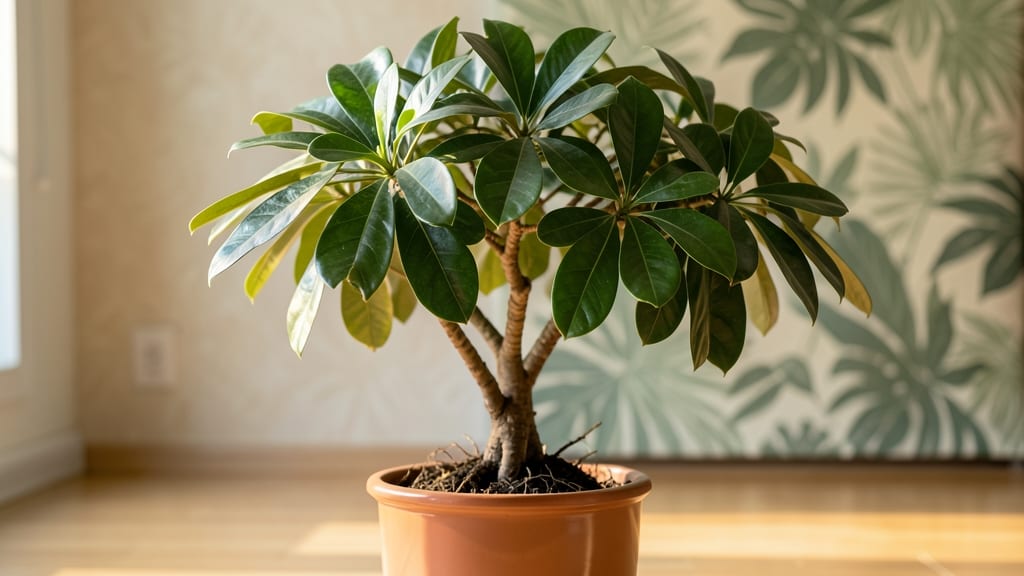
A tree that looks like an umbrella features a rounded, dense canopy with a slender trunk, like the Japanese pagoda tree (Styphnolobium japonicum), paperbark maple (Acer griseum), or Eastern redbud (Cercis canadensis). These adaptable trees thrive across climates and deliver bold seasonal color.
A tree with that iconic umbrella shape gets its look from horizontal branches radiating evenly from a central trunk. 💫 The Japanese pagoda tree, for example, grows its signature flat-topped silhouette through lateral buds that sprout outward rather than upward.
This growth habit creates that perfect parasol effect, while species like the Eastern redbud develop a vase-like form with layered branches. Pruning plays a key role—regular trimming encourages denser foliage while maintaining that balanced, rounded silhouette.
What makes these trees so versatile is their adaptability to different environments. The paperbark maple handles cold winters beautifully, while the umbrella magnolia thrives in humid climates. Many of these species also offer year-round interest: vibrant spring blooms, summer shade, and fiery fall foliage.
For landscape designers, this means choosing the right species for your climate ensures both beauty and low maintenance—perfect for creating statement focal points in any yard.
💡 In This Article
- How Canopy Shape and Trunk Structure Define Umbrella-Like Trees
- Best Umbrella-Shaped Trees for Landscaping by Climate and Soil
How canopy shape and trunk structure define umbrella-like trees
The umbrella shape in trees isn't random—it's a result of specific botanical growth patterns. Trees like the Japanese pagoda tree (Styphnolobium japonicum) develop their iconic flat-topped canopies through a process called apical dominance suppression.
This occurs when the central leader (main upward-growing branch) is pruned or naturally weak, allowing lateral buds along the trunk to grow outward instead. These lateral branches then produce horizontal layers of foliage, creating that perfect parasol silhouette. 🌿
The Eastern redbud (Cercis canadensis) takes a different approach with its vase-like form. Its branches grow at 45-degree angles from the trunk, creating a layered, umbrella-like effect without full horizontal spread.
The key difference lies in its bud arrangement: redbuds have alternate buds that develop into branches at various heights, while pagoda trees have whorled buds that sprout in circular patterns. This structural variation explains why some umbrella trees appear more compact while others spread wider.
Trunk thickness plays a crucial role too. Most umbrella-shaped trees have slender trunks (typically 6-12 inches in diameter at maturity) that support their wide canopies. The Japanese pagoda tree, for example, develops a smooth, gray bark that contrasts beautifully with its flat-topped foliage.
Pruning techniques can dramatically alter this structure—removing the central leader early encourages wider growth, while selective pruning of lower branches creates a more refined silhouette. 🌳
Leaf arrangement also contributes to the umbrella effect. Species like the paperbark maple (Acer griseum) have opposite leaves that grow in pairs along branches, creating a dense, rounded canopy.
The leaf angle (typically 30-60 degrees from horizontal) determines how sunlight filters through, affecting both shade quality and the tree's overall appearance. In contrast, trees with pinnate leaves (like the pagoda tree) create a more uniform, flat canopy.
Here's what happens when you prune these trees: Removing 20-30% of the canopy in late winter stimulates new lateral growth, reinforcing the umbrella shape. However, over-pruning can disrupt the natural balance, leading to sparse foliage or uneven growth.
The science behind this involves auxin hormone regulation—pruning reduces apical dominance, allowing lateral buds to develop more vigorously. This is why professional arborists recommend selective pruning rather than heavy cuts.
For a real-world example, consider the umbrella magnolia (Magnolia tripetala), which naturally grows to 15-20 feet tall with a 25-foot-wide canopy. Its horizontal branches create that perfect parasol effect, while its glossy leaves provide 90% shade coverage in summer.
The contrast between its smooth, gray bark and vibrant foliage makes it a standout in any landscape. 🌟