
Blooming
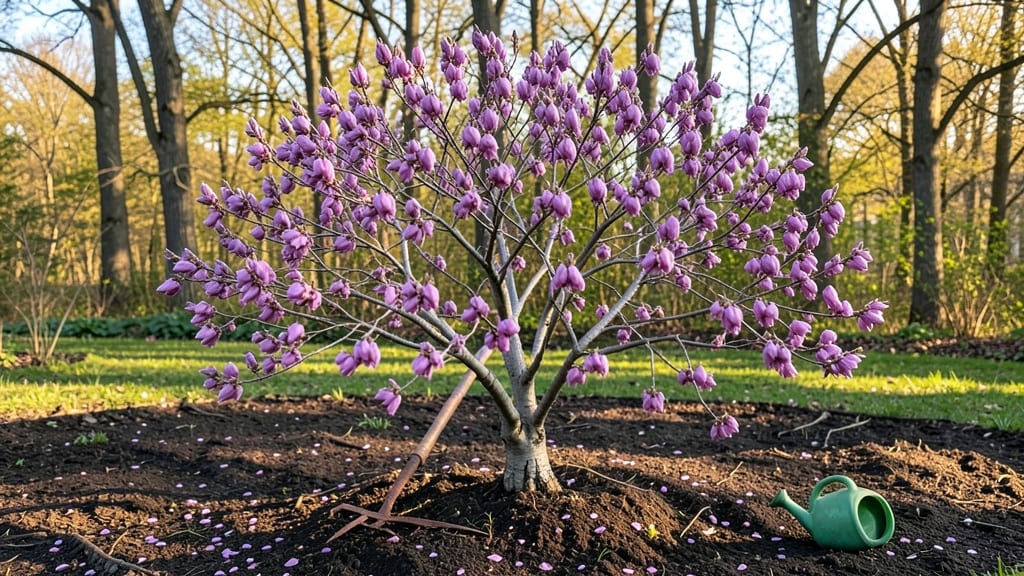
Redbud tree blossoms transform any spring garden into a dreamy pink waterfall. ✨ I’ve watched them turn bare branches into clouds of delicate blooms year after year, and there’s nothing like it—especially when they catch the morning sun.
Their soft magenta flowers appear before the leaves, creating a stunning focal point that lasts for weeks.
The key to showcasing their beauty is placement. Plant them where they’ll get full sun to partial shade and where their cascading branches can be admired from multiple angles.
They pair perfectly with early spring bulbs like daffodils or hellebores, extending the seasonal display. Even in small gardens, a single redbud makes a statement.
You’ll love how they age gracefully, shifting from vibrant pink to soft green foliage as summer arrives. Their heart-shaped leaves add texture, and their pea-pod seed pods in fall offer extra interest.
This tree isn’t just pretty—it’s a four-season performer that keeps your garden lively from winter’s end to early autumn.
For maximum impact, group them with other early bloomers like forsythia or serviceberry. Their layered colors create a dynamic spring tableau that neighbors will envy. Here’s how to make them the star of your landscape!
📚 In This Guide
- What you need
- Instructions
- Tips and common mistakes
- Wrapping up and next steps
What you need
- ● Redbud tree seedlings or saplings: Choose Cercis canadensis (Eastern redbud) or a variety suited to your USDA hardiness zone (zones 4-9). Opt for 1-2 gallon pots for young trees or bare-root plants for a cost-effective start.
- ● High-quality potting soil or native soil mix: 5-10 gallons, amended with compost (20-30% organic matter) for drainage and nutrients.
- ● Mulch: 2-3 bags of organic mulch (e.g., shredded bark or pine straw) to retain moisture and suppress weeds.
- ● Watering can or hose with a gentle spray nozzle: For consistent moisture without disturbing roots.
- ● Garden trowel or spade: For digging planting holes (12-18" wide/deep for saplings).
- ● Pruning shears: Sharp, sterilized shears for trimming dead branches or shaping.
- ● Garden gloves: Heavy-duty to protect hands from thorns (some varieties have them!).
- ● Measuring tape or ruler: To ensure proper spacing (15-25 feet apart for mature trees).
- ○ Stakes and twine (optional): For young trees in windy areas.
- ● Sunlight: A location with full sun to partial shade (6+ hours of sunlight daily for optimal blooms).
- ● Well-draining soil: Redbuds hate soggy roots! Test soil pH (ideal: 6.0-7.0).
- ● Patience: These trees grow slowly but reward you with 10+ years of vibrant pink blooms!
- ● 🌡️ Early spring planting: Aim for late winter/early spring (before buds swell) to avoid transplant shock.
- ● ✨ Drought tolerance: Once established, redbuds are low-maintenance—water deeply 1-2 times/week for the first year.
- ● 🎯 Prune after blooming: Trim in late spring/summer to encourage bushier growth.
Step-by-Step guide to cultivating stunning redbud tree blossoms
Here’s how to coax those iconic pink blooms into your garden with minimal fuss.
🌱 Step 1: Choose the Perfect Planting Spot
Redbuds thrive in full sun to partial shade—at least 4-6 hours of direct sunlight daily—but they tolerate light shade if summers are scorching. I always pick a spot with well-draining soil, since soggy roots lead to weak blooms. If your yard has heavy clay, mix in 2-3 inches of compost before planting to improve drainage.
Check the site’s air circulation—redbuds hate crowded spaces where humidity lingers. If nearby trees or shrubs block airflow, prune them back to give your redbud room to breathe. The ideal spot also has 6-8 feet of clearance around the trunk for mature growth.
🪴 Step 2: Plant at the Right Time and Depth
Plant bare-root redbuds in early spring or fall, when soil temperatures hover around 50-60°F. Dig a hole twice as wide as the root ball but no deeper—planting too deep suffocates the roots. Gently loosen any circling roots with your fingers to encourage outward growth.
Place the tree so the top of the root flare sits 1-2 inches above soil level. Backfill with native soil, tamp lightly, and water deeply to settle everything. Mulch with 2-3 inches of shredded bark around the base (but keep it 6 inches away from the trunk) to retain moisture and regulate soil temperature.
☀️ Step 3: Water Deeply and Consistently
Water once a week for the first two months, soaking the soil to a depth of 12 inches. Let the top inch dry out between waterings—redbuds hate soggy feet but need steady moisture to establish roots. After the first season, they become drought-tolerant, but deep watering every 2-3 weeks keeps blooms vibrant.
Watch for wilting leaves—this is your cue to water. If the soil feels dry only at the surface, dig down 3-4 inches to check moisture. Overwatering is worse than underwatering; redbuds develop root rot if they sit in wet soil for weeks.
✂️ Step 4: Prune for Shape and Health
Prune right after blooming (late spring) to shape the tree and remove dead wood. Use clean, sharp pruners to make cuts just outside the branch collar—never leave stubs. Thin out crossing branches and any that grow inward to improve airflow and sunlight penetration.
If your redbud grows leggy, prune back one-third of the longest branches to encourage bushier growth. Avoid heavy pruning in fall or winter—you’ll miss the spring blossoms. A well-pruned redbud rewards you with denser foliage and even more dramatic blooms next year.
🌿 Step 5: Fertilize Lightly for Optimal Blooms
Skip fertilizer the first year—redbuds establish best with minimal interference. In early spring of the second year, apply a balanced 10-10-10 fertilizer (use ½ the recommended dose) around the drip line (the edge of the tree’s canopy). Water deeply after applying to help nutrients soak in.
Too much fertilizer leads to leafy growth at the expense of flowers. If your redbud puts out more leaves than blooms, cut back on fertilizer and focus on well-draining soil and sunlight. A happy redbud blooms profusely with minimal care—just give it space, water, and a little patience.
Tips & tricks for perfect redbud tree blossoms
A few key strategies will help you coax those stunning pink blooms from your redbud tree with confidence.
Soil Drainage is Non-Negotiable: In Step 1, when you're checking your planting spot, pay special attention to drainage. Redbuds absolutely hate soggy roots—if your soil feels compacted or clay-heavy, mix in those 2-3 inches of compost right into the planting hole. I've seen redbuds struggle in clay soil even with the right sunlight, so don't skip this step. The goal is soil that drains like a sponge, not like a swamp.
Root Flare Position Matters More Than You Think: During Step 2, when you're planting, that 1-2 inch elevation of the root flare above soil level isn't just a suggestion—it's crucial. The flare is where the roots meet the trunk, and burying it too deep suffocates the tree. Think of it like planting a flagpole: you want the pole sticking up, not buried underground. This simple detail makes all the difference in long-term health.
Watering Wisdom for First-Year Trees: That once-a-week watering for two months in Step 3 requires some finesse. Instead of just pouring water randomly, use a trowel to check moisture at 3-4 inches deep. If it's dry, water until moisture reaches 12 inches down. The top inch drying out is your cue—don't wait until the soil is bone-dry. This deep watering encourages strong root development that'll support those spectacular blooms later.
Pruning Timing is Everything: When you prune right after blooming in Step 4, resist the urge to shape aggressively. Focus on removing only dead wood and crossing branches first. The rule of thumb is to never remove more than one-third of the tree's foliage in a single pruning session. I've seen gardeners over-prune in their excitement, and it takes years to recover that lost bloom potential.
Pro Tips for Redbud Tree Blossoms
- A few key strategies will help you coax those stunning pink blooms from your redbud tree with confidence.
- Soil Drainage is Non-Negotiable: In Step 1, when you're checking your planting spot, pay special attention to drainage.
- Root Flare Position Matters More Than You Think: During Step 2, when you're planting, that 1-2 inch elevation of the root flare above soil level isn't just a suggestion—it's crucial.
Frequently asked questions
Got questions about those stunning redbud tree blossoms? You’re not alone! Here are answers to the most common queries—from timing to troubleshooting—so you can enjoy this spring show with confidence.
When do redbud trees bloom, and how long does it last?
Redbuds typically burst into color in early to mid-spring (February–April, depending on your climate zone). Their blossoms last 1–2 weeks—a fleeting but spectacular pink spectacle! For the longest display, plant multiple trees to stagger blooming times.
Are redbud trees easy to grow? What’s the best care routine?
These low-maintenance trees thrive in full sun to partial shade and tolerate a range of soils. Water deeply 1–2 times per week during the first year, then let nature take over. Prune in late winter to shape the tree—just avoid cutting during bloom season!
Why aren’t my redbud tree’s flowers as vibrant as they should be?
Dull or sparse blooms often signal stress from overwatering, poor soil, or lack of sunlight. Check for yellowing leaves (a sign of overwatering) or brown edges (underwatering). Feed with a balanced fertilizer in early spring and ensure they get at least 6 hours of sun daily.
Can I plant redbud trees in containers? What about small gardens?
Yes! Dwarf varieties like ‘Little Henry’ or ‘Mickey Mouse’ thrive in large containers (15+ gallons) with drainage holes. For small gardens, choose single-trunk cultivars to avoid overcrowding. Just remember: Containers dry out faster—water frequently in hot weather!
Are redbud blossoms good for pollinators like bees and butterflies?
Redbuds are a pollinator magnet—their early spring flowers provide critical nectar when few other blooms are available. Planting redbuds supports native bees, butterflies, and hummingbirds, making your garden a biodiversity hotspot!
Wrapping up and next steps
Redbud tree blossoms bring a burst of color and life to gardens, offering early spring beauty with minimal fuss. Their vibrant pink blooms and adaptable nature make them a dream for gardeners—whether you’re a beginner or a seasoned pro. 🌸
Ready to welcome this cheerful tree into your landscape? Start by choosing the right variety for your climate and soil, then plant with care. Watch as your garden transforms into a pink paradise—one blossom at a time!
Next step: Visit your local nursery or order seeds online to begin your redbud journey today!