Watering
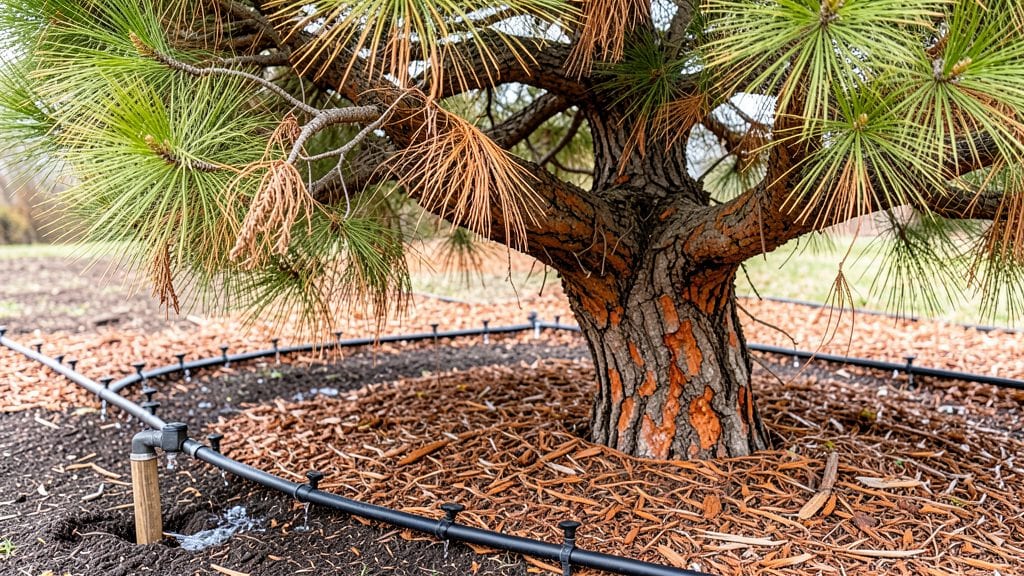
When pine tree drought turns needles brown and brittle, it’s not too late to save your tree. 🌲 I’ve nursed back multiple pines from drought stress using a few key watering tricks that actually work—no guesswork, just science-backed techniques that get water where it matters most.
The first mistake most people make is shallow watering. Pines need deep, slow soaking—think 1-2 inches of water per week—delivered right at the root flare, not splashed onto the needles.
A 3-gallon bucket with holes (or soaker hose) does the job better than a sprinkler. Mulch with 3-4 inches of wood chips to lock in moisture and keep roots cool.
You’ll see new growth within 4-6 weeks if you’re consistent. The needles will darken back to green, and the tree will stop dropping them like it’s autumn. For long-term resilience, amend the soil with compost or aged manure to improve water retention—pines hate dry, compacted soil.
This works for loblolly, ponderosa, and Scotch pines, but avoid overwatering spruces—they’re not as drought-tolerant. The key is patience and precision. Let’s get your pine thriving again.
The Root Causes Of Tree Stress
Understanding why pine trees suffer during droughts isn’t just about the lack of rain—it’s a complex interplay of environmental, biological, and even human factors. Here’s a breakdown of the key culprits behind pine tree drought stress, explained in actionable detail.
Pine trees are adapted to dry climates, but prolonged heatwaves push them beyond their limits. When temperatures rise, the soil dries out faster, and the tree’s transpiration rate (the process of water loss through leaves) skyrockets. Here’s why this happens:
- Increased Evaporation: Hot air holds more moisture, causing water to evaporate from the soil surface and the tree’s needles at an accelerated pace.
A study by the USDA Forest Service found that pine trees in drought-prone regions can lose up to 50% more water during heatwaves compared to cooler periods. - Root Zone Drying: Pine roots, especially in shallow or sandy soils, struggle to reach deeper moisture.
If the top 12 inches of soil dry out, roots can’t absorb enough water to compensate for the loss. - Photosynthesis Shutdown: When soil moisture drops below 30-40% of field capacity, pine trees may close their stomata (pores on needles) to conserve water.
This halts photosynthesis, starving the tree of energy.
Actionable Insight: 💡 Mulch heavily (3-4 inches of organic mulch) to retain soil moisture and reduce heat stress on roots.
Many pine tree drought issues stem from human watering habits that mimic drought conditions—even when rain is plentiful. Common mistakes include:
- Infrequent, Deep Watering: Pines prefer consistent moisture in the root zone.
Watering deeply once a week is better than a light sprinkle daily, but too-long gaps between waterings force roots to search for moisture inefficiently. - Surface-Level Irrigation: Drip irrigation or sprinklers that don’t penetrate 12-18 inches deep fail to reach the tree’s critical root zone, where most water absorption occurs. - Overwatering Then Neglect: Some growers drown young pines during establishment, then abandon them.
This leads to root rot followed by drought vulnerability.
Actionable Insight: 🔥 Use soil moisture sensors (like the Terralift or AcuRite) to water when the top 6 inches of soil are dry—but never let the root zone (12+ inches) bone-dry.
Not all soil is created equal—and some accelerate drought stress in pines. Here’s how soil plays a role:
| Soil Type | Problem | Solution |
|---|---|---|
| Sandy Soil | Drains too quickly; water runs off before roots absorb it. | Amend with compost or peat moss to improve water retention. |
| Clay Soil | Holds too much water, then becomes waterlogged, suffocating roots. | Add gypsum or coarse sand to improve drainage. |
| Compacted Soil | Prevents root expansion; roots can’t access deep moisture. | Aerate with a manual soil aerator or top-dress with pine bark fines. |
Actionable Insight: 🌡️ Test your soil’s percolation rate—if water drains in under 10 minutes, it’s too sandy. If it pools after 24 hours, it’s too clay-heavy.
A drought-stressed pine is an open invitation for pests and pathogens. When trees can’t fend off invaders due to weakened defenses, secondary issues compound the problem:
- Bark Beetles: Drought weakens pine trees, making them easier targets for beetles. These insects bore into the phloem, disrupting nutrient flow and killing the tree. - Fungal Infections: Fungi like Armillaria root rot thrive in water-stressed trees.
The fungus attacks roots, further reducing water uptake. - Spider Mites: These pests thrive in dry conditions, sucking sap from needles and accelerating moisture loss.
Actionable Insight: ✨ Proactively treat with neem oil (for mites) or beneficial nematodes (for beetles) during early drought stages.
Not all pines handle drought equally. Young pines and certain species are more susceptible:
- Young Pines (0-5 years): Shallow root systems can’t access deep water.
They need frequent, shallow watering (every 2-3 days in extreme heat). - Drought-Sensitive Species: Eastern White Pine and Ponderosa Pine are more vulnerable than Pinyon Pine or Aleppo Pine, which evolved in arid climates. - Transplant Shock: Recently planted pines take 1-2 years to establish roots.
During this time, they’re highly susceptible to drought.
Actionable Insight: 🎯 For young pines, water at the drip line (where the canopy ends) to encourage root spread outward.
Revive Your Drought-Stressed Pines
Drought-stressed pine trees need targeted care to bounce back. The key is addressing the root causes—literally—with practical, science-backed solutions. Below, we break down fixes by issue, from soil health to watering techniques, plus prevention tips to keep your trees thriving long-term.
Problem: Hard, clay-heavy, or overly sandy soil drains too fast or holds water poorly, starving roots.
Solutions:
- 🔥 Amend the Soil (Spring/Fall) Mix 2–3 inches of organic matter (compost, aged manure, or coconut coir) into the top 6–12 inches of soil around the tree’s drip line (the area where branches extend). This boosts moisture retention and aeration. Pro Tip: 💡 For sandy soil, add hydromulch (a wood-fiber and seed blend) to slow water runoff.
- 🍳 Mulch Like a Pro Apply 3–4 inches of mulch (pine straw, wood chips, or shredded leaves) in a 3-foot-wide ring around the tree. Keep mulch 6 inches away from the trunk to prevent rot. Warning: ❌ Avoid fresh wood chips—they can steal nitrogen as they decompose.
- 👨🍳 Deep Watering Hacks Use a soaker hose or drip irrigation to deliver water slowly (1–2 hours) 2–3 times per week during drought.
Aim for 1–1.5 inches of water per session—check with a rain gauge or tuna can. Pro Tip: 🌡️ Water early morning (5–9 AM) to reduce evaporation and fungal risks.
Problem: Pines with roots stuck near the surface struggle to access deep moisture.
Solutions:
- 🥘 Aerate Compacted Zones Rent a manual aerator or use a garden fork to poke holes 12–18 inches deep in a grid pattern around the tree. Fill holes with compost or vermicompost to feed roots deeper.
- ⏰ Gradual Watering Schedule Instead of frequent shallow watering, water deeply but infrequently (e.g., every 10–14 days in extreme drought). This trains roots to grow downward. Pro Tip: ✨ For newly planted pines, water every 5–7 days for the first year to establish roots.
- 🌿 Fertilize Strategically Use a slow-release, organic fertilizer (like 10-10-10 or fish emulsion) in early spring. Avoid high-nitrogen fertilizers—they encourage top growth over root development. Warning: ❌ Never fertilize a drought-stressed tree without watering first—it burns roots!
Problem: Drought + wind = accelerated moisture loss through needles.
Solutions:
- 🔪 Prune Smartly Remove dead, brown needles (they waste water) but avoid heavy pruning during drought. Focus on thinning the canopy to improve airflow and reduce stress. Pro Tip: 🎯 Use sterilized shears and prune on a cool, cloudy day to minimize shock.
- 🌡️ Shield from Harsh Elements Temporarily wrap young pines in burlap or shade cloth (30–50% coverage) if winds exceed 15 mph. Remove after 4–6 weeks to avoid overheating.
- 💦 Anti-Transpiration Sprays (Last Resort) In severe droughts, spray needles with anti-transpirants (like Wilt-Pruf) to create a protective film. Reapply every 2–3 weeks. Best for high-value trees only—not a long-term fix.
If needles are gray, brittle, or falling, act fast: 1. 🔥 Hydrate Immediately: Water deeply for 2 hours, then repeat every 3–4 days until soil is moist 12 inches down.
- 🌱 Root Stimulator Boost: Mix mycorrhizal fungi (like MycoApply) into water and apply to roots to jumpstart nutrient uptake.
- 🛡️ Protect from Pests: Stressed pines attract bark beetles. Apply neem oil or diatomaceous earth to trunks as a deterrent.
- 📊 Monitor Soil Moisture: Use a moisture meter or dig down 6 inches—soil should feel like a wrung-out sponge.
- 💪 Build Drought Resistance: Gradually reduce watering by 10% every 2 weeks in summer to toughen roots.
- 🌿 Plant Native Varieties: Choose drought-tolerant pines like Ponderosa, Lodgepole, or Mugo for your climate zone.
- 🌧️ Rainwater Harvesting: Install a leaf-catcher diverter on gutters to collect water for deep-soak sessions.
Remember: Patience is key—revival can take 1–2 seasons. With consistent care, your pines will regain their vibrant green and resilience! 🌲💚
Frequently asked questions
How do I know if my pine tree is suffering from drought stress?
Look for brown or yellow needles that stay on the tree (unlike natural shedding), thin, brittle needles, or needles falling year-round. The tree may also have dry, cracked soil around the base or shallow root growth. Check by gently pulling back mulch—if the top 6 inches of soil are dry, it’s time to water deeply.
Can I overwater a pine tree to fix drought damage?
No—overwatering after drought can drown roots or cause root rot. Instead, water deeply but slowly (1–2 hours per session) to reach 12–18 inches down. Use a soaker hose or drip irrigation to avoid surface runoff. Monitor soil moisture with a meter or your finger—it should feel damp like a wrung-out sponge.
What’s the best mulch for drought-prone pine trees?
Use 3–4 inches of organic mulch like pine straw, wood chips, or shredded bark. Keep it 6 inches away from the trunk to prevent rot. Avoid fresh wood chips—they steal nitrogen. For extra moisture retention, mix in hydromulch (a wood-fiber blend) in sandy soils. Replenish mulch annually to maintain coverage.
Will my pine tree recover from severe drought damage?
Yes, but it may take 1–2 seasons of consistent care. Focus on deep watering, soil amendments (compost or mycorrhizal fungi), and protecting roots from heat. Young pines (5 years old) recover faster than mature trees. If the tree is completely brown or has peeling bark, it may not survive—but act fast to give it a chance.
Are some pine species more drought-resistant than others?
Ponderosa, Aleppo, and Mugo pines handle drought best, while Eastern White and Ponderosa are more sensitive. For your climate, choose native varieties—like Loblolly Pine in the Southeast or Pinyon Pine in the Southwest. Always check the tree’s USDA hardiness zone to match it with your local conditions.