Watering
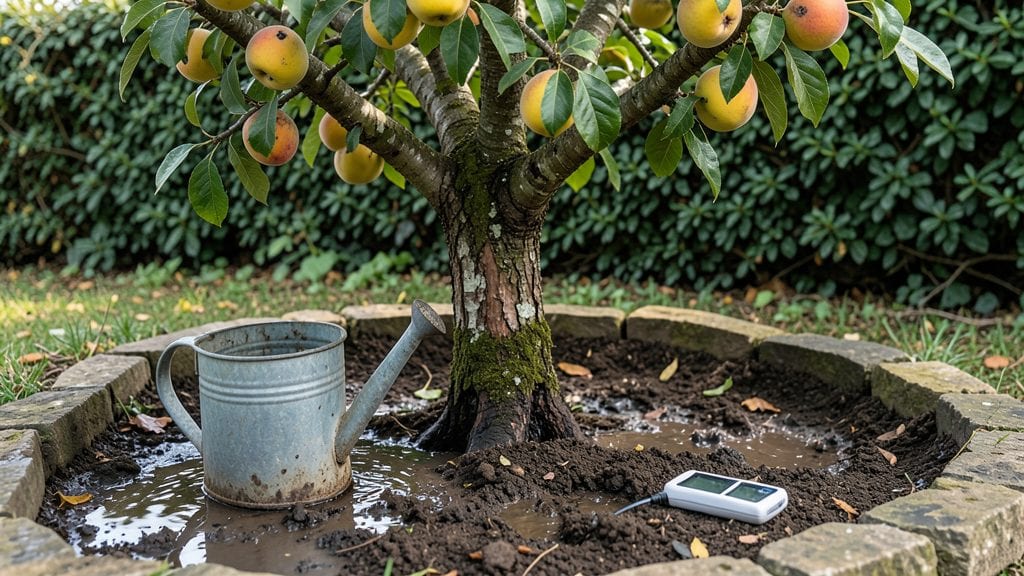
Your peach tree’s yellow leaves and soggy roots aren’t a death sentence—just a wake-up call about the overwatering of your peach tree. 🌱 I've nursed back more struggling peach trees than I can count, and the recovery starts with understanding why waterlogged soil turns fruit trees into sad, droopy shadows.
The problem usually begins with well-meaning watering schedules that ignore soil type or seasonal rain. Peach trees hate soggy feet—when roots can't breathe, they rot, and the tree sends out distress signals like yellowing leaves or wilting branches.
The good news? You can turn this around in weeks with the right adjustments, even if the tree looks terrible now.
By the time you're done, you'll have a tree that drinks just enough water to thrive—not drown. The leaves will regain their deep green color, new growth will appear at the tips, and you'll avoid the heartbreak of losing another tree to root rot.
Here's exactly how to diagnose and fix it.
This works for both young trees and mature ones, though older trees may need extra care. The key is patience—don't rush the recovery, and you'll have a productive peach tree again before you know it.
The Hidden Triggers Behind Overwatering
Overwatering a peach tree isn’t just about too much water—it’s a cascade of environmental, soil, and human factors that create the perfect storm for root stress. Understanding these causes is the first step to fixing the problem before it leads to yellowing leaves, wilting branches, or worse.
Let’s break down the real culprits behind peach tree overwatering, backed by science and actionable insights.
Peach trees thrive in well-draining soil, but when water can’t escape, roots suffocate. Here’s why drainage fails—and how to spot it:
- Compacted Soil: Heavy clay or tightly packed soil acts like a sponge, trapping water near the roots. Test it: Dig a 12-inch hole—if water pools after 30 minutes, drainage is poor.
- Improper Planting Depth: Burying the root flare (where roots meet the trunk) too deep restricts airflow and water movement. Fix it: Ensure the flare is 1–2 inches above soil level.
- Lack of Organic Matter: Soil without compost or mulch compacts easily, reducing porosity. Solution: Mix in 3–4 inches of compost before planting or top-dress annually.
💡 Pro Tip: If your yard floods after rain, amend the soil with coarse sand or perlite to improve drainage. For severe cases, consider raised beds or mounds for your peach tree.
Even with good drainage, watering too often or too much drowns roots. Peach trees need deep, infrequent watering—not frequent shallow drinks. Here’s what goes wrong:
- Ignoring Soil Moisture: Watering on a fixed schedule (e.g., every 3 days) doesn’t account for rain or temperature. Use the finger test: Stick your index finger 2 inches into the soil—if it’s damp, wait.
- Light, Frequent Watering: Shallow watering encourages roots to stay near the surface, where they’re more prone to rot. Goal: Water slowly and deeply (1–2 inches per week) to encourage deep root growth.
- Automatic Irrigation Mistakes: Sprinklers or drip systems set on timers can overwater, especially in humid climates. Adjust: Use a soil moisture sensor or smart controller to pause watering when the ground is saturated.
⚠️ Warning Signs: Yellowing leaves, mushrooms at the base of the tree, or a foul odor from the soil are red flags for chronic overwatering.
Peach trees can’t handle soggy conditions year-round. Seasonal shifts and local weather play a huge role:
- High Humidity: Air that’s too moist slows evaporation, keeping soil saturated longer. Solution: Space waterings further apart in humid summers (e.g., every 10–14 days).
- Winter Watering: Overwatering in cold months delays root dormancy and increases frost damage. Rule: Reduce watering in fall and avoid winter irrigation unless the ground is bone-dry.
- Sudden Rainfall: Heavy storms can overwhelm even well-draining soil. Prep: Install a swale or French drain to divert excess water away from the tree’s root zone.
🌡️ Quick Fix: After a downpour, check the soil 3–4 inches down. If it’s still soggy 48 hours later, hold off on manual watering.
Peach trees in pots or large containers dry out faster—but they’re also prone to overwatering if not managed properly:
- Small or Poor Containers: Roots outgrow the pot, leading to root-binding and waterlogging. Upgrade: Use a container at least 24 inches deep and wide with drainage holes.
- No Drainage Holes: Water pools at the bottom, causing rot. Non-negotiable: Ensure pots have 4+ drainage holes and use a cache pot (outer pot with gravel) to prevent soggy soil.
- Incorrect Potting Mix: Regular garden soil compacts in containers. Use: A 50/50 blend of potting mix and perlite/pumice for aeration.
💡 Pro Tip: Weigh your container before watering—if it’s light, the soil is dry. If it’s heavy, wait 2–3 more days.
Mulch is a gardener’s best friend—unless it’s applied incorrectly. Too much or the wrong type can smother roots and trap moisture:
- Over-Mulching: A layer thicker than 3–4 inches blocks oxygen and traps heat, promoting rot. Rule: Keep mulch 2–3 inches deep and 6 inches away from the trunk.
- Impermeable Mulch: Plastic or thick cardboard prevents water evaporation, keeping soil soggy. Use: Wood chips, straw, or shredded bark instead.
- Mulching Wet Soil: Adding mulch to already damp soil creates a suffocating barrier. Wait: Mulch only when the top 1–2 inches of soil are dry.
🚫 Avoid: Volcanic rock or gravel mulch—these don’t break down and can bake roots in summer.
Revive Your Peach Tree Now
Overwatering can turn your peach tree’s vibrant green leaves into sad, yellow patches—and worse, invite root rot. But don’t panic! With the right steps, you can nurse your tree back to health and prevent future waterlogging.
Below, we’ve mapped out practical fixes for common overwatering symptoms, along with prevention tips to keep your tree thriving. Let’s get your peach tree back on track!
Yellow leaves are often the first sign of stress, but they’re also the easiest to address.
🔥 Step 1: Adjust Your Watering Routine
Overwatering means your tree’s roots are drowning in soggy soil. Cut back immediately and let the top 2–3 inches of soil dry out between waterings.
- 👨🍳 Check soil moisture before watering: Stick your finger into the soil.
If it’s damp past 1 inch, wait. - 💡 Pro Tip: Use a moisture meter for accuracy—no more guesswork! - ⏰ Water deeply but less often: A slow, deep soak (1–2 gallons per tree, depending on size) encourages roots to grow deeper, reducing surface-level sogginess.
🥘 Step 2: Improve Drainage
If your tree is in a pot or heavy clay soil, poor drainage worsens the problem.
- 🔪 For potted trees: Add a drainage layer (pebbles or broken pottery) at the bottom of the pot. Repot if the current container has no holes. - 🌡️ For in-ground trees: Amend the soil with compost or perlite to loosen compacted areas.
Avoid tilling too deeply—you don’t want to damage roots! - 🎯 Long-term fix: Plant peach trees in well-draining, slightly sandy loam if replanting is an option.
Root rot is a silent killer, but early action can save your tree.
🔥 Step 1: Prune Affected Roots (If Needed)
If you suspect root rot (mushy, brown roots or a foul smell), act fast.
- 👨🍳 Inspect the roots: Gently dig around the base (be careful—healthy roots are white or light tan).
Trim any dark, mushy, or hollow roots with sterilized pruners. - 💡 Pro Tip: Wear gloves—root rot can spread to your hands! - ✨ Post-pruning care: Dust cut roots with fungicide (like copper-based or mycorrhizal treatments) to prevent further spread.
🥘 Step 2: Boost Soil Aeration & Fungus Control
Root rot thrives in anaerobic (oxygen-deprived) soil. Break the cycle with these steps:
- 🔪 Loosen compacted soil around the root zone with a fork or aerator. Avoid disturbing roots too deeply. - 🌡️ Apply a fungicide (e.g., neem oil, hydrogen peroxide spray, or systemic fungicides like Myclobutanil).
Follow label instructions! - 🎯 Mulch correctly: Use 2–3 inches of organic mulch (wood chips, straw) but keep it 6 inches away from the trunk to prevent moisture buildup.
Once your peach tree is recovering, keep these habits to avoid future overwatering:
- 📊 Know your tree’s needs: Peach trees need 1–1.5 inches of water per week (including rain).
Adjust in winter (less water) and summer (more, but deeply). - 💪 Use drip irrigation or soaker hoses to deliver water directly to the roots, reducing runoff and evaporation. - 🥗 Avoid watering at night—wet foliage encourages fungal diseases.
Morning or early afternoon is best. - 🌡️ Monitor weather patterns: Skip watering if rain is forecasted. Overwatering is often a habit, not a necessity! - 🎯 Test your soil’s drainage: Dig a hole, fill it with water, and time how long it takes to drain.
If it’s still wet after 6 hours, your soil needs amending.
Your peach tree can bounce back—but speed matters! Start with water adjustments and drainage fixes, then move to root care if needed. With a little TLC, your tree will be back to producing juicy peaches in no time. 🍑💦
Frequently asked questions
How do I know if my peach tree has root rot from overwatering?
Check for mushy, dark brown roots when you dig near the base—healthy roots are firm and light tan. A foul smell or mushrooms growing at the soil line are red flags. If leaves yellow even after drying out the soil, root rot may have set in.
Can I save a peach tree with yellow leaves from overwatering?
Yes! First, stop watering until the top 3 inches of soil dry out. Then improve drainage by adding compost or perlite to compacted soil. Within weeks, new green growth should appear if the roots aren’t severely rotted.
What’s the best way to water peach trees to avoid overwatering?
Use the finger test: Stick your finger 2 inches deep—if damp, wait. Water deeply but only 1–2 times per week (more in summer heat). Morning watering prevents fungal issues, and drip irrigation delivers water straight to roots.
Will mulch help or hurt an overwatered peach tree?
Mulch can help if used correctly: Keep it 2–3 inches thick and 6 inches from the trunk. Avoid plastic mulch—use organic options like wood chips. Too much mulch traps moisture, worsening rot.
How long does it take for a peach tree to recover from overwatering?
Mild cases show improvement in 2–4 weeks with adjusted care. Severe root rot may take 6–12 months to fully recover. Monitor soil moisture and avoid stressing the tree further. Patience is key—don’t rush recovery!