
Fertilization
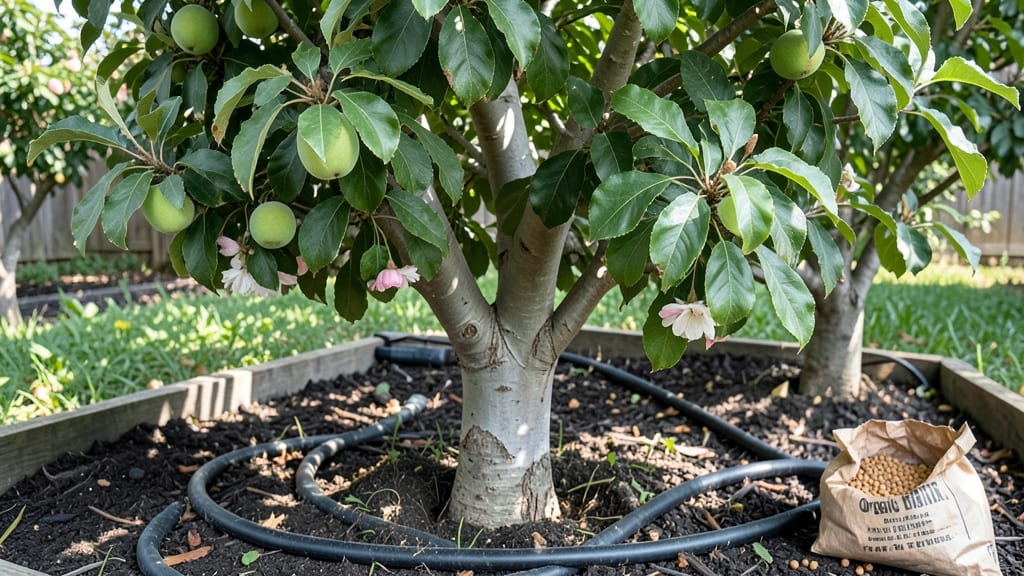
Proper peach tree fertilization is the key to transforming your sparse harvest into a lush, fruit-laden spectacle of sweet, juicy peaches.
Struggling to get your peach tree to produce year after year? The secret isn’t just adding fertilizer—it’s timing it with your tree’s growth cycles. Too much too soon can burn roots, while skipping key seasons means missed opportunities for bigger blooms and heavier fruit sets.
Peach trees need a balanced approach that shifts with the seasons: a strong start in spring, light maintenance in summer, and a complete break in fall and winter.
Below, I’ll walk you through the exact schedule, from soil prep to organic vs. synthetic choices, so you never over- or under-feed again.
Whether you’re dealing with a young sapling or a mature tree, these seasonal tips will help you grow fruit that’s not just abundant, but sweeter and more flavorful than ever.
Seasonal peach tree fertilizer schedule for optimal growth and fruit
Peach trees thrive when their nutrient needs align with their natural growth cycles. Unlike annuals, these trees need a seasonal fertilization plan that supports blooming, fruit set, and long-term health—not just random feedings.
I’ve learned the hard way that over-fertilizing in summer can lead to late-season growth that’s vulnerable to frost, while skipping spring feedings stunts fruit production. Let’s break down the exact timing, types, and amounts of fertilizer your peach tree needs each season.
Your peach tree’s fertilization needs change dramatically with the seasons. In spring, it craves nutrients to fuel new growth and blooms, while in summer, it needs lighter feedings to avoid stress. Fall and winter are all about rest and recovery.
The key is balancing nitrogen (N) for leaves, phosphorus (P) for roots and fruit, and potassium (K) for disease resistance. Here’s how to get it right every step of the way.
| Season | Fertilizer Type | NPK Ratio | Application Time | Amount per Tree | Notes |
|---|---|---|---|---|---|
| Early Spring | Balanced (10-10-10) | 10-10-10 | After bud break | ½ cup (young trees) 1 cup (mature trees) |
Encourages leaf and bloom growth |
| Late Spring | High-Potassium (5-10-15) | 5-10-15 | After fruit set | ½ cup (young trees) 1 cup (mature trees) |
Supports fruit development |
| Summer | Light Organic (Compost) | N/A | Mid-summer only | 2-3 inches mulch | Avoids late-season growth |
| Fall | None | N/A | Skip | N/A | Allows tree to harden off |
| Winter | None | N/A | Skip | N/A | Tree is dormant |
Spring is the most critical time to fertilize your peach tree. After the last frost date and once buds begin to swell, apply a balanced fertilizer (10-10-10) to kickstart growth.
I recommend splitting this into two applications: one right after bud break and another 4-6 weeks later to support early fruit development. For young trees, use half the amount of mature trees—½ cup per tree—to avoid overloading their root systems.
Organic options like composted manure or worm castings work well too, but apply them earlier in the season.
In late spring, switch to a high-potassium fertilizer (5-10-15) once fruit begins to set. Potassium helps prevent fruit drop and improves sweetness. This is also the time to side-dress with compost—spread a 2-3 inch layer around the drip line (the edge of the tree’s canopy) and water it in.
Avoid synthetic fertilizers now, as they can burn tender roots and stress the tree during fruit development. Instead, opt for fish emulsion or kelp meal for a gentle boost.
Summer fertilization is all about maintenance, not growth
Signs your peach tree needs fertilizer (and what to do next)
If your peach tree isn’t producing fruit like it used to—or worse, its leaves are turning yellow or falling off—it’s likely sending you a clear signal: it needs fertilizer. These signs don’t mean your tree is doomed; they’re simply clues that your soil nutrients are running low.
Peach trees thrive when their nitrogen, phosphorus, and potassium levels are balanced, but many gardeners overlook these early warning signs until the damage is done.
Before reaching for the fertilizer bag, though, it’s crucial to diagnose the exact issue. Yellow leaves, for example, could mean nitrogen deficiency, while small or no fruit might point to a lack of phosphorus. Ignoring these signs can lead to stunted growth, poor fruit quality, or even tree decline.
The good news? Correcting these issues with the right fertilization plan can revive your tree’s health in just a few months.
⚠️ Warning: Over-Fertilizing Is Just as Harmful
Peach trees are sensitive to excess salt and nitrogen buildup, which can burn roots and attract pests. If your tree shows signs like leaf scorch or drooping branches, it may be getting too much fertilizer. Always test your soil first and follow the recommended application rates—never guess!
Start by examining the leaves. Yellowing leaves that begin at the base of the tree often indicate a nitrogen deficiency. If the yellowing starts on the tips of older leaves, your tree might need more potassium.
Meanwhile, small or misshapen fruit suggests a lack of phosphorus, which is essential for root and flower development. In some cases, stunted growth or weak branches can mean your tree isn’t getting enough of all three major nutrients.
Don’t overlook the fruit itself. If your peach tree blooms but produces tiny, underdeveloped fruit, it’s a classic sign of phosphorus deficiency. This nutrient is critical for fruit set and development, so a balanced 10-10-10 fertilizer or a phosphorus-rich amendment like bone meal can help.
For young trees, focus on nitrogen to encourage leafy growth, while mature trees benefit from a higher phosphorus content to support fruit production.
To confirm your suspicions, invest in a soil test kit (available at garden centers for ~$20). These tests measure pH levels and nutrient concentrations, giving you a precise roadmap for fertilization. Peach trees prefer a slightly acidic soil with a pH between 6.0 and 7.0.
If your test reveals low levels of magnesium or zinc, a chelated micronutrient spray can work wonders. Once you’ve identified the deficiency, adjust your fertilizer type and application schedule accordingly.
If your tree is already struggling, don’t wait—act fast! Spread a slow-release fertilizer like osmocote around the drip line (the area where water drips from the leaves) and water it in thoroughly. For organic options, composted manure or worm castings can replenish nutrients naturally.
Remember, consistency is key: feed your tree every 4-6 weeks during the growing season (spring through summer), and avoid fertilizing in fall or winter when the tree is dormant.
With the right approach, your peach tree can bounce back stronger than ever. Keep an eye on its progress—healthy green leaves, vigorous branches, and plump fruit are your rewards for paying attention to its needs.
Soon, you’ll be enjoying a bountiful harvest of juicy peaches, all thanks to a little extra care and the right fertilization strategy!