
Trees
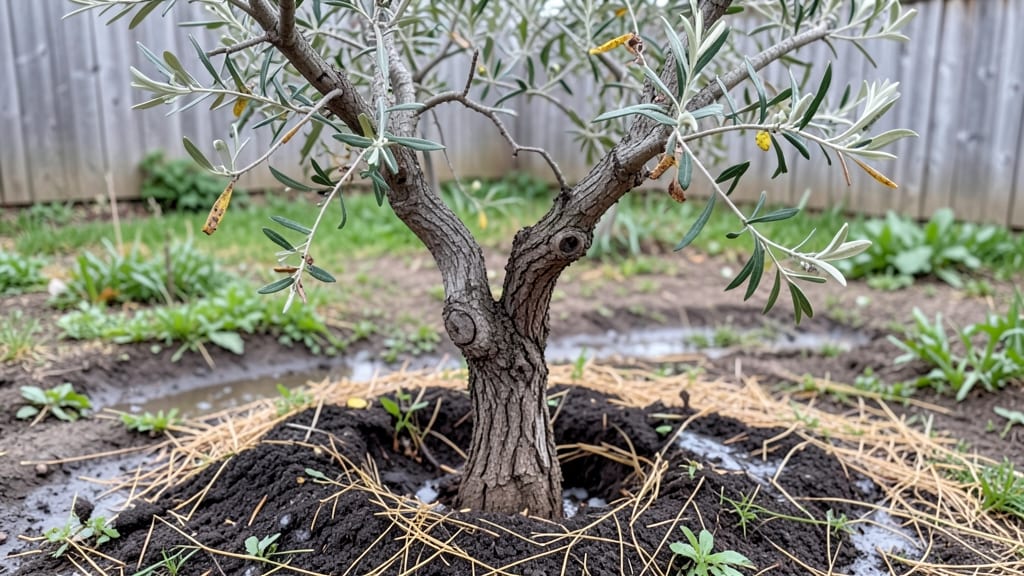
My olive tree’s yellowing leaves and squishy stems taught me the hard way that olive trees hate soggy roots—overwatered olive trees turn into sad, root-rot victims when we don’t check the soil first.
The moment I noticed the leaves drooping despite the pot feeling damp, I knew I’d been overdoing it. Olive trees are Mediterranean survivors, not swamp plants, and they’ll show you exactly when you’re drowning them.
Here’s the thing—olive trees need well-draining soil and infrequent deep watering, not frequent shallow drinks. Most people water when the top inch feels dry, but olive trees signal stress long before that.
Yellowing leaves, especially on older growth, and a foul smell at the base mean root rot is already setting in. The good news? You can still save it by cutting back on water, improving drainage, and giving the roots a chance to recover.
Within 4-6 weeks of adjusting your routine, you’ll see new green growth pushing out as the roots heal. The key is patience—olive trees rebound slower than annuals, but they’ll come back stronger.
By the time summer rolls around, you’ll have a tree that’s thriving on once-weekly watering instead of daily drenching. Let’s fix this before the roots give up for good.
This works for both potted olives and in-ground trees, though containers dry out faster and need extra vigilance. If your tree is already in the ground, focus on amending the soil around it with gritty compost or sand to improve drainage.
The goal? Mimic the dry, rocky soils of the Mediterranean where these trees evolved. You’ve got this—just don’t water it again until the soil’s bone dry two inches down.
Root Causes of Overwatering Trees
When your olive tree’s leaves turn yellow, wilt, or drop prematurely, the culprit is often too much water—especially if the soil stays soggy for days. But why does this happen?
Overwatering isn’t just about pouring too much H₂O; it’s a cascade of environmental, soil, and human factors that strangle roots and suffocate growth. Let’s break down the science behind the soggy soil syndrome.
Olive trees thrive in well-draining, slightly alkaline soil (pH 6.0–8.0), but clay, loam, or urban garden beds can trap excess moisture like a sponge. Here’s why:
- Clay soil has tiny particles that pack tightly, blocking oxygen flow to roots. Water pools instead of draining, creating anaerobic zones where roots suffocate.
- Compacted soil (from foot traffic, construction, or heavy machinery) crushes pore spaces, preventing water from seeping down. Roots can’t access oxygen, leading to root rot (a fungal infection from Phytophthora or Pythium).
- No slope or mulch: Flat landscapes or thick mulch layers (over 3 inches) trap moisture against the trunk, encouraging fungal growth.
💡 Pro Tip: Test your soil’s drainage by digging a 12-inch hole, filling it with water, and timing how long it takes to drain. If it stays wet past 6 hours, amend with coarse sand, perlite, or gravel to improve aeration.
Olive trees are drought-tolerant once established (after 2–3 years), but well-meaning gardeners often overestimate their thirst. Common mistakes include:
- Watering on a strict schedule (e.g., every 2 days), regardless of weather. Rain or humidity can already saturate soil, but many ignore this.
- Using sprinklers that soak the canopy instead of targeting the root zone (6–12 inches deep). This wastes water and promotes fungal diseases like leaf spot.
- Ignoring seasonal needs: Young trees need 1–2 inches of water weekly, but mature trees may only need every 2–3 weeks in dry climates.
📊 Data Point: A 2018 study in HortScience found that olive trees watered 30% more than recommended showed 50% higher root rot incidence.
Your olive tree’s environment can turn a light watering into a disaster. Factors like:
- High humidity: Warm, damp air slows evaporation, keeping soil wet longer. Fungal spores thrive in these conditions.
- No wind exposure: Trees in sheltered spots (e.g., against a wall or under dense foliage) dry out slower.
- Frost or cold nights: Water expands when freezing, damaging root cell membranes and increasing susceptibility to rot.
✨ Solution: Move potted olive trees to sheltered, breezy spots in summer and elevate containers to prevent waterlogging during rain.
Potted olive trees are high-risk for overwatering because containers lack natural drainage pathways. Key issues:
- No drainage holes: Water sits at the bottom, drowning roots. Even "self-watering" pots can trap excess moisture.
- Small or shallow pots: Roots fill the space quickly, leaving no room for oxygen. A mature olive tree needs a minimum 18-inch diameter pot.
- Using water-retentive soils: Mixes heavy on peat or coconut coir stay damp for weeks, choking roots.
🔥 Fix It: Upgrade to terracotta or fabric pots with holes, and use a 50/50 mix of cactus soil and perlite for better aeration.
Understanding these root causes is the first step to reviving your olive tree. Next, we’ll tackle how to diagnose the damage—because not all yellow leaves mean overwatering (sometimes it’s underwatering or nutrient deficiency!).
Revive Your Olive Tree Now
Overwatering can turn your olive tree into a sad, soggy mess—but don’t panic! With the right steps, you can nurse it back to health and prevent future waterlogging.
Below, we’ve mapped out practical fixes based on the root cause of your olive tree’s distress, along with prevention tips to keep it thriving.
If your olive tree is sitting in a swamp of excess moisture, improving drainage is your top priority.
🔥 Step 1: Stop Watering Immediately
- Why? Olive trees are drought-tolerant and hate "wet feet." Cutting off water lets the roots dry out and prevents further rot.
- How? Pause all irrigation (including rainwater if possible) for 3–5 days to let the soil aerate.
🍳 Step 2: Loosen Compacted Soil
- Why? Compacted soil traps water and suffocates roots.
- How?
- Gently fork or trowel the top 6–12 inches of soil around the base (but avoid damaging roots).
- Mix in coarse sand, perlite, or pumice (20–30%) to improve drainage.
- For potted olives, repot into a container with drainage holes if the soil is perpetually soggy.
👨🍳 Step 3: Elevate the Tree (If Needed)
- Why? If the tree is in a low-lying spot or a pot without drainage, water pools around roots.
- How?
- In-ground trees: Create a slight mound of soil around the base (like a shallow hill) to encourage runoff.
- Potted trees: Place the pot on feet or a tray to prevent water from sitting underneath.
If root rot has set in (yellow leaves, mushy roots, foul smell), act fast to save the tree.
⏰ Step 1: Assess Root Health
- How? Gently dig around the roots (1–2 inches deep) and check for:
- Healthy roots: Firm, white, or light tan.
- Rotten roots: Dark, mushy, or smelly.
- If >30% of roots are rotten, prune them with sterilized shears to prevent spread.
🔪 Step 2: Apply Fungicide (If Needed)
- Why? Fungal infections thrive in wet conditions.
- How?
- Use a copper-based or phosphite fungicide (follow label instructions).
- Prevention tip: Reapply every 4–6 weeks during rainy seasons.
🌡️ Step 3: Adjust Watering Habits
Olive trees prefer dry conditions—here’s how to water correctly:
- Frequency: Water deeply but infrequently (every 10–14 days in summer, less in winter).
- Method: Slow, deep watering (1–2 inches per session) at the drip line (not the trunk).
- Signs you’re overwatering: Puddles, soggy soil, or leaves that stay yellow despite drying out.
Prevention is key! Follow these easy maintenance tips to avoid future overwatering disasters.
💡 Pro Tip: Choose the Right Soil
Olive trees hate clay or heavy soil. Amend with:
- 50% native soil + 30% sand + 20% compost (for in-ground plants).
- Cactus/succulent mix (for pots).
🎯 Pro Tip: Mulch Smartly
- Use gravel or wood chips (2–3 inches deep) around the base to reduce evaporation and improve drainage.
- Avoid organic mulch (like bark) if your climate stays damp—it can hold too much moisture.
✨ Pro Tip: Monitor Climate & Season
- Winter: Reduce watering by 50%—olive trees are dormant and need less moisture.
- Summer: Increase water slightly, but never let soil stay wet.
- Rainy seasons: Move potted trees to a covered area or use a waterproof cover to shield from excess rain.
Remember: Olive trees are tough—they’d rather thrive on neglect than drown in kindness. With these fixes, your tree should bounce back in 4–8 weeks, showing new green leaves and stronger growth. 🌿💪
Frequently asked questions
How do I know if my olive tree is overwatered vs. underwatered?
Check the soil first—stick your finger 2 inches deep. If it's damp, you're likely overwatering. Overwatered olive trees show yellowing leaves, mushy stems, and a foul smell at the base. Underwatered trees have dry, crispy leaves that curl inward. Pro tip: Weigh the pot—if it feels heavy, it's soggy.
Can I save an olive tree with root rot from overwatering?
Yes, but act fast! Prune dark, mushy roots with sterilized shears, repot in dry, gritty soil, and stop watering for 5 days. Apply a copper-based fungicide to prevent spread. With proper care, new growth appears in 4-6 weeks. If >50% of roots are rotten, the tree may not recover.
What’s the best soil mix to prevent overwatering in potted olive trees?
Use a 50/50 blend of cactus soil and perlite—this mimics Mediterranean conditions. Avoid peat-heavy mixes that stay damp. Add coarse sand (20%) for extra drainage. Always use pots with drainage holes and elevate them on feet to prevent water pooling.
How often should I water an established olive tree in summer?
Water every 10-14 days with 1-2 inches of water per session, focusing on the root zone (6-12 inches out). Let the soil dry completely between waterings—olive trees hate "wet feet." In extreme heat, you might water weekly, but always check soil moisture first.
Why does my olive tree’s soil stay wet even after days without water?
This usually means poor drainage from compacted soil or no slope. Test drainage by filling a hole with water—if it takes >6 hours to drain, amend with gravel or sand. For pots, ensure holes aren’t clogged and use a terracotta pot (which dries faster than plastic).