
Watering
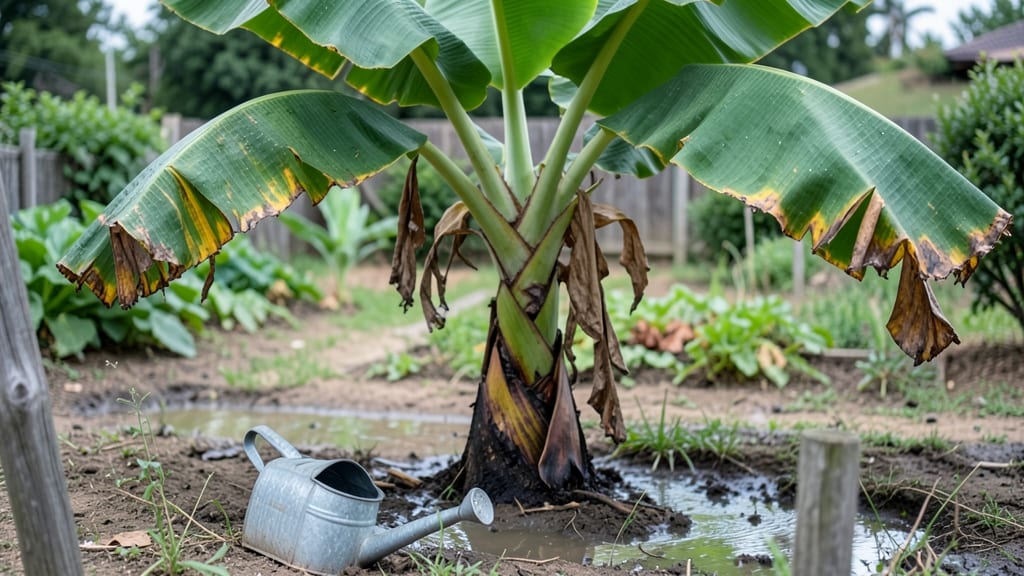
An overwatered banana tree is the last thing you want when you're dreaming of tropical harvests. 🌱 I’ve nursed more than a few back from the brink—yellowing leaves, mushy roots, and that sad, droopy look that screams "too much love."
The good news? With the right moves, you can turn this around in weeks, not years.
Here’s the thing—banana trees hate soggy feet. When roots suffocate from overwatering, they can’t pull in nutrients or oxygen, leading to yellow leaves and root rot. The first step is cutting back on water (yes, really) and improving drainage.
I’ve used a mix of perlite and coconut coir to lighten heavy soil, and within a week, new growth starts pushing through.
You’ll see the difference in just a few weeks: firmer stems, brighter green leaves, and that telltale sign of recovery—tiny new shoots at the base.
The key is consistency: water only when the top 2-3 inches of soil are dry, and always use pots with drainage holes if growing in containers.
Works for both backyard tropicals and container-grown plants in patios. Once you’ve got the watering routine down, your banana tree will bounce back stronger than ever—ready for that first bunch of fruit. Let’s get those roots breathing again!
Root Causes Of Overwatering
Banana trees thrive in tropical climates, where consistent moisture is key—but too much water can turn a lush plant into a struggling one. Understanding why this happens is the first step to fixing it. Let’s break down the science behind the soggy soil problem.
Banana trees (especially dwarf varieties) need well-draining soil to prevent waterlogging. When soil is heavy, compacted, or lacks organic matter, water pools around the roots instead of draining away. This creates an anaerobic environment—meaning oxygen is scarce—which suffocates roots and triggers:
- Root rot from fungal pathogens like Phytophthora or Pythium, which thrive in soggy conditions.
- Nutrient leaching, as excess water washes away essential minerals (e.g., potassium, magnesium) the tree needs.
- Weakened root structure, making the plant more susceptible to wind or disease.
Actionable fix: Amend soil with perlite, sand, or coconut coir to improve aeration. For container-grown trees, ensure pots have drainage holes and use a mix of 60% potting soil, 20% perlite, and 20% compost.
Banana trees love moisture, but their roots are sensitive to consistency. Common watering mistakes include:
- Ignoring soil moisture: Watering on a rigid schedule (e.g., every 3 days) without checking if the top 2–3 inches of soil are dry.
- Drowning the roots: Pouring large amounts of water at once, especially in clay or dense soils.
- Lack of seasonal adjustment: Watering the same amount in winter (when growth slows) as in summer (when evaporation spikes).
Science note: Banana roots need oxygen to absorb water and nutrients efficiently. When soil stays wet for >48 hours, roots stop functioning, leading to yellowing leaves and stunted growth.
Actionable fix:
- Use the "finger test": Stick your finger 2–3 inches into the soil. If it’s damp, wait.
- Water deeply but infrequently—aim for 1–2 inches per week (adjust for rain).
- In containers, let the top 50% of soil dry out between waterings.
Not all overwatering is the grower’s fault—sometimes, the environment sets the tree up for failure. Key culprits:
| Factor | How It Causes Overwatering | Solution |
|---|---|---|
| 🌧️ High Humidity | Slows evaporation, keeping soil wet longer. Common in greenhouses or tropical climates. | Improve airflow with fans or prune dense foliage to reduce humidity around the base. |
| 🏢 Shade or Poor Airflow | Slows transpiration (water release through leaves), making roots stay soggy. | Place trees in bright, indirect light (6+ hours/day) and ensure airflow. |
| 🌊 Heavy Rain or Flooding | Saturates soil beyond recovery, especially in low-lying areas or containers without drainage. | Move potted trees to elevated surfaces or use rain covers during storms. |
Pro tip: If your banana tree is in a container, elevate it on pot feet or bricks to prevent water pooling at the base. 💡
Once you identify why your banana tree is drowning, the next steps—reviving yellow leaves and saving the roots—become much clearer. The key is balance: keep the soil moist but never waterlogged.
Reviving Your Overwatered Banana Tree
Don’t panic—your banana tree isn’t doomed! With the right steps, you can nurse it back to health and prevent future waterlogging. Below, we’ve mapped out practical fixes based on the most common causes of overwatering, from soggy soil to root rot. Follow these solutions step by step, and your tree will bounce back stronger than ever.
If your banana tree is sitting in waterlogged soil, the first priority is draining excess moisture and giving the roots room to breathe.
🔥 Step 1: Stop Watering Immediately
- Cut off all water until the soil dries out. Overwatering is often a habit—break it now to avoid repeating the mistake.
- Check soil moisture by sticking your finger 2–3 inches deep. If it’s damp, wait before watering again.
🍳 Step 2: Loosen Compacted Soil
- Use a trowel or fork to gently aerate the soil around the base of the tree. This helps water drain faster and encourages root growth.
- If planting in pots, ensure they have drainage holes—no exceptions!
👨🍳 Step 3: Amend the Soil for Better Drainage
- Mix in perlite, coarse sand, or orchid bark (1 part amendment to 3 parts soil) to improve drainage.
- For heavy clay soil, consider raising the planting bed or using a gravel base in containers.
💡 Pro Tip: If your banana tree is in a pot, repot it into a larger container with fresh, well-draining potting mix if the roots are circling or mushy.
Yellowing leaves, blackened roots, and a foul smell? You’re likely dealing with root rot, a fungal infection caused by prolonged soggy conditions. Act fast!
🔪 Step 1: Inspect & Trim Damaged Roots
- Carefully remove the tree from its pot or dig around the base to expose the roots.
- Use sterilized scissors to cut away any black, mushy, or smelly roots—only keep firm, white roots.
- Disinfect your tools with rubbing alcohol between cuts to prevent spreading infection.
🌡️ Step 2: Apply Fungicide (Optional but Helpful)
- Spray the remaining roots with a fungicide like copper-based or hydrogen peroxide (3%) solution to kill lingering pathogens.
- For a natural option, mix 1 part cinnamon powder to 10 parts water and apply as a root dip.
✨ Step 3: Repot in Fresh, Sterile Soil
- Choose a clean pot with drainage holes and fill it with a well-draining mix (cactus/succulent mix works well).
- Let the roots dry out for 24 hours before replanting to reduce shock.
💡 Pro Tip: After repotting, avoid watering for 3–5 days to let the roots adjust. Then, water only when the top 2 inches of soil are dry.
Prevention is key! Once your banana tree recovers, rewrite your watering rules to keep it happy without drowning it.
📊 Rule 1: Water Deeply but Infrequently
- Banana trees prefer thorough watering (soaking the root zone) followed by a drying period.
- In containers, water when the top 2–3 inches of soil are dry.
- In the ground, water 1–2 times per week (adjust for rain and heat).
🌡️ Rule 2: Water in the Morning
- Watering in the early morning (before 10 AM) gives leaves time to dry, reducing fungal risks.
- Avoid evening watering, as damp foliage overnight invites disease.
🎯 Rule 3: Monitor Soil & Climate
- Use a moisture meter or your finger to check soil moisture—don’t guess!
- In humid climates, reduce watering slightly to prevent root suffocation.
- In hot, dry weather, mulch around the base to retain moisture (but keep mulch 2–3 inches away from the trunk).
💡 Pro Tip: If your banana tree is in a shady spot, it needs less water than one in full sun. Adjust accordingly!
Give your banana tree the best chance to recover with these supportive measures:
🍎 Step 1: Fertilize Lightly (Once Recovered)
- Wait until new growth appears before fertilizing with a balanced, water-soluble fertilizer (10-10-10 or 20-20-20).
- Dilute to half-strength to avoid shocking the roots.
- Use organic options like banana peel tea or compost tea for a gentler boost.
☀️ Step 2: Provide the Right Light
- Banana trees need bright, indirect light (6+ hours of sun daily).
- If indoors, place near a south- or west-facing window or use grow lights.
- No direct midday sun if your tree is still weak—it can scorch recovering leaves.
🌡️ Step 3: Humidity & Airflow
- Mist leaves daily in dry climates to mimic tropical conditions.
- Use a pebble tray with water under the pot for added humidity.
- Ensure good airflow (but avoid drafts) to prevent fungal reinfection.
💡 Pro Tip: If your banana tree’s leaves are drooping but not mushy, it may just need a good drink—water deeply and prop up the fronds with a stake if needed.
With these fixes, your banana tree should show signs of recovery in 2–4 weeks. Stay patient, adjust your watering habits, and soon you’ll be harvesting those sweet, tropical treats! 🍌🌟
Frequently asked questions
How do I know if my banana tree is overwatered instead of underwatered?
Check the soil and leaves: Overwatered banana trees have yellowing leaves (especially older ones), mushy stems, and soggy soil that smells foul. Roots may appear black or mushy when exposed. Underwatered trees have crispy brown edges on leaves and dry, pulling soil. Stick your finger 2-3 inches deep—if it's damp, you're overwatering.
Can I save my banana tree if the roots are already rotting?
Yes, but act fast! Remove the tree from its pot, trim away all black/mushy roots with sterilized scissors, and repot in fresh, well-draining soil. Apply a fungicide (like copper-based spray) to prevent reinfection. Let roots dry for 24 hours before replanting, then water only when the top 2 inches are dry. Recovery takes 2-4 weeks with proper care.
Why does my banana tree need drainage holes if I water it carefully?
Even careful watering can't prevent root suffocation in containers without drainage. Banana roots need oxygen, and standing water creates anaerobic conditions that kill roots within 48 hours. Without holes, excess water pools at the bottom, drowning roots regardless of how gently you pour. Always use pots with drainage and elevate them on feet to prevent water pooling.
How often should I water a banana tree in a container vs. in the ground?
Container trees need water when the top 2-3 inches of soil are dry (usually every 3-5 days). Ground-planted trees require 1-2 inches of water per week, adjusted for rain. In both cases, check soil moisture with your finger before watering—bananas hate soggy roots but also need consistent moisture. Morning watering prevents fungal issues from overnight dampness.
Will my banana tree recover if I've been overwatering it for months?
It depends on root damage severity. If only leaves are yellow but roots are firm, recovery is likely within 4-6 weeks. If roots are extensively rotted, the tree may not survive. Start by stopping all water, improving drainage, and fertilizing lightly (half-strength) once new growth appears. Patience is key—banana trees are resilient but need time to rebuild their root systems.