
Pruning
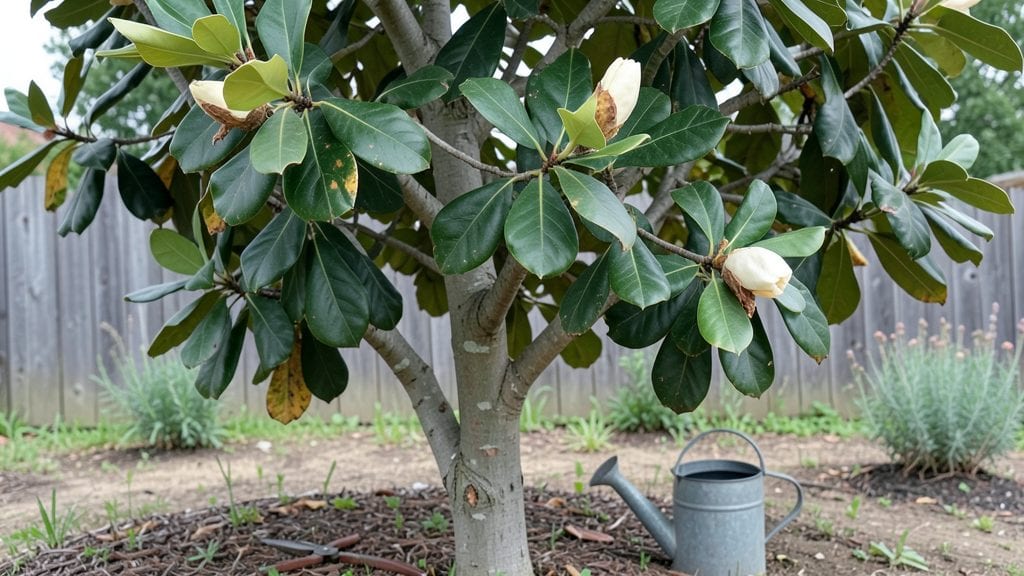
Magnolia tree problems often start with pruning mistakes that stifle those showstopping blooms. 🌿 I’ve watched my own grandiflora magnolia go from lush and proud to struggling—until I learned the right cuts make all the difference.
The key isn’t just when to trim but how: too aggressive cuts invite disease, while lazy pruning chokes growth.
Most issues—like powdery mildew or scale insects—trace back to two things: weak spots from bad pruning and stressed roots. I’ll show you how to spot the warning signs (yellowing leaves, sparse blooms, sticky sap) and fix them without killing your tree.
Even a single wrong cut can set back blooming for years, so we’re getting this right.
By the end, you’ll prune with confidence, knowing exactly where to cut to encourage stronger branches and more dramatic flowers. The secret lies in timing (late winter, after blooms fade) and technique (clean cuts at the right angle).
Your magnolia will thank you with glossy leaves and a canopy of blooms that’ll make neighbors green with envy.
Works for all magnolia types—southern, star, or saucer—no matter your yard size. Let’s turn those problems into a thing of the past.
Root Causes Behind Magnolia Struggles
Magnolia trees are stunning additions to any landscape, but their health can decline due to a mix of environmental, biological, and human-induced factors. Understanding why these issues arise is the first step to restoring your tree’s vibrancy.
Below, we break down the key culprits—backed by science—and explain how they disrupt growth, blooms, and overall vigor.
Magnolias thrive in well-draining, slightly acidic soil (pH 5.0–6.5). When soil fails to meet these needs, problems like yellowing leaves, stunted growth, or poor flowering emerge. Here’s why:
- Compacted or Waterlogged Soil Magnolias hate soggy roots, which suffocate them by cutting off oxygen.
This triggers anaerobic bacteria that release toxic compounds like ethylene, signaling the tree to shed leaves prematurely. Actionable fix: Test soil drainage—dig a 12-inch hole, fill it with water, and time how long it takes to drain.
If it’s slower than 6 hours, amend with compost or sand to improve aeration.
- Nutrient Deficiencies (Especially Nitrogen & Iron) Yellowing between leaf veins (a classic iron chlorosis sign) often stems from alkaline soil locking out iron.
Nitrogen deficiency (pale green leaves) weakens the tree’s energy reserves, reducing bloom production. Actionable fix: Apply chelated iron supplements (for chlorosis) or a slow-release nitrogen fertilizer (like 10-10-10) in early spring. Mulch with pine needles or oak leaves to acidify soil naturally over time.
- Soil pH Imbalance Soil pH above 6.5 blocks micronutrient uptake (e.g., manganese, zinc), while pH below 4.5 can burn roots.
Both extremes stress the tree, making it susceptible to pests or disease. Actionable fix: Use a soil test kit (available at garden centers) and adjust with elemental sulfur (to lower pH) or lime (to raise it), following package rates.
Magnolias are magnet targets for pests and pathogens, especially when stressed. Here’s how they exploit weaknesses:
- Scale Insects & Spider Mites These sap-suckers clog stomata (leaf pores), causing sticky honeydew, sooty mold, and curled leaves.
They thrive in hot, dry conditions and weak trees (often those with compacted roots). Actionable fix: Blast off pests with a strong hose spray (💦) or apply neem oil or insecticidal soap in late spring/early summer. Release ladybugs or lacewings (natural predators) for long-term control.
- Fungal Infections (e.g., Powdery Mildew, Anthracnose) Fungi like powdery mildew (white, powdery patches) or anthracnose (dark, sunken leaf spots) spread via humid, stagnant air and infected mulch.
They weaken the tree’s photosynthesis, leading to defoliation. Actionable fix: - Prevent: Space trees for airflow, avoid overhead watering, and prune for sunlight penetration. - Treat: Spray with copper fungicide (for anthracnose) or baking soda mix (1 tbsp baking soda + 1 quart water + a drop of soap) for mildew.
- Borers & Bark Diseases Magnolia bark borers (🪲) tunnel into the cambium layer, disrupting nutrient flow. Signs include sawdust-like frass near the trunk and oozing sap.
Weak trees or those with physical wounds (from improper pruning) are prime targets. Actionable fix: Seal fresh wounds with pruning paint, and apply beneficial nematodes (like Heterorhabditis bacteriophora) to the soil to target larvae.
Magnolias are sensitive to extreme conditions, and sudden shifts can trigger leaf scorch, bud drop, or dieback.
- Heat Stress & Drought Magnolias wilting leaves or premature leaf drop often signal transpirational stress—when the tree loses more water than it absorbs.
This is common in full sun + high winds or during prolonged dry spells. Actionable fix: - Water deeply 1–2 times per week (1–1.5 inches per session) during droughts. - Mulch heavily (3–4 inches of organic mulch) to retain moisture and regulate soil temp. - Provide afternoon shade with a lightweight shade cloth if in a hot climate (e.g., Zone 8+).
- Winter Burn & Freeze Damage Young magnolias or those in Zone 6 or colder can suffer winter desiccation—when cold, dry winds dehydrate leaf tissue without the tree’s ability to absorb water from frozen soil. Actionable fix:
- Wrap the trunk with burlap or tree guard to protect from wind.
- Avoid late-season pruning (stimulates new growth that can’t harden off before frost).
- Apply anti-desiccant sprays (like Wilt-Pruf) in late fall to seal leaf surfaces.
- Improper Watering (Over or Under) Overwatering leads to root rot (caused by Phytophthora fungi), while underwatering stresses the tree into dormancy. Both scenarios delay blooming and weaken structural integrity. Actionable fix: Use a moisture meter to check soil—water when the top 2 inches are dry.
Install drip irrigation for consistent, slow-release hydration.
Even well-meaning gardeners can accidentally sabotage a magnolia’s health with poor pruning timing, technique, or overzealous trimming.
- Pruning at the Wrong Time Magnolias set flower buds in late summer/fall for the following spring. Pruning after bud set (winter) or during flowering removes next year’s blooms. Actionable fix: Prune immediately after flowering (late spring) to avoid cutting off new buds. Never prune in fall or winter.
- Top-Heavy or Improper Cuts Removing too many branches at once (especially large limbs) disrupts the tree’s hormonal balance, leading to dieback or weak crotches (where branches split). Actionable fix: - Thin selectively—remove no more than 25% of foliage in one season. - Use the "3-cut method" for large branches to avoid bark tears: 1. Undercut 12–18 inches from the branch collar.
- Top-cut just outside the branch collar.
- Clean cut to remove the stub.
- Over-Fertilizing or Using Wrong Products Magnolias are light feeders—excess nitrogen or synthetic fertilizers burn roots, while high-phosphorus fertilizers (for flowering) can stunt growth if overapplied. Actionable fix: Stick to balanced, slow-release fertilizers (like 10-10-10) in early spring, and avoid granular fertilizers near the trunk (can cause salt buildup).
Pro Tip: 🌡️ Monitor your magnolia’s microclimate—shade, wind, and soil moisture vary just a few feet from the tree. Use a weather station or soil probe to track conditions and adjust care accordingly!
Quick Fixes for Common Magnolia Issues
Magnolia trees are stunning but can face challenges that affect their health and beauty. Whether it’s sparse blooms, yellowing leaves, or pests, the right care can turn things around. Below are practical, step-by-step solutions for the most common magnolia tree problems—plus tips to keep your tree thriving long-term.
If your magnolia isn’t flowering as expected, it’s often due to improper pruning, age, or stress. Here’s how to revive those show-stopping blooms:
🔥 Prune at the Right Time
- When: Prune immediately after flowering (late spring to early summer) for spring-blooming varieties like Magnolia grandiflora.
For summer-bloomers (e.g., Magnolia stellata), wait until after the last bloom. - Why? Pruning too late can remove next year’s flower buds. - How: Use clean, sharp pruners to make cuts just above a bud or branch collar. Avoid heavy pruning—remove only dead, diseased, or crossing branches.
🍳 Feed for Better Blooms
- Fertilize in early spring with a balanced, slow-release fertilizer (10-10-10 or 20-20-20).
- Avoid high-nitrogen fertilizers—they encourage leafy growth over flowers.
- Pro tip: 💡 Mulch around the base (2-3 inches of organic mulch like pine straw) to retain moisture and nutrients.
🌡️ Check for Stress Factors
- Too much shade? Move young trees to partial sun (4-6 hours of sunlight).
- Overwatering? Magnolias hate soggy roots—ensure well-draining soil and water only when the top 2 inches are dry.
- Age matters: Younger trees (under 5 years) may not bloom heavily.
Be patient!
Yellowing leaves can signal nutrient deficiencies, pests, or disease. Here’s how to diagnose and fix it:
👨🍳 Test for Nutrient Deficiencies
- Iron deficiency (chlorosis)? Apply chelated iron or iron sulfate in early spring.
- Nitrogen deficiency? Use a low-nitrogen fertilizer (like 5-10-10) in spring.
- Magnesium deficiency? Sprinkle Epsom salt (1 tbsp per gallon of water) around the base monthly.
🔪 Treat Pest Infestations
- Scale insects or spider mites? Spray with neem oil or insecticidal soap (follow label instructions).
- Japanese beetles? Handpick them or use milky spore for long-term control.
- Pro tip: 🌡️ Water deeply in the morning to deter pests and fungal diseases.
⏰ Address Fungal Diseases
- Powdery mildew or leaf spot? Prune affected leaves and apply copper fungicide or baking soda spray (1 tbsp baking soda + 1 gallon water + a drop of dish soap).
- Prevent future issues: Improve air circulation by spacing trees properly and avoid overhead watering.
Pests like magnolia scale, webworms, and borers can weaken your tree. Act fast with these solutions:
| Pest | Signs | Fix It |
|---|---|---|
| Scale Insects | Sticky residue (honeydew), white bumps | Spray with horticultural oil or soapy water (1 tsp mild soap per quart). Repeat weekly. |
| Webworms | Silk webbing, chewed leaves | Prune and destroy infested branches. Apply Bt (Bacillus thuringiensis) spray. |
| Borers | Sawdust-like frass, wilting branches | Inject systemic insecticide (like imidacloprid) or call an arborist for professional treatment. |
| Japanese Beetles | Skeletons of leaves, larvae in soil | Handpick adults or use neem oil to deter them. |
💡 Pro Tip: Encourage natural predators like ladybugs and birds by planting neighboring pollinator-friendly plants (e.g., marigolds, lavender).
An ounce of prevention saves a pound of cure! Follow these long-term care tips to keep your magnolia healthy:
- 🎯 Prune regularly (every 1-2 years) to maintain shape and remove deadwood. - ✨ Mulch properly—keep mulch 3-4 inches deep but 6 inches away from the trunk to prevent rot. - 🌡️ Monitor soil pH—magnolias prefer slightly acidic soil (pH 5.0-6.5).
Test annually and amend with sulfur or peat moss if needed. - 🔥 Avoid overwatering—deep, infrequent watering (1-2 inches per week) is best. - 🍎 Watch for early signs of stress—wilting, discoloration, or pest activity. Act quickly!
By following these targeted solutions, your magnolia should bounce back with vibrant blooms, lush foliage, and pest-free resilience. Happy gardening! 🌸🌿
Frequently asked questions
Why are my magnolia leaves turning yellow between the veins?
This is likely iron chlorosis, caused by alkaline soil blocking iron uptake. Test your soil pH—magnolias thrive in acidic soil (pH 5.0-6.5). Apply chelated iron supplements in early spring and mulch with pine needles to acidify the soil naturally over time.
Can I prune my magnolia in winter to encourage more blooms?
Never prune in winter! Magnolias set next year’s flower buds in late summer/fall. Prune immediately after blooming (late spring) to avoid removing potential flowers. Focus on removing dead or crossing branches—never cut more than 25% of foliage in one season.
What should I do if I see white, powdery spots on my magnolia leaves?
That’s powdery mildew, a fungal disease. Improve airflow by thinning dense branches and avoid overhead watering. Spray leaves with a baking soda mix (1 tbsp baking soda + 1 quart water + a drop of soap) every 7-10 days until it clears. For severe cases, use a copper fungicide.
How do I know if my magnolia has scale insects?
Look for small, white bumps on branches or sticky honeydew residue on leaves. Wipe off visible pests with a damp cloth or spray with neem oil (follow label instructions). For heavy infestations, apply horticultural oil in late spring when pests are most active.
My magnolia isn’t blooming—what could be wrong?
Common causes include over-pruning, poor sunlight, or nutrient deficiencies. Ensure it gets 4-6 hours of sunlight daily and fertilize with a balanced, low-nitrogen fertilizer in early spring. Young trees (under 5 years) may also need more time to mature before blooming.