
How To
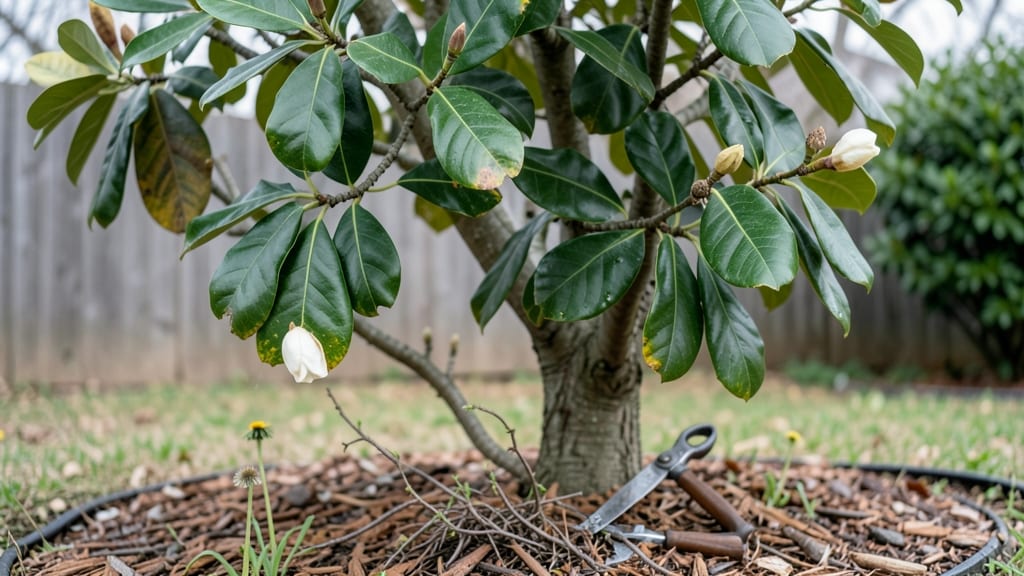
Pruning magnolia trees isn’t just about shaping—it’s about unlocking next year’s blooms and keeping the tree healthy for decades. ✨ I’ve learned that timing, technique, and knowing your magnolia’s personality (evergreen vs. deciduous) make all the difference.
A single wrong cut can rob you of flowers or stress the tree for years.
The best time to prune depends on your magnolia: late winter or early spring for most varieties, right after blooming for Magnolia stellata, and minimal pruning for Magnolia grandiflora unless removing dead wood.
With the right tools—a sharp bypass pruner, loppers for thicker branches, and gloves to handle those thorns—you’ll avoid tearing bark or spreading disease. Just remember: less is more. These trees bloom on old wood, so aggressive cuts mean fewer flowers next spring.
📚 In This Guide
- What you need
- Instructions
- Tips and common mistakes
- Wrapping up and next steps
What you need
- ● Pruning shears (bypass or anvil type) – For small branches (¼" to ¾" in diameter). Choose bypass for cleaner cuts.
- ● Loppers – For medium branches (¾" to 2" in diameter). Look for long-handled models for better leverage.
- ● Pruning saw – For thick branches (2" or larger). Opt for a curved-tooth saw to avoid tearing bark.
- ● Disposable gloves – Heavy-duty, cut-resistant gloves to protect your hands from thorns and sap.
- ● Rubbing alcohol or bleach solution – 70% isopropyl alcohol or 1:9 bleach-water mix to sterilize tools between cuts and prevent disease.
- ○ Sealing wax or pruning sealant – Optional but recommended for large cuts (over ½" diameter) to protect against pests and decay.
- ● Ladder or extension pole – If your magnolia is taller than 6 feet, use a stable, non-slip ladder or a pole saw for high branches.
- ● Heavy-duty trash bags or bucket – To collect pruned branches and debris for easy cleanup.
- ● Hand pruners with ratcheting mechanism – For stubborn branches that need extra force.
- ● Safety glasses – To shield your eyes from flying debris.
- ● Work boots or closed-toe shoes – For protection while standing on uneven ground.
- ● Tree wrap or tape – To protect the trunk if you’re pruning near it.
- ● Sharpie or marker – For marking branches to prune (helpful for complex shaping).
Step-by-step instructions for pruning magnolia trees
Pruning magnolias isn't just about shaping—it's about preserving their legendary blooms and health.
✂️ Step 1: Time Your Pruning for Optimal Bloom and Growth
Magnolias bloom on old wood, meaning their flowers form on last year's growth. Never prune after mid-summer—you risk removing next year's flower buds. The best time is immediately after flowering, when blooms have faded but before new growth hardens. For late-blooming varieties like Magnolia grandiflora, wait until late spring.
If you must prune in fall or winter, limit work to light shaping only. Avoid heavy cuts—magnolias heal slowly and are prone to disease when stressed. I always mark the timing on my calendar so I never miss the window.
✂️ Step 2: Gather the Right Tools for Clean, Safe Cuts
Use only sharp, sterilized pruning tools—dull blades tear bark and invite infection. A bypass pruner works for branches under ½ inch thick, while a pruning saw with a fine-tooth blade handles thicker limbs. Sterilize tools with 70% rubbing alcohol before and after pruning to prevent spreading fungal diseases like anthracnose.
Wear gloves—magnolia bark is rough and can irritate skin. I also keep a bucket of soapy water nearby to clean tools between cuts, especially if the tree has signs of disease like oozing sap or dead branches.
✂️ Step 3: Remove Dead, Diseased, or Crossing Branches First
Start by eliminating dead wood—branches that snap easily when bent or have no green beneath the bark. Next, cut out diseased branches (look for discolored bark, fungal growth, or oozing sap). Remove any branches that cross or rub others, as these create wounds and weaken the tree.
Make cuts just outside the branch collar—the swollen area where the branch meets the trunk. Never leave stubs; they rot and invite pests. For thick branches, make a 3-step cut: undercut, then cut above, and finally clean up the top edge. This prevents bark from tearing.
✂️ Step 4: Thin the Canopy for Better Airflow and Light
Magnolias need open, airy canopies to prevent fungal issues and encourage strong growth. Focus on removing branches that grow inward or downward, thinning the center by 20-30% max. Avoid "lion-tailing"—cutting back all branches to a single stub, which stresses the tree.
Step back often to visualize the tree's shape. You want a balanced silhouette with no heavy clusters of branches on one side. For young trees, prune to encourage a strong central leader (main upright stem). Older trees may need selective thinning to reduce weight and improve bloom visibility.
✂️ Step 5: Shape Gradually and Avoid Over-Pruning
Remove no more than 25% of the tree's foliage in one season. Heavy pruning triggers excessive water sprouts (fast-growing, weak shoots) and weakens next year's blooms. For formal shaping, make small adjustments over 2-3 years—magnolias respond better to patience than drastic cuts.
If your tree has water sprouts (thin, upright shoots), prune them back to a bud or side branch. These compete with flower buds for energy. After pruning, apply a wound sealant only if the cut is larger than ½ inch in diameter—small cuts seal naturally and benefit from air exposure.
⏰ Step 6: Clean Up and Monitor for Recovery
Rake up and dispose of all pruned branches—never leave them on the ground, as they harbor pests and diseases. Sterilize your tools again with alcohol and store them in a dry place. Water the tree deeply after pruning to reduce stress, but avoid overwatering, which can drown fresh cuts.
Watch for new growth in 4-6 weeks—this signals the tree is healing. If you see yellowing leaves or oozing sap at pruning sites, the cuts may be too large or the tree is stressed. Adjust your approach for next year, focusing on lighter pruning and better timing.
Tips & tricks for pruning magnolia trees
Pruning magnolias requires precision—one wrong cut can mean fewer blooms next season. Here's what I've learned after years of working with these majestic trees.
Timing is Everything: The post-bloom window (immediately after flowers fade) is your golden hour. For early bloomers like Magnolia stellata, this is typically late spring, while late bloomers like Magnolia grandiflora can wait until early summer. I mark my calendar with reminders because missing this window means sacrificing next year's spectacular blooms. Remember, magnolias bloom on old wood, so never prune after mid-summer!
The Three-Step Cut Technique: When dealing with branches thicker than ½ inch, follow this exact method: First make an undercut about 12 inches from the trunk, then cut above the undercut just outside the branch collar, and finally clean up the top edge. This prevents bark tearing and promotes faster healing. I've seen many gardeners skip the undercut and end up with ugly tears that take years to heal.
Canopy Thinning Strategy: Aim to thin the center by no more than 20-30% to maintain airflow and light penetration. I visualize the tree's silhouette from multiple angles, stepping back every few cuts. For young trees, focus on developing a strong central leader—the main upright stem—that will support future growth. The key is gradual shaping over 2-3 years rather than drastic changes.
Disease Prevention Protocol: Sterilize your tools between every cut, especially if you notice oozing sap or discolored bark. I keep a spray bottle of 70% rubbing alcohol handy and wipe down blades after each cut. Also, never leave pruned branches on the ground—they harbor pests and diseases that can infect your magnolia. Dispose of them immediately in sealed bags.
Pro Tips for Prune Magnolia Tree
- Pruning magnolias requires precision—one wrong cut can mean fewer blooms next season.
- Timing is Everything: The post-bloom window (immediately after flowers fade) is your golden hour.
- This prevents bark tearing and promotes faster healing.
Frequently asked questions
Got questions about pruning your magnolia tree? You’re not alone! Here are some of the most common concerns—and their answers—to help you prune with confidence.
When is the best time to prune a magnolia tree?
The ideal window is late winter or early spring (just before buds swell), but you can also prune after blooming if needed. Avoid pruning in fall—this can stimulate tender new growth that may freeze. For evergreen magnolias, prune anytime except during peak bloom.
Can I prune a magnolia tree after it blooms?
Yes! If you missed the late-winter window, prune right after flowering (usually spring). This won’t harm the tree, but avoid heavy pruning—stick to light shaping or deadwood removal. Evergreen magnolias are more flexible, so timing is less critical.
What if I accidentally prune too much?
Don’t panic! Magnolias are resilient, but over-pruning (removing >25% of foliage) can stress the tree. If you’ve gone overboard, focus on light maintenance next year and fertilize to support recovery. Severe cuts may reduce blooms temporarily—be patient!
Should I remove spent blooms from my magnolia?
Only if they’re diseased or unsightly. Deadheading (trimming spent flowers) isn’t necessary for most magnolias—it can even reduce next year’s blooms! Let nature take its course unless you’re dealing with pests or decay.
How do I prune a young magnolia tree for shape?
For young trees, focus on structure: Remove crossing branches, weak limbs, and suckers at the base. Use the “open-center” method—trim inward-facing branches to encourage airflow. Avoid “topping” (cutting the main stem)—it weakens growth and invites pests.
Wrapping up and next steps
Pruning your magnolia tree doesn’t have to be intimidating—with the right timing, tools, and techniques, you can encourage vibrant blooms and a healthy shape year after year! 🌸 Remember to prioritize late winter or early spring for major cuts, avoid pruning during bloom season, and always sterilize your tools to prevent disease.
Whether you’re shaping young branches or revitalizing an older tree, your efforts will pay off in stunning flowers and lush foliage.
Ready to give your magnolia the care it deserves? Grab your pruners and start with one small section at a time—confidence grows with every cut! For extra guidance, check out our FAQs or explore seasonal magnolia care tips to keep your tree thriving all year round.