Diseases
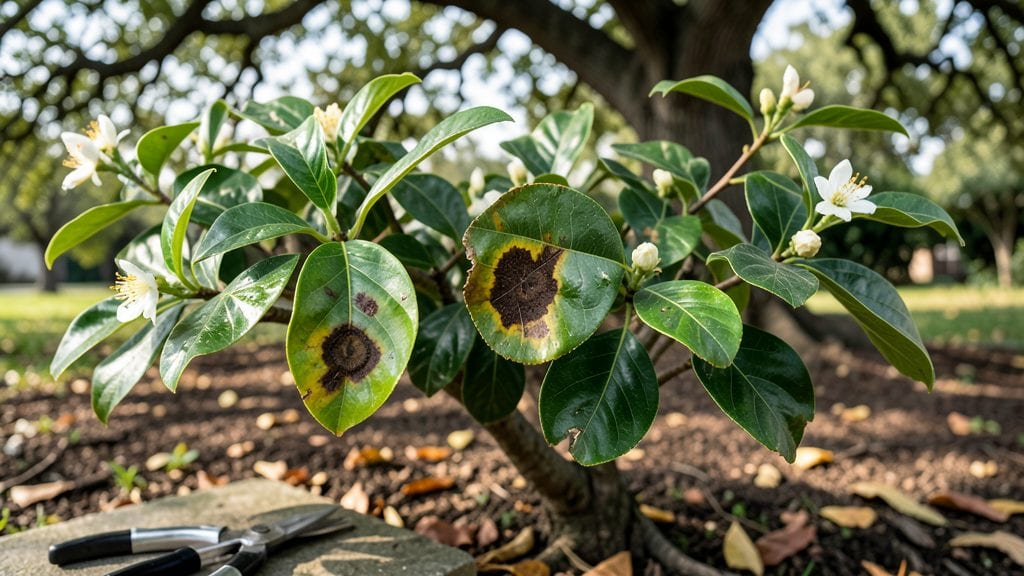
Loquat tree diseases can turn your lush harvest into a sad sight faster than you think. 🌿 I’ve seen anthracnose blacken fruit overnight and bacterial canker girdle branches like a silent killer—both before I caught them.
The good news? Spotting these issues early means you can still save your tree with the right moves.
Most problems start with wet foliage, poor airflow, or stressed roots—things you can actually control. Anthracnose loves humid summers, while bacterial canker thrives when pruning cuts aren’t clean.
Even nutrient deficiencies (like yellowing leaves) often have simple fixes: adjust your fertilizer or improve drainage. The key is acting before symptoms spread.
You’ll learn to recognize the first signs—spots, ooze, or wilting—and how to treat them without harsh chemicals. Pruning infected branches, applying copper sprays, or switching to disease-resistant varieties can keep your tree thriving. By the end, you’ll spot trouble before it ruins your harvest.
Works for backyard trees in warm climates or container-grown loquats. Let’s keep those fruits sweet and your tree standing strong for years.
Underlying Causes Of Tree Stress
Loquat trees, like all fruit-bearing plants, are vulnerable to diseases when their natural defenses weaken. Understanding why these issues arise helps gardeners take proactive steps to prevent outbreaks. Below, we break down the key factors that create the perfect storm for loquat tree diseases—from environmental stressors to biological invaders.
Loquat trees thrive in USDA Zones 8–10, where temperatures stay mild year-round. When exposed to sudden cold snaps (<32°F) or scorching heat (>95°F), their cellular processes shut down, leaving them susceptible to fungal and bacterial infections.
- Cold Damage: Frozen leaves or bark create entry points for pathogens like Phytophthora (root rot) or Alternaria (leaf spot).
- Heat Stress: Prolonged drought weakens the tree’s cuticle (its natural protective layer), making it easier for spores to latch on.
- Actionable Fix: Mulch heavily in winter (3–4 inches of organic matter) and provide drip irrigation in summer to stabilize soil temps.
Loquat trees despise "wet feet." When soil stays soggy for more than 48 hours, anaerobic bacteria and fungi explode in growth, leading to:
- Root Rot (Phytophthora): Waterlogged roots suffocate, inviting this soilborne pathogen. Infected trees wilt even when soil is moist.
- Canker Diseases (Botryosphaeria): Excess moisture softens bark, allowing fungal spores to penetrate and form sunken, oozing lesions.
- Pro Tip: Test drainage by digging a 12-inch hole—if water doesn’t drain within 6 hours, amend soil with perlite or sand.
Fungi are everywhere—but they only cause trouble when conditions are just right. Loquat trees face the highest risk during:
- Humid Weather (70%+ RH): Spores like Anthracnose (which causes dark, crinkled leaves) thrive in damp air. Overhead watering sprays spores directly onto foliage.
- Warm, Still Nights: Temperatures between 75–85°F with little wind create the ideal incubation chamber for Guignardia (another leaf spot culprit).
- Old Debris: Fallen leaves or mummified fruit harbor spores year-round. Remove them within 2 weeks of drop.
Some insects don’t just eat loquat trees—they spread diseases like silent assassins. The worst offenders:
| Pest | Disease Spread | Signs to Watch For |
|---|---|---|
| Scale Insects | Sooty Mold (black fungal growth on honeydew) | Sticky residue on leaves; yellowing foliage |
| Thrips | Bacterial Leaf Scorch (vascular blockages) | Silver streaks on leaves; distorted new growth |
| Citrus Leafminer | Secondary Fungal Infections (open wounds) | Serpentine tunnels in leaves; premature leaf drop |
💡 Pro Tip: Use neem oil or horticultural oil in early spring to smother overwintering pests before they multiply.
Every cut is a wound. If pruning tools aren’t sterilized or cuts aren’t made correctly, pathogens rush in like vultures. Common mistakes:
- Dirty Tools: Fungal spores from previous cuts (e.g., Cytospora) hitchhike to fresh wounds.
- Over-Pruning: Removing >25% of foliage at once stresses the tree, lowering its resistance to diseases like Dieback.
- Ragged Edges: Uneven cuts tear bark, creating perfect entry points for canker fungi.
- ✨ Solution: Prune in late winter (dormant season), use 70% isopropyl alcohol to sterilize tools, and make cuts at a 45° angle just outside the branch collar.
Fixing Fungal and Bacterial Threats
Loquat trees are resilient, but fungal and bacterial diseases can quickly turn your lush foliage into a battleground. The good news? Early action and smart prevention can save your tree. Below, we’ve mapped out practical fixes for common loquat tree diseases, along with prevention tips to keep your tree thriving.
Fungi thrive in damp conditions, so the key is drying out the tree and boosting airflow.
🔥 Anthracnose & Leaf Spot
Fix:
- Prune infected branches (🔪) immediately—sterilize shears with rubbing alcohol between cuts.
- Apply copper fungicide (like Bordeaux mixture) every 2–3 weeks during wet seasons.
- Remove fallen leaves (🍃) from the base to prevent spore spread.
Prevention:
- Space trees 8–10 ft apart for better airflow.
- Water at the base, not overhead (💦) to keep leaves dry.
- Avoid overhead irrigation—drip systems work best.
🍄 Powdery Mildew (White Fuzzy Coating)
Fix:
- Spray with neem oil or sulfur-based fungicide (🌿) at first sign of white dust.
- Thin out dense foliage to improve sunlight penetration.
- Clean pruners with bleach (1 part bleach : 9 parts water) after each cut.
Prevention:
- Plant in full sun (✨)—powdery mildew loves shade.
- Water early in the day so leaves dry before nightfall.
- Use reflective mulch (like silver plastic) to deter fungal spores.
🍅 Fruit Rot (Soft, Mushy Spots)
Fix:
- Pick and destroy infected fruit (🍒) immediately—don’t compost it!
- Apply a fungicide with myclobutanil (like Scotts Disease Control) before blooming.
- Reduce humidity with a fan in the greenhouse (if applicable).
Prevention:
- Thin fruit clusters (🍑) to reduce overcrowding and improve airflow.
- Avoid wet foliage—prune branches that drip water onto fruit.
Bacteria spread fast, so sterilization and speed are critical.
💦 Bacterial Leaf Spot (Yellow Halos & Ooze)
Fix:
- Remove and burn infected leaves (🔥)—do not compost them.
- Spray copper bactericide (like Copper Soap) every 10–14 days.
- Disinfect tools with 70% isopropyl alcohol between cuts.
Prevention:
- Avoid wounding the tree—use sharp pruners for clean cuts.
- Water in the morning (🌞) to prevent evening moisture buildup.
- Rotate fungicides to prevent resistance.
🌱 Bacterial Canker (Sunken, Oozing Wounds)
Fix:
- Cut out infected bark (🔪) ½ inch beyond the damaged area.
- Paint wounds with pruning sealant (🎨) to prevent further entry.
- Apply streptomycin-based spray (if organic isn’t working).
Prevention:
- Prune during dry weather (⏰)—never in wet conditions.
- Keep the tree well-nourished (💪) to boost natural defenses.
Pests weaken trees, making them susceptible to secondary infections.
🐜 Scale & Aphid Infestations (Sticky Sap, Curled Leaves)
Fix:
- Blast off pests with water (💦) first thing in the morning.
- Apply horticultural oil or insecticidal soap (🧴) every 5–7 days.
- Introduce ladybugs or lacewings (🐞) for natural control.
Prevention:
- Inspect new plants (🔍) before bringing them home.
- Use yellow sticky traps to monitor pest activity early.
- Test soil pH (📊)—loquats prefer 6.0–7.0; adjust with lime or sulfur if needed.
- Mulch with wood chips (🌲) to regulate soil moisture and temperature.
- Rotate fungicides (🔄) to avoid resistance—don’t use the same one season after season.
By acting fast and staying proactive, you can keep your loquat tree disease-free and bursting with sweet fruit! 🍊🌿
Frequently asked questions
What are the first signs of fungal infections on my loquat tree?
Look for dark, sunken spots on leaves or fruit (anthracnose), white powdery coatings (mildew), or yellow halos around lesions. Early fungal signs often appear as tiny specks that grow rapidly in damp conditions. Check both upper and lower leaf surfaces daily during humid weather.
Can I save my loquat tree if it has bacterial canker?
Yes, but act fast! Cut out infected branches ½ inch beyond the oozing lesions and sterilize your tools with 70% isopropyl alcohol. Apply copper bactericide and seal wounds with pruning paint. Severe cases may require removing the entire tree to prevent spread.
How often should I spray fungicides on my loquat tree?
Apply copper-based fungicides every 2-3 weeks during rainy seasons or when humidity exceeds 70%. For preventive care, a single application before blooming can reduce 90% of fungal risks. Always alternate products to avoid resistance buildup.
Why do my loquat leaves turn yellow even when I'm fertilizing?
Yellowing leaves often signal nutrient deficiencies (like iron or nitrogen) or overwatering. Test soil pH (6.0-7.0 is ideal) and check drainage. If roots are waterlogged, fungal diseases like Phytophthora may be blocking nutrient uptake.
Are there disease-resistant loquat varieties?
Yes! Varieties like 'Big Jim' and 'Baekcheong' show better resistance to fungal diseases. While no variety is completely immune, these types handle humidity better. Always plant in well-draining soil and maintain proper spacing to reduce disease pressure.