
Trees
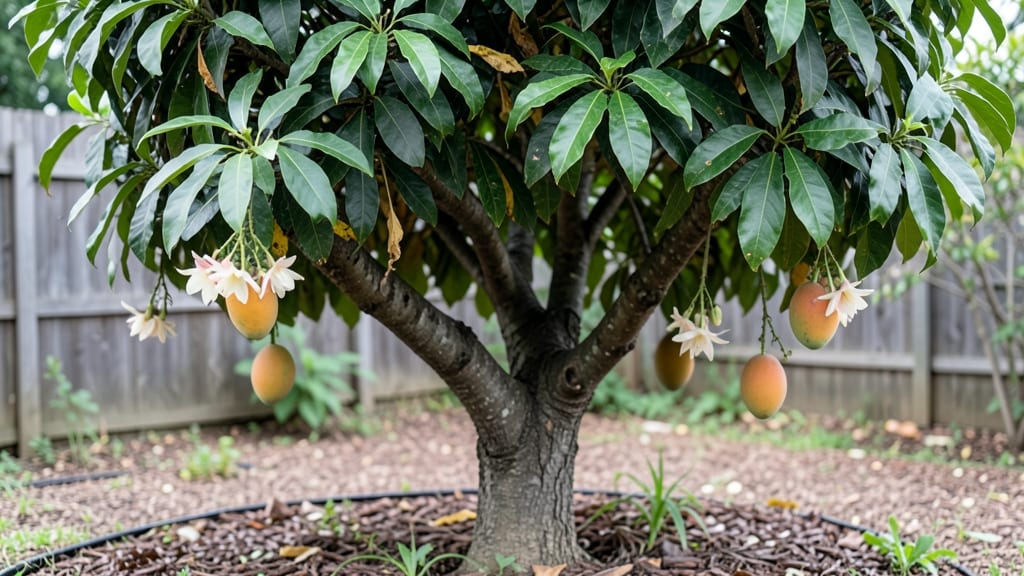
Growing large mango trees for a fast privacy screen means tropical vibes without the decade-long wait. 🌿 I planted mine last spring, and they’re already 8 feet tall—just like the nursery promised.
The key isn’t magic; it’s matching their needs to your climate, from soil prep to pruning hacks that keep them lush and productive.
You’ll need a spot with full sun (6+ hours daily) and well-draining soil—think sandy loam mixed with compost. Mangoes love heat but hate soggy roots, so raised beds or mounds work wonders in wetter areas.
Start with a young grafted tree (they fruit faster) and stake it early to prevent flopping in windy spots.
Within three years, you’ll have a dense, 12-foot-tall wall of glossy leaves and fragrant blossoms. The best part? They produce fruit by year 4 or 5, so your privacy screen doubles as a snack station.
Prune aggressively in late winter to shape growth and remove dead wood—this keeps them compact and healthy.
Works in zones 10-11 (with winter protection in cooler microclimates) and thrives in containers for smaller yards. Let’s get those roots growing!
📚 In This Guide
- What you need
- Instructions
- Tips and common mistakes
- Wrapping up and next steps
What you need
- ● Mango tree saplings: 3–5 healthy, disease-free grafted varieties (e.g., 'Keitt,' 'Haden,' or 'Tommy Atkins') for optimal growth and fruit quality. Choose 1–2-year-old saplings for faster establishment.
- ● Well-draining soil: A mix of 60% topsoil, 30% compost, and 10% perlite/sand (or a pre-mixed citrus/mango blend). Test soil pH (ideal: 5.5–7.0).
- ● Organic fertilizer: 10-10-10 NPK blend (or citrus-specific fertilizer) for planting. Later, switch to 6-6-6 or 8-3-9 for mature trees.
- ● Mulch: 3–4 inches of wood chips or straw to retain moisture and suppress weeds.
- ● Drip irrigation system: 1–2 emitters per tree (flow rate: 1–2 gallons/hour) with a timer for efficiency.
- ● Stakes & ties: 3–4 wooden stakes (2–3 ft tall) and soft tree ties to support young trees in windy areas.
- ● Pruning tools: Bypass pruners (for small branches)
- ● Loppers (for thicker branches)
- ● Sterilizing solution (70% isopropyl alcohol)
- ● Pest/disease control: Neem oil (organic option)
- ● Copper fungicide (for fungal issues)
- ● Yellow sticky traps (for fruit flies)
- ● Soil aerator: For compacted soil (rent or buy a manual core aerator).
- ● Tree guard: 6–8 ft tall wire mesh or plastic to protect young trunks from animals.
- ● Slow-release fertilizer spikes: For convenience (follow package instructions).
- ● Growth regulators: Paclobutrazol (e.g., B-Nine) to control excessive height in early years (use sparingly!).
- ● Weather monitoring: A simple hygrometer to track humidity (mangoes thrive in 60–80% humidity).
- ● Compost tea: For a nutrient boost (brew 2–3 weeks before applying).
Step-by-step instructions for planting large mango trees as a privacy screen
Here’s how to plant four fast-growing mango trees for a lush, tropical privacy screen in just three years.
🌱 Step 1: Choose the Right Location and Prepare the Soil
Mango trees thrive in full sun—pick a spot that gets at least 6-8 hours of direct sunlight daily. Avoid low-lying areas where cold air settles, as mangoes are sensitive to frost. Test your soil’s drainage by digging a 12-inch hole—if water pools after 30 minutes, amend the soil with 2-3 inches of compost to improve aeration.
I like to plant in early spring when temperatures are consistently above 60°F, giving roots time to establish before summer heat. Space each tree 15-20 feet apart to allow for mature canopy spread. Mark the spots with stakes to avoid digging multiple times.
🪴 Step 2: Dig Holes and Plant the Trees
Dig each planting hole twice as wide and just as deep as the tree’s root ball. Gently remove the tree from its container and loosen any circling roots with your fingers—this encourages outward growth. Place the tree in the hole so the top of the root ball sits 1-2 inches above ground level to prevent waterlogging.
Backfill with the native soil, tamping lightly every 4 inches to remove air pockets. Water deeply right after planting to settle the soil and eliminate gaps. A 5-gallon bucket of water per tree ensures roots make contact with moist soil immediately.
☀️ Step 3: Mulch and Water for Fast Establishment
Spread 3-4 inches of organic mulch (like wood chips or shredded bark) in a 2-foot-wide circle around each tree, keeping it 6 inches away from the trunk to prevent rot. Mulch conserves moisture, regulates soil temperature, and suppresses weeds—critical for young trees in their first year.
Water twice weekly for the first month, then taper to once weekly once leaves appear. You’ll know you’re doing it right when the soil stays evenly moist but not soggy—stick your finger 2 inches deep to check. Avoid overhead watering to prevent fungal diseases.
✂️ Step 4: Prune and Fertilize for Rapid Growth
In the first year, focus on removing any dead, damaged, or crossing branches to encourage a strong structure. Prune in late winter or early spring before new growth begins. I cut back any suckers (shoots growing from the base) to direct energy upward—this helps the tree grow taller faster.
Fertilize twice a year with a balanced citrus/mango fertilizer (like 6-6-6) in early spring and again after fruiting. Follow the package rates, but halve them the first year to avoid overfeeding. You’ll see new leaves emerge within 4-6 weeks of fertilizing—that’s your signal the tree is thriving.
🌿 Step 5: Monitor and Protect Through the First Three Years
Watch for aphids or scale insects on new growth—spray with neem oil if you spot sticky residue on leaves. Mango trees are shallow-rooted, so avoid heavy foot traffic near the base. If your area gets cold snaps, wrap young trees in burlap during winter to protect them from temperatures below 30°F.
By year three, your trees should reach 15-20 feet tall with a dense canopy. Thin out any crowded branches to maintain airflow, which reduces disease risk. With consistent care, you’ll have a privacy screen taller than most fences—and the added bonus of sweet, tropical fruit in 5-7 years.
Tips & tricks for perfect large mango trees
A few key tricks will help your mango trees grow into that lush, fast privacy screen in just three years—without the common pitfalls.
The Sunlight Secret: That 6-8 hours of daily sunlight is non-negotiable for mango trees. I've seen trees struggle in partial shade, even when everything else seemed perfect. If your yard has afternoon shade, consider planting on the east side of your property where morning sun dominates. The trees will reward you with faster growth and better fruit production.
Soil Test Trick: Before planting, do a quick drainage test in your 12-inch hole—if water pools after 30 minutes, you're dealing with heavy clay soil. To fix this, mix in 2-3 inches of compost AND consider adding a layer of coarse sand or perlite to improve drainage. I've seen roots rot in compacted soil despite all other care being perfect.
Root Ball Placement: That 1-2 inch elevation above ground level for the root ball isn't just about looks—it prevents waterlogging which can suffocate young roots. When backfilling, use a level to ensure consistent elevation across all four trees. I've seen trees planted too deep struggle to establish properly, while those with proper elevation thrived.
Watering Wisdom: Those first two weeks of twice-weekly watering are critical. I recommend setting a timer for your irrigation system or marking your calendar—consistency is more important than exact amounts. The goal is keeping that 2-inch soil depth evenly moist, not soggy. Overwatering is just as damaging as underwatering for young mango trees.
Pro Tips for Large Mango Trees
- A few key tricks will help your mango trees grow into that lush, fast privacy screen in just three years—without the common pitfalls.
- The Sunlight Secret: That 6-8 hours of daily sunlight is non-negotiable for mango trees.
- Soil Test Trick: Before planting, do a quick drainage test in your 12-inch hole—if water pools after 30 minutes, you're dealing with heavy clay soil.
Frequently asked questions
How fast do large mango trees grow for a privacy screen?
With proper care, mango trees can grow 10–15 feet per year in ideal conditions. In 3 years, you can expect a lush, 20–30-foot-tall screen—faster than many ornamental trees! Fast growth depends on well-draining soil, full sun, and regular watering.
When is the best time to plant a mango tree for a privacy hedge?
Plant in early spring (after last frost) or late summer (before fall rains). Avoid winter planting—mangoes are tropical and sensitive to cold. If you’re in a warm climate (Zone 10+), plant year-round, but spring ensures strong root establishment.
Can mango trees survive in cold climates? What’s the workaround?
Mangoes thrive in USDA Zones 10–11 but can be grown in cooler areas with container gardening or greenhouse protection. For outdoor privacy screens, choose cold-hardier alternatives like fig trees or citrus hybrids if temps drop below 30°F.
Why isn’t my mango tree growing tall? Troubleshooting slow growth.
Slow growth often stems from:
- Poor drainage – Mango roots rot in soggy soil. Amend with sand or gravel.
- Insufficient sunlight – Plant in 6+ hours of direct sun daily.
- Nutrient deficiency – Fertilize with citrus/mango-specific food in spring.
- Pests/disease – Check for aphids or fungal spots; prune affected branches.
If issues persist, test your soil pH (6.0–7.5 is ideal).
Do mango trees need pruning for a dense privacy screen?
Yes! Prune in late winter to:
- Remove dead or crossing branches for airflow.
- Trim suckers at the base to focus energy on upward growth.
- Thin inner foliage to reduce disease risk.
Use sterilized shears and avoid heavy pruning—mangoes bloom on new growth.
Will my mango tree produce fruit if I plant it for privacy?
Yes! Large mango trees are heavy fruit bearers (50–100 lbs/year in mature trees). However, privacy-focused varieties like ‘Keitt’ or ‘Cogshall’ prioritize fast growth and dense foliage over fruit size. If fruit isn’t a goal, prune to encourage leafy growth.
Are there faster-growing alternatives to mango trees for privacy?
If you need a quick screen but mango’s tropical needs are a challenge, consider:
- Leyland Cypress – Grows 3–5 ft/year, evergreen, cold-hardy (Zone 6+).
- Fig Trees – Fast-growing, drought-tolerant, and edible (Zone 7+).
- Bamboo (clumping types) – 6+ ft/year, but invasive if not contained.
For a tropical vibe, try ‘Mexican Petate’ palm—grows 2–3 ft/year and tolerates partial shade.
Wrapping up and next steps
Growing a large mango tree as a fast-growing privacy screen is not only possible—it’s a rewarding project that yields delicious fruit and stunning shade in just three years! 🌳 With the right soil, spacing, and care, you’ll enjoy a lush, tropical oasis that doubles as a natural windbreak and pollinator magnet.
Whether you’re a seasoned gardener or a beginner, this project is well within reach with patience and passion.
Ready to take the next step? Start by selecting your mango variety—research climate suitability, soil needs, and growth habits to pick the perfect fit for your yard. Then, roll up your sleeves and plant with confidence—your future privacy screen (and snack stash!) is just a few seasons away. 🍈✨