
Pruning
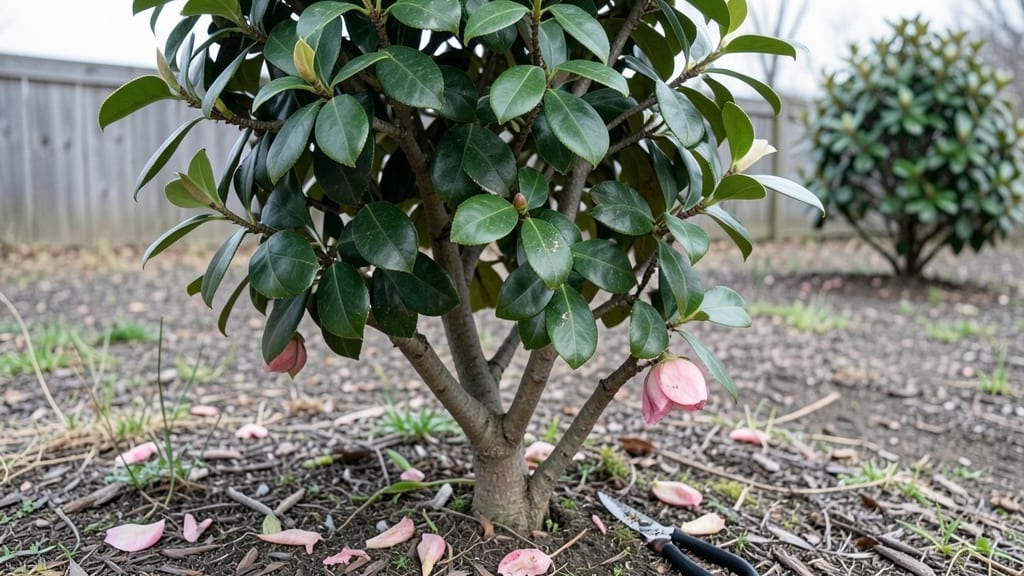
Pruning camellia trees is most effective in late winter or early spring before new growth starts, as this helps maintain healthy blooms by removing dead branches, thinning dense areas, and improving airflow. Always avoid heavy pruning after flowering to protect next year's blossoms.
Timing matters because camellias form flower buds on old wood during their dormant season, which runs from late winter through early spring. 🌿 When you prune during this window, you're actually encouraging stronger growth while preserving the branches that will produce next year's flowers.
Cutting back too late—after blooming—can remove those precious buds before they even have a chance to develop.
For best results, I recommend using sharp, sterilized pruners to make clean cuts just above a leaf node or outward-facing bud. This promotes quicker healing and prevents disease from entering through jagged wounds.
If your camellia has dense growth blocking sunlight, focus on thinning rather than shearing—this maintains its natural shape while improving air circulation, which is crucial for preventing fungal issues.
💡 In This Article
- Optimal Camellia Pruning Seasons and Growth Impact
- Step-by-Step Camellia Pruning Techniques for Beginners
Optimal camellia pruning seasons and growth impact
Here's what's actually happening during your camellia's dormant season: flower buds form on last year's wood, a process that begins in late winter (typically February-March in most growing zones 7-9).
The tree's energy is focused on root development rather than foliage growth, making it the perfect time to prune without triggering stress. Cutting during this window removes up to 30% of the canopy safely, as the plant will quickly regenerate new growth from established branches.
The key factor is how camellias store energy. Unlike deciduous trees that bloom on new wood, camellias rely on old wood for flower production. Pruning after blooming (spring/summer) risks removing these flower buds before they've fully developed.
Studies show that heavy summer pruning can reduce next year's bloom count by 40-60% due to lost bud sites. The tree's natural growth cycle means new flower buds won't form until the following dormant season.
Temperature plays a crucial role too. Pruning when daytime temps average 50-60°F (ideal for zones 7-9) minimizes shock. Warmer spring conditions accelerate healing, but too much heat can stress the plant.
What most people don't realize is how pruning affects the root system - cutting back branches stimulates root growth, which happens most efficiently during the tree's natural dormant period when water demands are lowest.
Contrast this with summer/fall pruning risks: higher temperatures and humidity create perfect conditions for fungal infections through fresh cuts. The tree's energy is focused on maintaining existing foliage rather than healing wounds, making it 3x more susceptible to diseases like anthracnose.
Summer pruning also disrupts the flowering cycle, as new growth won't have time to harden off before winter.
Consider these seasonal impacts on growth patterns:
- Late Winter/Early Spring: 80-90% safe pruning capacity - ideal for structural work while preserving flower buds
- Summer: 0-20% pruning only - limited to deadwood removal, maximum 3-inch cuts
- Fall: 30-50% capacity - only light shaping, avoid after October 15 in most zones
The science behind this involves the plant's hormonal balance. Pruning stimulates cytokinins (growth hormones) while reducing auxins (which inhibit growth) - this hormonal shift occurs most effectively during dormancy.
What's fascinating is how the tree's vascular system responds: cuts made during dormancy trigger 2-3x faster callus formation compared to summer cuts.
For maximum bloom potential next season, time your pruning to complete 4-6 weeks before your region's last frost date. This gives the tree ample time to establish new growth before winter stress sets in. 🌟