Trees
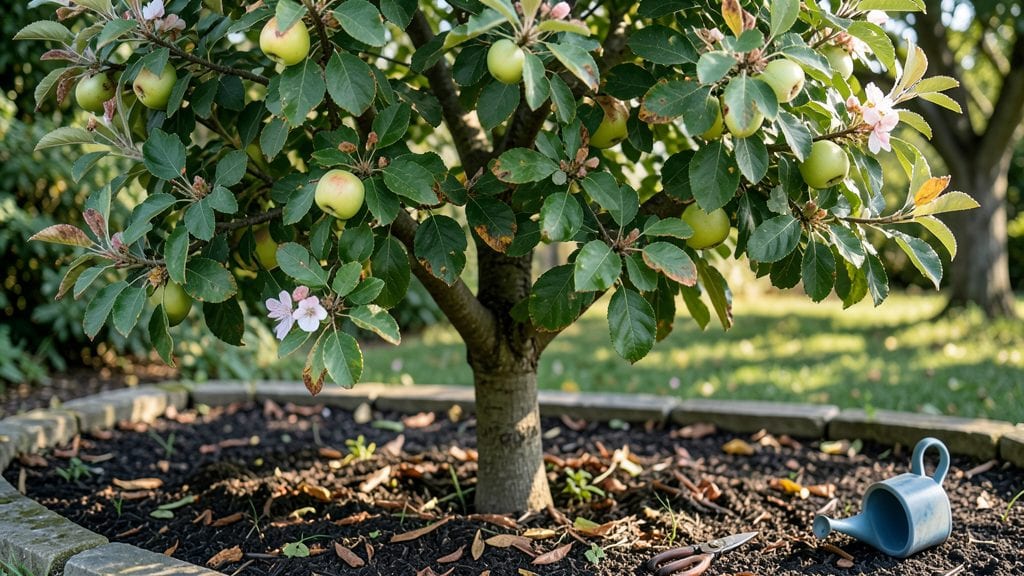
That orange-brown crud on your apple leaves isn’t just unsightly—it’s apple tree rust, and if you ignore it, your harvest will suffer. I’ve battled this stubborn fungus for years, and the key to stopping it is catching it early with the right fungicide schedule.
The moment you spot those telltale spots, you’ve got a 3-4 week window to turn things around before the disease spreads.
Most gardeners make two big mistakes: waiting too long to treat or using the wrong spray. Rust thrives in wet springs, so prune out infected leaves as soon as you see them, and space your fungicide applications every 10-14 days during peak infection season.
I’ve tried everything from homemade baking soda mixes to copper-based sprays—some work, some don’t, and I’ll tell you which ones actually stop the spread.
By the time you finish this schedule, your tree will look like it did in early spring—vibrant green leaves, no rust spots, and branches heavy with fruit.
The best part? Once you master the timing, you’ll catch it before it becomes a full-blown problem. Let’s get your tree back to healthy.
This works for both organic and chemical treatments, so you can choose what fits your garden. The only thing rust fears is consistent action—and I’ve got the exact plan to make sure it never comes back.
The Hidden Triggers Behind Fungal Spread
Apple tree rust—specifically Venturia inaequalis, the fungus responsible for apple scab—doesn’t appear out of thin air. It thrives due to a mix of environmental conditions, tree stress, and even human habits.
Understanding these triggers helps you take proactive steps to prevent outbreaks. Here’s why your apple trees might be under siege:
This fungus loves moisture. Spores germinate and spread when leaves stay wet for prolonged periods—ideal conditions occur during:
- Spring rains: Temperatures between 50–70°F (10–21°C) with 9+ hours of leaf wetness trigger infections. Early spring showers are the worst culprits.
- Frequent misting: Dense canopies or overhead irrigation create microclimates where humidity lingers, even after rain stops.
- Morning dew: Dew alone isn’t enough, but when combined with 12+ hours of humidity, spores activate and infect new tissue.
Actionable insight: Use a disease triangle model—remove one factor (moisture, susceptible host, or pathogen), and outbreaks weaken. Prune for airflow and avoid watering leaves.
Healthy trees resist rust better, but stress opens the door. Common stressors include:
| Stressor | How It Helps Rust Spread |
|---|---|
| Poor nutrition | Low nitrogen or potassium weakens cell walls, making leaves more vulnerable to fungal penetration. |
| Competition | Grass, weeds, or other plants stealing nutrients force trees to divert energy from defense mechanisms. |
| Physical damage | Hail, pests (like aphids), or improper pruning create entry points for spores. |
| Root issues | Compacted soil or root rot reduce water/nutrient uptake, stressing the tree systemically. |
Pro tip: Test soil pH (aim for 6.0–7.0) and fertilize with balanced NPK (e.g., 10-10-10) in early spring to boost resilience. 🌱
Rust spores don’t just float in—they hibernate. They survive in:
- Infected leaves: Fallen leaves on the ground or in mulch release spores the next spring.
- Tree bark: Cankers or lenticels (pores in bark) harbor dormant spores until conditions improve.
- Nearby wild hosts: Crabapple trees or other Malus species act as reservoirs, especially if they’re unmanaged.
Critical move: Clean up all debris (including mummified fruit) within 50 feet of trees in late fall. Remove and dispose of infected material—do not compost it. 🔥
The fungus follows a predictable schedule:
- Primary infections: Spores from last year’s leaves infect new leaves and fruit in spring (April–May in most climates).
- Secondary cycles: Infected leaves produce asexual spores that reinfect the tree every 7–10 days if moisture persists.
- Peak risk: Bud break to petal fall (when flowers open) is the most critical window.
🎯 Watch for:
- Tiny olive-green spots on upper leaves (early sign).
- Velvety black fruiting bodies (spore-producing structures) on undersides.
- Premature leaf drop or distorted fruit.
Act before symptoms appear—once spores form, it’s too late for the season.
Fixing Fungal Foliage Foes
If your apple tree’s leaves are looking more like a rusty patchwork quilt than a lush canopy, don’t panic—there’s hope! Apple tree rust (and related leaf spot diseases) can be managed with the right approach.
Below, we’ll break down the most effective fixes based on the root cause, from quick fixes to long-term prevention. Think of this as your tree’s emergency repair manual—practical, step-by-step, and designed to get your apple tree back to its healthy, fruit-bearing glory.
Rust spores and infected leaves are like tiny disease spreaders—remove them, and you remove the problem at its source.
- 🔥 When to act: As soon as you spot rust-colored spots or blackened leaves, especially in spring or fall when spores are most active.
- 👨🍳 How to do it:
- Pick leaves by hand (wear gloves!) and drop them into a sealed plastic bag. Do not compost them—this spreads spores.
- Rake up fallen leaves and debris from the tree’s base. Aim for a 3-foot radius around the trunk.
- Disinfect your tools with a 10% bleach solution (1 part bleach to 9 parts water) or rubbing alcohol to prevent cross-contamination.
- 💡 Pro tip: If the infestation is severe, prune out heavily infected branches. Sterilize pruners between cuts to avoid spreading disease.
Overhead watering and poor airflow are like an open invitation to fungal parties. Break up the crowd!
- 🔥 Fix it now:
- Switch to drip irrigation or soaker hoses to keep leaves dry. Water at the base of the tree in the early morning so foliage has time to dry.
- Thin out dense branches to improve airflow. Aim for a sunny, breezy canopy—fungi hate competition.
- Mulch around the tree (but keep mulch 3–4 inches away from the trunk) to retain moisture in the soil while keeping leaves dry.
- 🌡️ Long-term habit: Avoid watering late in the day. Wet leaves overnight = fungus buffet.
Prevention is key, but if rust is already taking hold, fungicides can save the day. The trick? Timing is everything.
| Fungicide Type | When to Apply | How to Use |
|---|---|---|
| Copper-based fungicides (e.g., Bordeaux mixture, copper sulfate) | Early spring (before buds swell) and after rain | Spray thoroughly, covering both sides of leaves. Reapply every 10–14 days during wet seasons. |
| Sulfur fungicides (e.g., lime-sulfur) | Late winter (dormant season) or early spring | Mix according to package instructions and spray evenly. Avoid spraying when temps exceed 85°F—it can burn leaves. |
| Organic options (e.g., neem oil, potassium bicarbonate) | At first sign of rust (spring/fall) or after rain | Spray in the evening to avoid leaf burn. Reapply every 7–10 days. |
| Synthetic fungicides (e.g., myclobutanil, propiconazole) | Preventive: Before rust appears; curative: At first signs | Follow label rates. Rotate with copper/sulfur to prevent resistance. |
⏰ Critical timing: Start sprays before rust appears (early spring) for best results. If rust is already visible, treat immediately and repeat every 2–3 weeks until new growth is healthy.
A strong tree fights off diseases better. Give your apple tree the VIP treatment!
- 💪 Fertilize smartly:
- Test soil pH (aim for 6.0–6.5). Adjust with lime (to raise pH) or sulfur (to lower it).
- Use a balanced fertilizer (e.g., 10-10-10) in early spring. Avoid high-nitrogen fertilizers late in the season—they promote tender growth that’s vulnerable to rust.
- 🍎 Prune for strength:
- Remove dead, crossing, or weak branches in late winter or early spring to improve airflow and sunlight penetration.
- Avoid heavy pruning in fall—it stresses the tree and leaves it vulnerable to winter diseases.
- 🎯 Resistant varieties: If your tree is a repeat offender, consider grafting a rust-resistant cultivar like ‘Liberty’ or ‘Enterprise’ onto it.
An ounce of prevention is worth a pound of fungicide. Here’s how to keep rust at bay long-term:
- 🌿 Clean up annually: Remove and dispose of fallen leaves and debris in fall before spores spread.
- 🌡️ Monitor weather: Rust thrives in wet, warm springs. If rain is forecasted, apply a preventive spray 24–48 hours before.
- 🔄 Rotate treatments: Alternate between copper, sulfur, and organic fungicides to prevent resistance.
- 🍎 Watch for early signs: Check leaves weekly in spring and fall. Catch rust early, and you’ll avoid a full-blown outbreak.
Frequently asked questions about apple tree rust
What does apple tree rust look like on leaves?
Start with tiny olive-green spots on upper leaf surfaces that turn orange-brown as they age. Check the undersides for velvety black fruiting bodies—these are the fungus’s spore-producing structures. Severe cases cause leaves to curl, yellow, and drop prematurely, leaving your tree vulnerable to sunburn.
Can I still harvest fruit from a rust-infected apple tree?
Yes, but only if you act fast. Remove heavily infected leaves immediately to reduce spore spread. For fruit already set, monitor for black spots or cracking—these indicate severe infection. Harvest early if rust is widespread, but avoid eating fruit with visible fungal growth. Always wash apples thoroughly before eating.
How often should I spray fungicide for apple tree rust?
Start with a preventive spray in late winter (before buds swell), then repeat every 10-14 days during wet springs. If rust appears, switch to 7-10 day intervals until new growth is healthy. Pro tip: Alternate between copper-based and organic sprays (like neem oil) to prevent resistance—this two-pronged approach works best.
Will pruning help stop apple tree rust?
Prune to improve airflow—remove dense, crossing branches and thin the canopy by 20-30%. Focus on removing infected leaves and small branches first, then sterilize tools between cuts. Time it right: Prune in late winter or early spring (before buds break) to minimize stress and reduce spore spread.
Are there rust-resistant apple tree varieties?
Yes! Consider Liberty, Enterprise, or Priscilla—these cultivars are bred to resist Venturia inaequalis. If you can’t replace your tree, graft resistant scions onto it. For existing trees, combine resistant varieties with copper fungicide sprays during peak risk periods (spring rains) for maximum protection.