
Pests
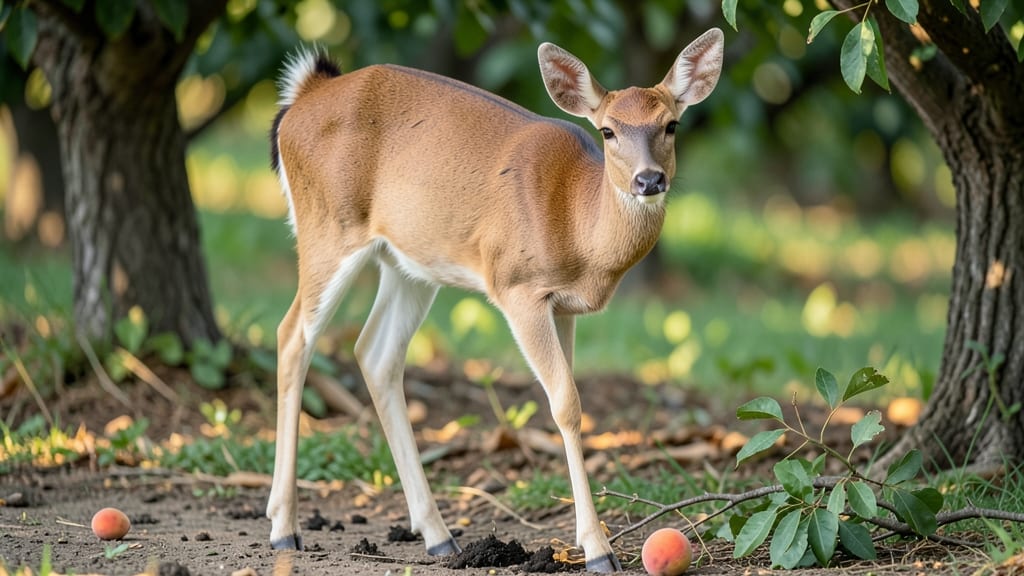
Deer are drawn to peach trees because they offer a nutrient-rich buffet: young leaves and blossoms provide protein, while fruit delivers natural sugars. 🌿 The real damage happens in spring when deer target blossoms, preventing fruit set, and in late summer when they strip bark from stressed trees.
Unlike some pests, deer don't discriminate—they'll devour every part of the tree that's accessible, making prevention critical for tree health.
This vulnerability extends beyond just the fruit. Deer often browse the lower branches first, creating a "bark ring" that can girdle and kill young trees. Even mature trees suffer when deer repeatedly target new growth, leading to weak, spindly branches that produce fewer fruits.
The key to protection lies in understanding deer behavior—most feeding occurs at dawn and dusk, and they prefer areas with dense cover nearby.
💡 In This Article
- Why Deer Target Peach Trees and Their Feeding Habits
- Effective Deer-Protection Methods for Peach Trees
Why deer target peach trees and their feeding habits
Deer are opportunistic browsers with a preference for nutrient-dense, easily digestible plant matter. Peach trees become prime targets because their new growth in spring contains high levels of nitrogen and water—ideal for deer recovering from winter.
The tender leaves and blossoms have a protein content of about 15-20%, which is crucial for fawns and does during breeding season. This is why you'll often see deer browsing peach orchards aggressively in March through May, when trees are most vulnerable.
The real science lies in deer digestion. Their four-chambered stomachs are designed to break down fibrous materials, but they still prefer softer, more digestible foods like peach leaves and fruit. The high sugar content in ripe peaches (10-14% natural sugars) provides quick energy, making them irresistible.
Interestingly, deer have a sensitive sense of smell that detects the volatile organic compounds released by stressed or damaged trees—so even a single bite can attract more deer to the area. 🌱
Age matters dramatically in tree vulnerability. Young peach saplings (1-3 years old) are particularly at risk because their bark is thin and their growth is concentrated in a small area.
Deer will often create a "bark ring" by stripping the lower trunk, which girdles the tree and kills it within weeks. Mature trees are less likely to be killed but suffer from reduced fruit production when deer browse blossoms or strip leaves, leading to 50-70% yield losses in severe cases.
Seasonal patterns dictate feeding intensity. Spring is peak season for blossom and leaf consumption, while late summer sees increased fruit predation. Deer also target stressed trees—those recovering from drought or poor soil conditions—because their nutrient content rises as the tree prioritizes survival over growth.
This is why you might see deer ignoring healthy trees while devouring others in the same orchard. 🌿
Another critical factor is tree height. Deer typically browse up to 4-5 feet off the ground, which means they'll strip lower branches clean before moving to higher foliage. This creates a distinctive "deer browse line" that gardeners can use to identify feeding patterns.
The combination of high nutritional value, accessibility, and seasonal availability makes peach trees a deer's dream menu—especially when other food sources are scarce.
What most people don't realize is how deer behavior changes with food availability. In areas with abundant natural forage, peach trees might see minimal damage. But during drought years or when acorns are scarce, deer will turn to orchards with aggressive intensity.
This is why prevention strategies must account for both the tree's growth stage and local deer population dynamics. 🦌