
Pests
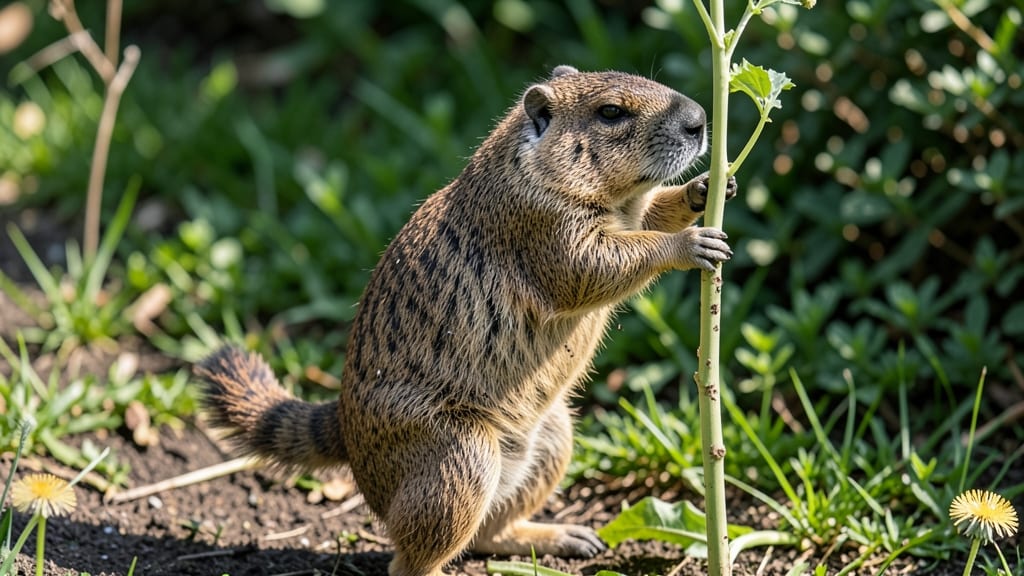
Groundhogs climb trees mainly to escape danger, find food, or reach nesting spots, even though they’re not built for climbing and usually stay on the ground. This unusual behavior often signals stress or changes in their environment.
Groundhogs are ground-dwelling creatures with short, blunt claws designed for digging—not climbing. 🌳 When you spot one in a tree, it’s usually reacting to a threat like a predator (such as a fox or coyote) or searching for food in disturbed habitats.
Their climbing is awkward and rare, which is why it stands out so much compared to natural tree-dwellers like squirrels.
This behavior also happens when groundhogs feel their burrow systems are compromised, forcing them to seek alternative vantage points. Unlike squirrels, they lack the agility and tail balance for efficient climbing, so you’ll rarely see them high up for long.
💡 In This Article
- Groundhog Behavior: Natural Instincts vs Tree-Climbing Exceptions
- Preventing Groundhogs from Damaging Trees in Your Yard
Groundhog behavior: natural instincts vs tree-climbing exceptions
Groundhogs (Marmota monax) are primarily ground-dwelling rodents with anatomy optimized for burrowing, not climbing. Their front claws are short and blunt—ideal for digging 3-4 foot deep burrows—but completely inadequate for gripping tree bark.
Studies show their climbing attempts are 3-5 times less efficient than squirrels due to their 15-20% smaller hind limbs and lack of a prehensile tail. 🌲
The rare occasions when groundhogs climb trees reveal critical survival instincts. When threatened by predators like coyotes or foxes, they'll scramble up 6-12 feet to gain vantage points, though their movements are clumsy and slow (about 1-2 feet per minute).
This behavior spikes during breeding season (March-April) when territorial disputes force males to establish dominance through elevated displays. Unlike chipmunks, which climb daily for food, groundhogs treat trees as emergency escape routes rather than habitats.
Food scarcity triggers another climbing response. In disturbed ecosystems—like suburban areas where natural ground vegetation is replaced with lawns—groundhogs may climb young trees (1-3 inches in diameter) to reach leaves or buds.
Their chewing patterns on bark reveal this: horizontal gnaw marks at 3-4 feet high, where they can't reach from the ground. This contrasts sharply with squirrels, whose vertical climbing leaves clean, diagonal striations along entire trunks. 🦔
Territorial disputes explain some vertical behavior too. Male groundhogs establish dominance through vocalizations and scent marking, but when burrow systems are threatened (by flooding or human activity), they'll climb nearby trees to survey their domain.
The key difference from squirrels: groundhogs never build nests in trees—they use them only temporarily, often for 5-15 minutes before returning to ground level. Their tree-climbing is always a stress response, not a lifestyle adaptation.
Comparing groundhogs to their arboreal cousins reveals stark anatomical differences. Squirrels have 2-inch claws and tails that act as fifth limbs, while groundhogs' claws average just 0.5 inches.
This explains why you'll never see a groundhog 10+ feet up a tree—squirrels routinely reach 30-50 feet—and why their climbing always ends in awkward descents. The rare exceptions prove the rule: groundhogs climb only when their ground-based survival strategies fail. 🦫