
Plants
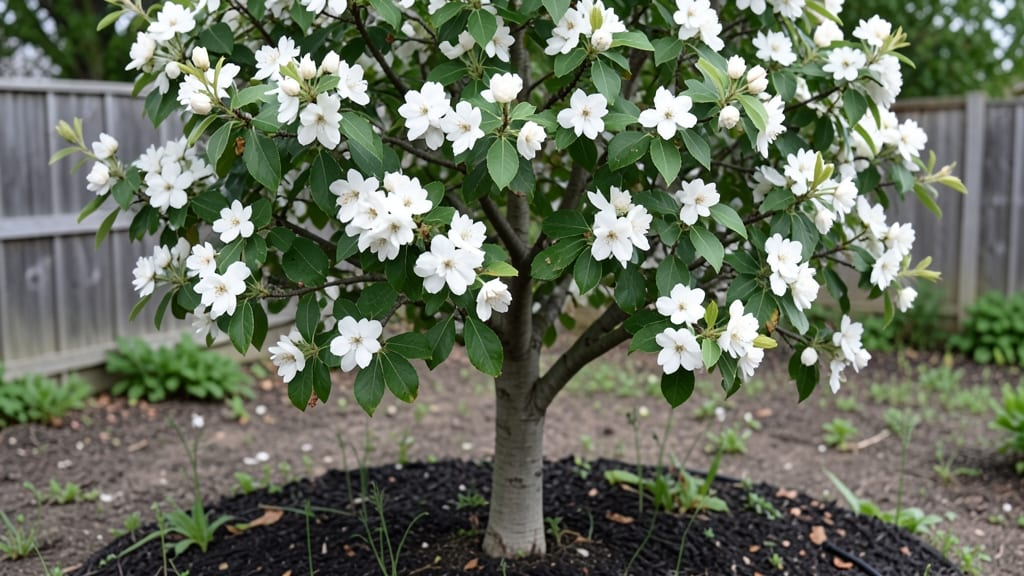
A Bradford pear tree looks like a small, rounded deciduous tree with horizontal branching, white spring blooms, and glossy green leaves that turn yellow in fall. Its bark is smooth and gray, and mature trees often develop a vase-like shape with a dense canopy.
A Bradford pear tree stands out with its striking horizontal branching that creates a layered, almost tiered appearance. 🌳 The fragrant white flower clusters in spring are one of its most recognizable features, often drawing pollinators like bees and butterflies.
Unlike other pear varieties, its leaves maintain a vibrant green hue until autumn, when they transition to a warm golden-yellow—making it a standout in fall landscapes. This tree's compact size and ornamental appeal make it a popular choice for urban and suburban yards alike.
What sets Bradford pears apart is their vase-like growth pattern, which contrasts with the more upright forms of other fruit trees. The smooth gray bark also helps distinguish it from similar-looking trees, especially when young.
While the classic Bradford pear is well-known, newer cultivars like 'Royal Raindrops' offer even more dramatic blooms and improved disease resistance—proving this tree's enduring popularity in modern landscaping.
💡 In This Article
- Distinctive Bradford Pear Tree Characteristics
- How to Identify a Bradford Pear in Your Yard
Distinctive Bradford pear tree characteristics
The Bradford pear's most eye-catching feature is its horizontal branching pattern, which creates a layered, almost tiered silhouette. Unlike the more upright growth of Callery pear varieties, Bradford pears develop branches that spread outward at roughly 45-degree angles from the trunk, forming a natural, symmetrical vase shape.
This growth habit is particularly noticeable in mature trees, where the lower branches often extend outward while the upper branches curve slightly upward, creating a balanced, rounded canopy.
The tree's leaves are simple, alternate, and elliptical, typically measuring 2-4 inches long with finely serrated edges. When young, they emerge with a soft, velvety texture due to fine hairs, though this fuzziness disappears as they mature.
In summer, the leaves maintain a rich, glossy green color that contrasts sharply with the smooth, gray bark—a key distinguishing feature from other pear varieties, which often develop rougher bark textures as they age. 🌿 The bark remains relatively smooth even on mature specimens, though it may develop shallow, vertical fissures over time.
Spring is when Bradford pears truly shine, producing large clusters of fragrant white flowers that blanket the tree. These blooms, known as corymbs, can reach 4-6 inches wide and contain 30-50 individual flowers, each with 5 petals and a sweet, honey-like scent that attracts pollinators.
Unlike Callery pears, which often have slightly smaller flower clusters, Bradford pears create a dramatic visual impact, almost resembling a cloud of blossoms. The flowers appear before the leaves in early spring, making the tree a standout feature in dormancy.
Seasonal color changes set Bradford pears apart from other ornamental pears. While some Callery varieties may produce red or purple foliage in fall, Bradford pears maintain their green leaves until late autumn, when they transition to a bright golden-yellow.
This color shift is more pronounced in cooler climates and can last for several weeks, providing extended seasonal interest. The tree's small, pear-shaped fruits (about 1 inch in diameter) also develop in late summer but are typically not edible for humans due to their hard, astringent texture.
One often-overlooked characteristic is the tree's root system, which can be surprisingly aggressive. Bradford pears develop a shallow, wide-spreading root system that can interfere with sidewalks and driveways if planted too close to structures. This contrasts with Callery pears, which often have deeper root systems.
The tree's disease resistance is another key trait—while not immune to fire blight or powdery mildew, Bradford pears generally handle urban conditions better than many native pear species. 🌳
For those comparing Bradford pears to their invasive hybrid relatives, note that Bradford pears often produce more uniform fruit and maintain a slightly smaller stature (typically 30-40 feet tall at maturity).
The classic Bradford pear's 'Bradford' cultivar remains the most recognizable, though newer varieties like 'Aristocrat' and 'Capital' offer improved disease resistance while retaining the signature horizontal branching and abundant blooms.