Trees
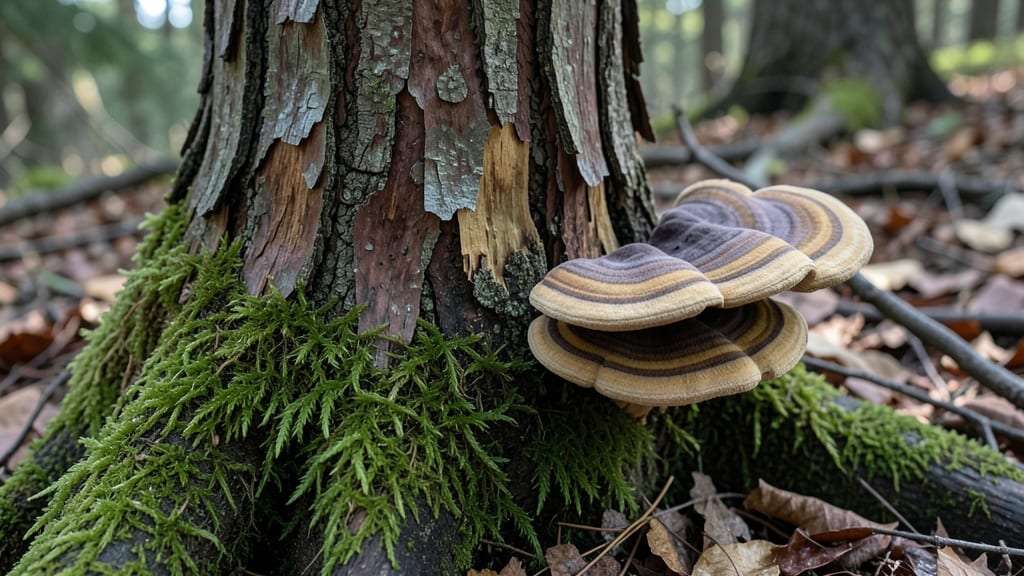
Finding turkey tail mushrooms growing on your tree might look like something out of a fantasy forest, but these colorful, fan-shaped fungi actually tell a story about your tree’s health. 🌿 I’ve spotted them on oak, maple, and even fruit trees, and while they’re harmless to harvest, they’re also a sign your tree is alive—and fighting back against decay.
These mushrooms aren’t harmful to the tree itself, but they do indicate the wood is already compromised by rot or injury. Think of them like a natural bandage: they’re breaking down dead tissue, which can actually help the tree redirect energy to healthier growth.
The key is monitoring their spread—if they’re taking over large branches, it’s time to assess the tree’s stability.
You can safely prune branches heavily infected with turkey tails, but only if the tree is otherwise healthy. Focus on removing dead or weak wood first, then give the tree a boost with proper watering and mulching.
A thriving tree handles these fungi better, so think of this as a wake-up call to improve its care routine.
Foraging these mushrooms is safe (they’re edible, though not the most flavorful), but only do so if you’re 100% certain of the identification. When in doubt, leave them on the tree—they’re doing more good than harm, and your tree might just thank you by standing strong for years to come.
Natural Causes of Fungal Growth
Turkey tail mushrooms—those vibrant, fan-shaped fungi with their signature concentric rings—are a fascinating sight on trees. But why do they appear in the first place? The answer lies in the intricate relationship between fungi, trees, and their environment.
Understanding these causes can help you spot where and when these mushrooms thrive, making your foraging adventures more successful. Here’s a breakdown of the key factors:
Turkey tail mushrooms (Trametes versicolor) are primarily saprotrophic or parasitic, meaning they feed on dead or dying wood. When a tree’s bark is damaged—whether by disease, injury, or natural aging—it creates the perfect entry point for fungal spores.
These spores, often carried by wind or rain, land on the wounded wood and germinate, forming the mycelium (the mushroom’s root-like network). Over time, this mycelium breaks down the wood’s cellulose and lignin, releasing nutrients that fuel the mushroom’s growth.
Actionable insight: Look for trees with cracks, peeling bark, or old wounds. Oak, maple, and beech trees are common hosts because their wood is rich in nutrients. If you’re foraging, prioritize trees with visible signs of decay—these are hotspots for turkey tail colonies!
Fungi thrive in wet conditions. Turkey tail mushrooms need consistent moisture to grow, which is why they often appear after prolonged rain or in damp forests. High humidity keeps the mycelium hydrated, allowing spores to spread and mushrooms to expand.
In drier climates, you might find them clustered in shaded, low-lying areas where moisture lingers.
Scientific note: The mushroom’s basidiocarps (the fan-shaped fruiting bodies) absorb water through their surface, swelling and becoming more vibrant when wet. This is why they’re most visible after rain—ideal foraging weather!
Pro tip: 💡 Check trees after a few days of steady rain. Early morning is the best time to spot fresh, hydrated turkey tails before the sun dries them out.
Healthy trees can resist fungal invasions, but stress makes them vulnerable. Factors like root damage, nutrient deficiency, or pest infestations weaken a tree’s defenses, allowing turkey tail mushrooms to take hold.
For example, a tree under attack by bark beetles or suffering from root rot may develop large fungal colonies as a secondary invader.
Visual clues: Look for trees with:
- 🍂 Yellowing or thinning leaves (signs of poor health)
- 🐜 Visible insect damage (e.g., boreholes or sawdust-like frass)
- 🌳 Cankers or oozing sap (wounds that invite fungi)
While turkey tails themselves don’t kill healthy trees, they’re often a symptom of underlying stress.
Turkey tail mushrooms follow a seasonal rhythm, typically appearing in late summer to fall when temperatures are cooler and moisture is abundant. However, in temperate rainforests or humid regions, they may grow year-round. Cold snaps can also trigger a flushing of new mushrooms as the tree’s defenses slow down.
Regional variations:
Climate
Peak Growth Period
Best Foraging Conditions
Temperate (e.g., Pacific Northwest)
Spring through Fall
Mild, rainy seasons
Arid/Semi-Arid (e.g., Southwest U.S.)
Monsoon season (July–September)
Sudden heavy rains
Tropical/Rainforest
Year-round (peaks after storms)
High humidity, shaded areas
Foraging hack: ⏰ Plan trips after the first major rain of the season. Mushrooms often appear within 3–7 days of heavy moisture.
Turkey tail mushrooms reproduce via spores, which are released from the underside of their caps and carried by wind, water, or animals. When spores land on suitable wood, they germinate and form new mycelial networks.
This cycle can repeat indefinitely as long as the host tree remains decaying or stressed.
Fun fact: A single turkey tail colony can produce millions of spores, ensuring widespread colonization. This is why you’ll often see clusters of mushrooms growing in tight groups—they’re all part of the same mycelial web!
Safety note: 🚨 Avoid harvesting mushrooms growing on treated wood or near toxic substances. Turkey tails on healthy trees are safe, but those near pesticides or industrial runoff may be contaminated.
Removing & Preventing Fungal Growth
Turkey tail mushrooms (Trametes versicolor) may be beautiful and even edible, but their presence on living trees can signal decay or disease. If you’re dealing with unwanted fungal growth, here’s how to address it—whether you want to remove the mushrooms, protect your tree, or even harvest them safely.
Not all cases require intervention, but if the mushrooms are spreading rapidly or the tree shows signs of stress, action may be needed.
🔥 Signs You Should Act
- Decaying wood: Soft, crumbling, or hollow tree trunks.
- Multiple clusters: Large patches of turkey tails indicate advanced decay.
- Tree decline: Yellowing leaves, poor growth, or dead branches.
- Structural risk: If the tree is near a home or walkway, removal may be necessary for safety.
If the tree is already dead or dying, removal may not be urgent—but preventing spread to healthy trees is key.
1. 🪓 Prune Infected Branches (Best for Living Trees)
- Tools needed: Sharp pruners, gloves, disinfectant (rubbing alcohol or bleach solution).
- Steps: 1. Disinfect tools to prevent spreading spores. 2. Cut 6–12 inches below the mushroom cluster to remove infected wood.
- Dispose of debris in a sealed bag—do not compost.
- Seal the wound with pruning sealant (optional but helpful for large cuts).
✨ Pro Tip: If the tree is healthy, pruning may slow decay. If the trunk is hollow or soft, removal may be the only option.
2. 🌪️ Remove the Entire Tree (For Severe Cases)
- When to do this: If the tree is dead, structurally unsound, or heavily decayed.
- How:
- Call a professional arborist for safe removal.
- Burn or chip the wood (if no disease risk) or dispose of it properly.
- Do not leave stumps—they can regrow mushrooms or attract pests.
3. 🧹 Clean the Area to Prevent Spread
- Remove fallen leaves/debris around the tree (mushroom spores spread easily).
- Avoid disturbing soil near the base—this can spread spores to other trees.
- Mulch with caution: Use fresh, sterile mulch (not wood chips from infected trees).
Even if you’re not dealing with an infestation, these steps keep trees strong and fungus-free:
🌱 Promote Tree Health
- Water deeply but infrequently (overwatering weakens roots).
- Fertilize appropriately—too much can stress the tree.
- Prune properly (remove dead/diseased branches in dry weather).
🚫 Avoid Common Mistakes
- ❌ Don’t wound trees unnecessarily (e.g., aggressive pruning, construction damage).
- ❌ Avoid over-mulching (keep mulch 2–4 inches away from the trunk).
- ❌ Don’t ignore early signs (small mushrooms = easier removal than large patches).
💡 Bonus: Encourage Beneficial Fungi (If Harvesting)
If you’re foraging turkey tails, let some grow on dead or dying trees—this prevents them from colonizing healthy ones. Always:
- Harvest from non-toxic, decaying hardwoods (oak, beech, maple).
- Never take mushrooms from live, productive trees.
If the tree is large, near structures, or shows severe decay, hire an arborist. They can assess whether removal, cabling, or bracing is needed.
By acting early and maintaining tree health, you can keep your yard safe—whether you’re foraging, preserving the tree, or just keeping things looking good! 🌿✂️
Frequently asked questions about fan-shaped fungi on trees
Are turkey tail mushrooms harmful to my tree?
Not directly—they feed on dead or decaying wood, so they don’t kill healthy trees. However, their presence signals the tree is already compromised by rot or injury. Think of them like nature’s recycling crew: they break down weak wood, which can actually help the tree redirect energy to healthier growth.
Can I safely eat mushrooms growing on my tree?
Yes, turkey tail mushrooms are edible (though not highly prized for flavor), but only if you’re 100% certain of the identification. Avoid harvesting from trees near pesticides, roads, or industrial areas. Always cook them thoroughly—raw turkey tails can be tough and bitter.
How do I know if my tree needs pruning because of these mushrooms?
Prune only if the mushrooms are spreading rapidly or the tree shows signs of decay (soft wood, large hollow areas, or dead branches). Cut 6–12 inches below the fungal growth, disinfect your tools, and dispose of infected wood properly. Never prune during wet weather to avoid spreading spores.
Will removing the mushrooms stop them from coming back?
No—once the fungal network (mycelium) is established in the wood, spores will keep producing new mushrooms. Your best bet is to improve the tree’s health through proper watering, mulching, and pruning. For severe cases, consult an arborist to assess structural risks.
What’s the best time of year to spot these mushrooms?
Look for them after prolonged rain in late summer to fall, when moisture triggers growth. Early morning is ideal—they’ll be fresh and hydrated. In humid climates, they may appear year-round, especially after storms. Check shaded, low-lying areas first.