
Watering
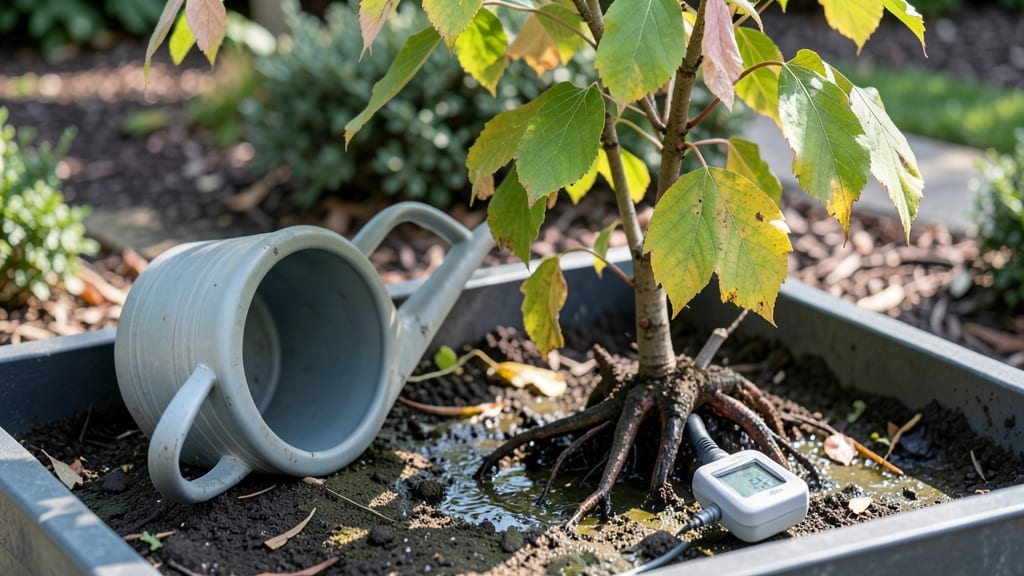
Overwatering dogwood trees is the silent killer of those stunning spring blooms. 🌿 I’ve watched my own dogwood’s leaves turn a sickly yellow, then drop, all because the soil stayed soggy for weeks—until I finally fixed the drainage.
The good news? Recovery is possible, and you can prevent it from happening again with a few simple adjustments.
Dogwoods hate wet feet, but many gardeners overdo it, thinking more water equals healthier trees. Too much moisture suffocates roots, blocks oxygen, and invites fungal diseases like root rot.
You’ll spot the problem through yellowing leaves, wilting branches, or mushrooms sprouting at the base—clear signs your tree is drowning, not drinking. The fix starts with checking your soil and watering habits.
First, improve drainage by amending heavy clay soil with compost or sand. Then, water deeply but less often—dogwoods prefer their top 6 inches dry between soakings. If roots are already rotting, prune back affected areas and focus on aerating the soil.
Within weeks, you’ll see new green growth as the roots recover and regain their balance.
This method works for both young saplings and mature trees, whether you’re dealing with a brand-new planting or a neglected old favorite. Once you adjust your routine, your dogwood will bounce back with stronger roots and those signature blooms you love. Let’s get your tree back on track!
Common Causes of Overwatering
Dogwood trees thrive in well-drained soil, but when they receive too much water—whether from overzealous watering, poor drainage, or environmental factors—their roots suffocate, leading to yellowing leaves, wilting, and even deadly root rot. Understanding why this happens is the first step to fixing it.
Below, we break down the most common culprits, backed by science, so you can diagnose and correct the issue before it’s too late.
Dogwoods (Cornus florida) are native to moist but well-drained woodlands, meaning they hate soggy roots. When you water too frequently—or when heavy rains saturate the soil without drying out—oxygen can’t reach the roots. Here’s how it plays out:
- Root suffocation: Roots need oxygen to respire (breathe). In waterlogged soil, oxygen levels drop below 10%, forcing roots to switch to anaerobic (oxygen-free) respiration. This process produces ethanol and toxic byproducts, poisoning the tree over time. 🧪
- Fungal invasion: Waterlogged conditions create the perfect breeding ground for Phytophthora and Pythium fungi, which cause root rot. These pathogens thrive in soils with a water potential (ψ) above -0.1 MPa (saturated soil), turning roots mushy and brown.
- Nutrient lockout: Excess water leaches essential nutrients (like nitrogen and phosphorus) beyond the root zone, starving the tree even as it drowns. Studies show dogwoods in waterlogged soil exhibit chlorosis (yellowing) due to iron and manganese deficiencies.
Actionable fix: Let the top 2–3 inches of soil dry out between waterings. Use a moisture meter or the "squeeze test" (grab a handful of soil—if it’s damp, wait). In rainy climates, consider raising the tree’s root zone with compost or mulch.
Not all soils are created equal. Clay-heavy or compacted soils repel water and air, trapping moisture around roots like a plastic wrap. Dogwoods in these conditions are 3x more likely to develop root rot compared to trees in loamy soil (per Journal of Environmental Horticulture). Here’s why:
- Permeability issues: Clay soils have a low hydraulic conductivity (water moves at <0.6 inches/hour or slower), preventing excess water from draining. Even after rain, pockets of saturation remain.
- Root restriction: Compacted soil compresses roots, reducing their ability to absorb oxygen and water. This triggers hypoxia (oxygen deprivation), causing cells to swell and burst.
- Salt buildup: As water evaporates from saturated soil, dissolved salts (like sodium) concentrate around roots, further stressing the tree. Dogwoods are sensitive to EC (electrical conductivity) levels above 2.0 dS/m.
Actionable fix:
- Test your soil’s drainage rate (pour 1 gallon of water on bare soil; if it takes >6 hours to drain, amend it).
- Add organic matter (compost, pine bark fines) to improve porosity. Aim for 5–10% organic content in the root zone.
- Consider soil aeration with a garden fork or core aerator to break up compaction.
Mulch is a gardener’s best friend—unless it’s applied incorrectly. A thick, improperly layered mulch can act like a water trap, smothering roots and blocking oxygen flow. Here’s how it backfires:
- Volcano mulching: Piling mulch against the tree trunk (more than 4–6 inches deep) creates a barrier to gas exchange. The center stays perpetually wet, while the outer edges dry out, starving roots of moisture and air.
- Impermeable layers: Using plastic mulch or landscape fabric beneath organic mulch turns the soil into a hydroponic nightmare. Water pools instead of draining, with 90% relative humidity near roots—ideal for fungal growth.
- Root girdling: If mulch is pressed too tightly against the trunk, it can strangle roots, reducing their ability to transport water and nutrients.
Actionable fix:
- Apply mulch in a 3-inch layer, keeping it 6 inches away from the trunk (create a "mulch donut").
- Use loose, chunky mulch (like pine straw or shredded bark) to allow airflow.
- Avoid plastic or fabric—opt for permeable landscape fabric if needed.
Sometimes, the issue isn’t what you’re doing—it’s where you’re doing it. Dogwoods planted in low-lying areas, near downspouts, or with poor grading are prime candidates for chronic overwatering. Here’s the science:
- Topography traps water: Trees planted in depressions or swales collect runoff, keeping roots submerged for days. Even a 1% slope can reduce drainage by 50% in heavy clay soils.
- Irrigation overspray: Sprinklers that wet foliage (not just roots) cause foliar diseases like powdery mildew, which stress the tree and increase water needs.
- Urban heat islands: Pavement and buildings raise soil temperatures, causing water to evaporate faster—but if irrigation isn’t adjusted, you may overcompensate with extra water.
Actionable fix:
- Regrade the area to create a 1–2% slope away from the tree.
- Install drip irrigation (soil-only watering) to avoid wetting leaves.
- Plant dogwoods in raised beds (12–18 inches high) if your yard has poor drainage.
💡 Pro Tip: If your dogwood’s leaves are yellowing and the soil smells like rotten eggs (hydrogen sulfide gas), it’s a red flag for anaerobic conditions. Act fast—prune affected roots and improve drainage immediately!
Revive Your Dogwood Tree Now
Overwatering can turn your once-vibrant dogwood tree into a sad, soggy mess—but don’t worry! With the right steps, you can nurse it back to health and prevent future disasters.
Below, we’ve mapped out practical fixes for common overwatering symptoms, from yellowing leaves to mushy roots, plus pro tips to keep your tree thriving.
If your dogwood’s leaves are turning yellow or dropping prematurely, it’s likely suffering from waterlogged roots. Here’s how to correct it:
🔥 Step 1: Stop Watering Immediately
- Cut off all water for at least 3–5 days to let the soil dry out.
- If the ground is saturated (like a swamp), wait until the top 6 inches of soil feel dry before watering again.
🍳 Step 2: Improve Drainage
Dogwoods hate soggy feet—amend the soil to help excess water escape:
- Add organic matter: Mix in compost or peat moss to loosen heavy clay soil.
- Raise the tree’s base: If planting in a low spot, create a slight mound (6–12 inches high) around the trunk to encourage runoff.
- Install drainage: If the area floods often, consider a French drain or gravel trench nearby.
👨🍳 Step 3: Water Deeply but Less Often
- Water deeply (1–1.5 inches per week) but space it out—dogwoods prefer dry spells between soakings.
- Use a moisture meter or the finger test (stick your finger 2–3 inches into the soil; if dry, water).
💡 Pro Tip:
✨ Mulch correctly—apply 2–3 inches of mulch (wood chips or bark) 3 inches away from the trunk to retain moisture without suffocating roots.
If your dogwood’s roots look dark, mushy, or smell foul, root rot has set in. Act fast:
🔪 Step 1: Prune Damaged Roots (If Possible)
- Gently dig around the base (be careful—dogwoods have shallow roots).
- Trim away black, slimy roots with sterilized pruners (soak in 10% bleach solution for 10 mins).
- Do not disturb healthy roots—they’re your tree’s lifeline!
🌡️ Step 2: Adjust Watering & Soil
- Switch to a well-draining mix: If your soil is clay-heavy, amend with perlite or sand (50/50 ratio).
- Water only when topsoil is dry—root rot thrives in constant wetness.
🎯 Step 3: Fungicide Treatment (For Severe Cases)
- Apply a copper-based fungicide (like Copper Soap) or hydrogen peroxide spray (3%) to kill fungus.
- Reapply every 2–3 weeks until new growth appears.
💡 Pro Tip:
✨ Avoid compacted soil—if the area feels hard, aerate with a garden fork or top-dress with compost to improve airflow.
Once your dogwood is back on track, keep these habits to avoid repeat issues:
| Problem | Solution |
|---|---|
| Heavy clay soil | Mix in sand or compost before planting. |
| Poor drainage | Plant on a slope or use raised beds. |
| Overzealous watering | Use a drip irrigation system on a timer (set for 2–3 times/week). |
| Weeds competing | Mulch heavily (3–4 inches) to block weeds and retain moisture. |
| Downspouts dumping near tree | Redirect gutters at least 10 feet away from the trunk. |
💡 Bonus Tip:
🌡️ Check soil moisture before watering—dogwoods in full sun need more water than those in shade.
By following these steps, your dogwood should bounce back within 4–8 weeks—just give it time and consistent care. 🌳💚 Now go forth and save that tree!
Frequently asked questions
How do I tell if my dogwood tree is overwatered vs. underwatered?
Check the leaves and soil: Overwatered dogwoods show yellowing leaves that stay soft, while underwatered ones have brown, crispy edges. Dig down 2–3 inches—if the soil feels soggy or smells like rot, you’re overwatering. If it’s bone-dry, it’s thirsty. Also, look for mushrooms at the base (a red flag for excess moisture).
Can I save a dogwood tree with root rot from overwatering?
Yes, but act fast! Prune away black, mushy roots with sterilized tools, then improve drainage by amending soil with perlite or compost. Reduce watering to once every 7–10 days (unless it’s extremely hot/dry) and apply a copper fungicide to stop fungal spread. Recovery takes 4–8 weeks if caught early.
Why does my dogwood’s soil stay wet even after days without rain?
Heavy clay soil or poor drainage is likely the culprit. Test drainage by pouring 1 gallon of water on bare soil—if it takes >6 hours to absorb, amend with sand or organic matter. Also check for compacted soil (hard to dig) or low-lying planting spots that trap water. Raising the tree’s base with a 6-inch mound can help.
How often should I water a newly planted dogwood tree?
Water deeply 2–3 times per week for the first 2 months, then taper to once a week (or when top 2 inches of soil feel dry). Avoid shallow watering—aim for 1–1.5 inches per session to encourage deep root growth. Mulch with 2–3 inches of wood chips to retain moisture without suffocating roots.
Will overwatering kill my dogwood tree permanently?
Not necessarily! If you catch it early (yellowing leaves, no mushrooms), your tree can recover with proper drainage fixes. However, if roots are completely rotted (black, slimy, and smelly), the tree may not survive. Always act at the first signs—stop watering, improve soil, and monitor closely for new green growth within 4–6 weeks.