
Trees
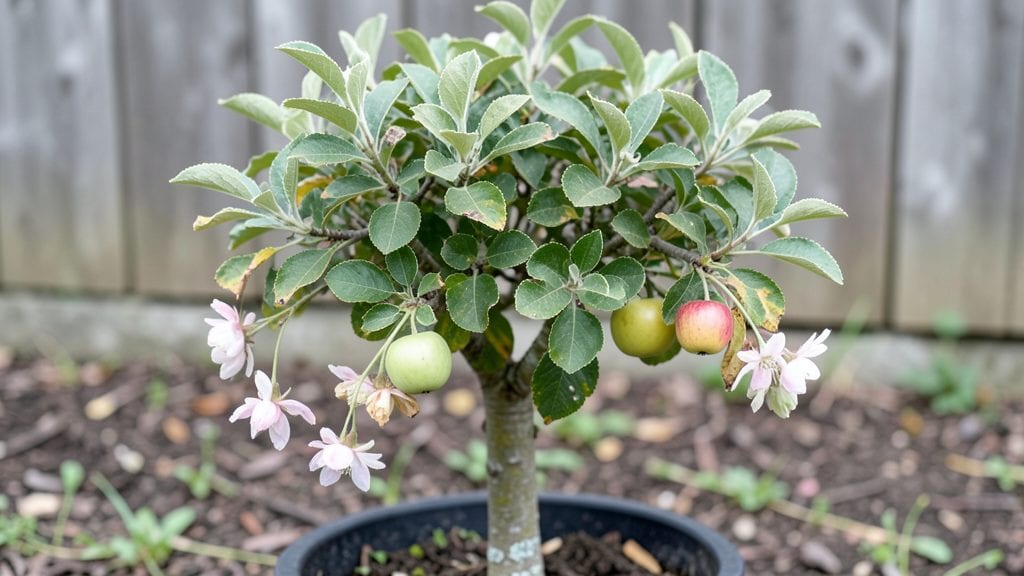
Growing mini apple trees in your backyard turns fruit-picking into a year-round joy—no orchard needed. 🌱 I planted my first dwarf apple tree last spring, and within months, I was harvesting crisp, sweet fruit from a tree that fits in a 5-foot-square space.
The secret isn’t just the size; it’s how these little powerhouses produce just as much fruit as their full-sized cousins, but in a fraction of the room.
You’ll need a sunny spot with at least 6 hours of light daily, well-draining soil mixed with compost, and a sturdy container if you’re growing in pots. Most dwarf varieties thrive on standard pruning—just shape them in early spring and remove dead wood.
Pollination is the trickiest part, so plant two compatible varieties (like ‘Liberty’ and ‘Gala’) or hand-pollinate with a paintbrush if bees are scarce.
By summer’s end, you’ll be biting into homegrown apples that taste nothing like store-bought—juicy, fragrant, and packed with flavor. The best part? These trees keep producing for decades with minimal effort.
Even if you’ve killed houseplants before, dwarf apple trees are surprisingly forgiving once you get the basics right.
Works in urban backyards, patios, or even large containers. Let’s get you growing apples without the orchard—here’s how to start right.
📚 In This Guide
- What you need
- Instructions
- Tips and common mistakes
- Wrapping up and next steps
What you need
- ● Dwarf apple tree saplings: Choose disease-resistant varieties like Columnar (e.g., 'Urban Apple'), Semi-Dwarf (e.g., 'Liberty'), or Columnar types (e.g., 'Apple Tree Columnar'). Buy 1–3 trees for cross-pollination (if needed).
- ● 5-gallon pots or containers: At least 2–3 pots (18"–24" deep) with drainage holes for each tree. Use fabric grow bags or plastic pots with saucers.
- ● High-quality potting mix: A well-draining blend like 50% garden soil + 50% compost or a pre-mixed fruit tree mix.
- ● Organic fertilizer: A balanced 10-10-10 or 5-10-10 formula (or slow-release pellets) for planting and seasonal feeding.
- ● Mulch: Wood chips or straw (2–3 inches thick) to retain moisture and suppress weeds.
- ● Pruning shears: Sharp, bypass-style shears (sterilized with rubbing alcohol).
- ○ Tree stakes (optional but helpful): 3–4 18" wooden or bamboo stakes per tree for support.
- ● Gloves: Heavy-duty gardening gloves to protect hands.
- ● Watering can or hose with a gentle spray nozzle: Avoid overwatering—aim for deep, infrequent watering.
- ● pH test kit: Ensures soil pH is 6.0–6.5 (ideal for apple trees).
- ○ Insect netting (optional): Fine mesh to protect blossoms from pests like bees or birds.
- ○ Drip irrigation system (optional): Automates watering for consistent moisture.
Step-by-Step instructions for planting and caring for mini apple trees
Here's how to grow productive dwarf apple trees that thrive in tight spaces.
🪴 Step 1: Select the Right Variety and Planting Location
Choose self-pollinating dwarf varieties like 'Liberty,' 'Enterprise,' or 'GoldRush'—these produce fruit without needing a second tree. Plant in full sun (at least 6-8 hours daily) with well-draining soil (pH 6.0-7.0). Avoid low spots where water pools, as soggy roots invite root rot.
I always test soil drainage first by digging a 12-inch hole, filling it with water, and watching how quickly it drains. If it takes more than 30 minutes, amend with compost or sand before planting. Dwarf trees need 10-15 feet between plants for airflow, even in small spaces.
🌱 Step 2: Plant at the Correct Depth and Stake for Support
Dig a hole twice as wide as the root ball but no deeper—planting too deep suffocates roots. Loosen the root ball slightly if roots are circling, then place the tree so the graft union (visible bump near the base) sits 2-3 inches above soil level. This prevents buried unions from rotting.
Backfill with native soil mixed with 2-3 inches of compost, tamping gently to remove air pockets. Install a 5-foot stake at a 45-degree angle, tying the trunk with soft tree tie (never wire—it cuts into bark). Water deeply to settle soil around roots.
☀️ Step 3: Water Deeply and Mulch to Retain Moisture
Water once weekly (more in hot weather) until the top 6 inches of soil feel moist. Dwarf trees have shallow roots, so deep watering (1-2 gallons per tree) encourages root growth downward. Avoid wetting foliage to prevent fungal diseases like apple scab.
Spread 3 inches of mulch (wood chips or straw) in a 3-foot diameter circle, keeping mulch 6 inches away from the trunk. This conserves moisture, regulates soil temperature, and suppresses weeds. Replenish mulch annually—it breaks down faster than you’d expect.
✂️ Step 4: Prune for Shape and Airflow in Early Spring
Prune before buds swell (late winter/early spring) to remove dead, crossing, or inward-growing branches. Use clean, sharp pruners to make cuts at a 45-degree angle just above an outward-facing bud. Never remove more than 25% of the canopy in one season—dwarf trees are sensitive to over-pruning.
Shape the tree into an open-center form (central leader with scaffold branches) for easy harvesting. Thin out crowded branches to improve airflow, which reduces disease risk. You’ll see new growth sprout from pruned areas within 4-6 weeks—that’s your cue the tree is recovering well.
🍏 Step 5: Fertilize and Monitor for Pests/Diseases
Apply a balanced 10-10-10 fertilizer in early spring (follow label rates) and again after harvest. Dwarf trees need less fertilizer than standard varieties—overfeeding leads to weak wood and fewer fruits. Water thoroughly after fertilizing to prevent root burn.
Watch for aphids, codling moths, or apple scab (common in humid climates). Treat aphids with a strong spray of water (they hate it), and use row covers for young trees to deter moths. For scab, apply copper fungicide at bud break and again after rain. Healthy trees produce fruit in 2-3 years—patience pays off!
Tips & tricks for perfect mini apple trees
These game-changing tips will help you grow thriving dwarf apple trees that produce bountiful harvests in even the smallest spaces.
Soil Preparation Secret: In Step 1, when testing drainage with your 12-inch hole, pay attention to how the water disappears—not just the time. If water pools at the bottom, you need more sand or gravel for true drainage. I've seen gardeners skip this step and end up with root rot within months. Pro tip: Add a handful of perlite to your soil mix for extra aeration—it makes a noticeable difference in root health.
Planting Depth Caution: The 2-3 inches above soil level for the graft union in Step 2 is non-negotiable. I once buried a graft union too deep and lost that tree to rot within a year. If you're unsure, mark the correct depth on your stake before planting. And never use wire ties—they cut into bark as the tree grows. Soft fabric ties are a small investment that pays off in tree longevity.
Watering Wisdom: That weekly watering guideline in Step 3 is perfect, but here's what nobody tells you: The 6-8 hour sun requirement means your watering needs will change dramatically between seasons. In summer, you might need to water twice weekly, while winter might require only monthly deep watering. Always check soil moisture by hand—digital moisture meters work great for this.
Pruning Precision: When shaping your tree in Step 4, remember that those 4-6 weeks for new growth are your feedback mechanism. If you see weak, spindly growth after pruning, you've removed too much. Aim to maintain that open-center form while keeping at least 60% of the canopy intact. And always sterilize your pruners with rubbing alcohol between cuts to prevent disease spread.
Pro Tips for Mini Apple Trees
- These game-changing tips will help you grow thriving dwarf apple trees that produce bountiful harvests in even the smallest spaces.
- Soil Preparation Secret: In Step 1, when testing drainage with your 12-inch hole, pay attention to how the water disappears—not just the time.
- Planting Depth Caution: The 2-3 inches above soil level for the graft union in Step 2 is non-negotiable.
Frequently asked questions
Got questions about growing mini apple trees?
You’re not alone! Here are answers to the most common queries—from spacing to pests—so you can confidently grow your own compact orchard.
How close can I plant mini apple trees together?
Dwarf varieties thrive in tight spaces! Plant them 8–12 feet apart for standard dwarfs or 6–8 feet for columnar types. Semi-dwarf trees need 12–15 feet of space. Avoid overcrowding to prevent disease and competition for sunlight.
How long does it take for a mini apple tree to bear fruit?
Patience pays off! Most dwarf apple trees produce fruit within 2–5 years, depending on the variety and care. Some early bloomers (like ‘Liberty’ or ‘Zestar!’ series) may fruit sooner. Cross-pollination with a compatible variety speeds up harvests.
What pests or diseases should I watch for in mini apple trees?
Common issues include apple maggots, aphids, and powdery mildew. Use neem oil or insecticidal soap for pests, and prune for airflow to deter mildew. Dwarf trees are hardier but still need vigilance—check leaves and fruit regularly!
Can I grow mini apple trees in containers? Yes! Here’s how:
Use a 15–25 gallon pot with drainage holes and well-draining soil. Choose columnar varieties (e.g., ‘Columnar Red Delicious’) for vertical growth. Repot every 2–3 years and fertilize monthly during spring/summer.
Do mini apple trees need winter protection?
Dwarf trees handle cold well, but young or tender varieties may need mulch or burlap wraps in harsh winters (below 10°F/-12°C). Prune in late winter to avoid frost damage, and avoid planting in low-lying areas where cold air pools.
Pro Tip: Need a pollinator?
Pair your mini apple tree with a compatible dwarf variety (e.g., ‘Gala’ + ‘Honeycrisp’). Some self-pollinating types (like ‘Liberty’) work alone, but cross-pollination boosts yields. Check the tag for details!
Wrapping up and next steps
Growing mini apple trees is a rewarding way to enjoy fresh, homegrown fruit—even in tight spaces! These dwarf varieties pack big flavors into small footprints, making them perfect for balconies, patios, or small yards.
Whether you’re a beginner or a seasoned gardener, their low-maintenance care and quick harvests (often within 2–3 years) will inspire confidence and excitement.
Ready to take the next step? Pick your favorite dwarf variety, gather your supplies, and plant with confidence! 🌱 With a little patience and love, you’ll soon be savoring the sweet taste of success—literally. Happy growing!