
Size
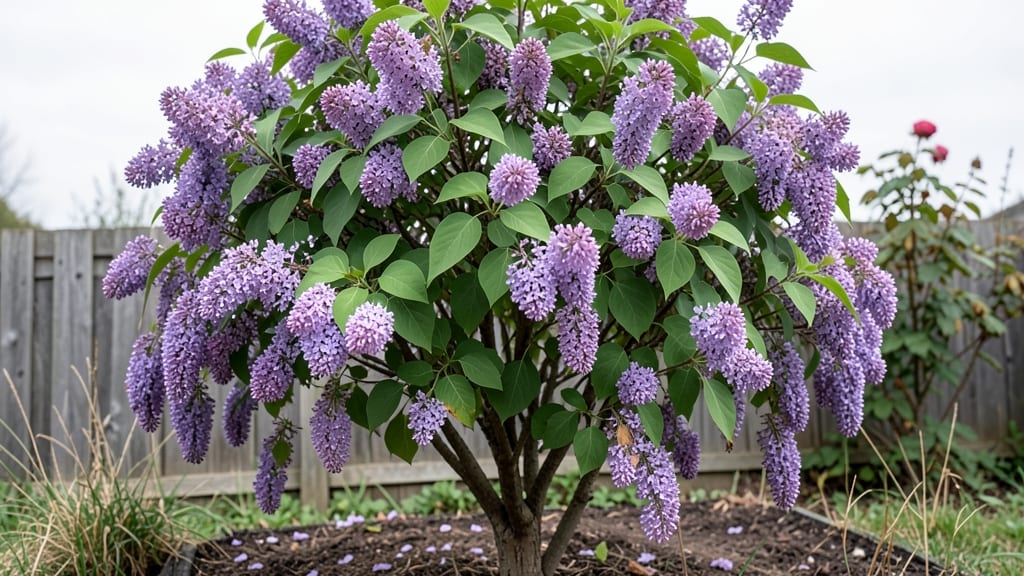
A tall lilac tree can transform your backyard into a fragrant sanctuary with vertical privacy that lasts all season. 🌿 I planted mine near the fence line, and within three years, it became the centerpiece of my garden—its purple spikes perfuming the air from late spring through early summer.
The best part? It grows tall enough to block nosy neighbors while still letting sunlight filter through for a dappled, romantic effect.
You’ll need a spot with full sun and well-draining soil, plus patience—these trees take a few years to reach their full 12-15 foot height. Pair it with low-growing perennials like lavender or catmint at its base to highlight its towering presence while keeping maintenance simple.
The fragrance alone makes it worth the wait, but the way it frames your patio or deck creates instant curb appeal.
By midsummer, you’ll have a living privacy screen that smells like spring and attracts hummingbirds. The blooms fade to seed pods that add winter interest, and the glossy green leaves provide year-round structure. Think of it as your garden’s signature scent—one that turns heads every time someone walks by.
Works beautifully in cottage gardens, modern landscapes, or even as a standalone specimen. Just give it space to stretch its roots, and it’ll repay you with decades of effortless beauty. Here’s how to make the most of its natural charm.
📚 In This Guide
- What you need
- Instructions
- Tips and common mistakes
- Wrapping up and next steps
What you need
- ● Lilac plant: Choose a Syringa species (e.g., Syringa vulgaris for classic lilacs or Syringa meyeri for dwarf varieties). Opt for a bare-root or container-grown plant (3–5 feet tall for mature height).
- ● Well-draining soil: Mix 1 part native soil, 1 part compost, and 1 part perlite/sand (for sandy or clay-heavy soils).
- ● Organic mulch: 3–4 inches of wood chips or shredded bark (keeps roots cool and moist).
- ● Slow-release fertilizer: 10-10-10 NPK or composted manure (apply 2–3 tablespoons per plant in early spring).
- ● Watering can or hose: With a gentle spray nozzle (lilacs hate soggy roots!).
- ● Shovel or trowel: For digging holes 2–3 times wider than the root ball.
- ● Garden gloves: To protect hands from thorns and rough bark.
- ● Pruning shears: Bypass pruners (sharp and clean) for shaping after planting.
- ○ Stake & ties (optional): If planting in windy areas, use a 5–6 ft bamboo stake and soft fabric ties.
- ● Sunlight access: Full sun (6+ hours/day)—lilacs thrive in open, sunny spots!
- ○ pH test kit (optional): Lilacs prefer neutral to slightly alkaline soil (pH 6.5–7.5).
Step-by-step guide to planting and caring for a tall lilac tree
Here's how to establish a fragrant, long-blooming lilac that thrives for decades with minimal fuss.
🌱 Step 1: Choose the Perfect Planting Spot
Lilacs crave full sun—at least 6-8 hours daily—and well-draining soil. I always scout the site in late winter when the ground is still bare. Look for an area where morning sun warms the roots gradually, then afternoon shade protects from harsh heat.
Dig a hole twice as wide as the root ball but only as deep as the container's bottom. This encourages roots to spread horizontally instead of sinking deeper where drainage might fail. If your soil feels heavy or clay-like, amend it with 2-3 inches of compost mixed into the bottom of the hole.
🪴 Step 2: Plant with Proper Spacing and Support
Place your lilac tree so the top of the root ball sits 1-2 inches above ground level—this prevents rot when spring rains swell the soil. Space multiple lilacs 10-15 feet apart for that classic fragrant hedge effect. I like to plant mine in a slight trench to improve drainage.
Backfill with native soil (no amendments now—you'll disturb the roots). Press gently around the edges to remove air pockets, then water deeply until moisture reaches 6 inches down. Mulch with 2-3 inches of wood chips, keeping it 6 inches away from the trunk to prevent rot.
☀️ Step 3: Water Deeply and Establish Routine Care
For the first two weeks, water every other day until the soil feels moist 8 inches down. Lilacs hate soggy roots but also can't handle drought. After that, water once a week unless you see wilting leaves—then give it a deep soak. You'll know you're doing it right when the soil stays evenly damp but not wet.
Prune lightly in late summer after blooming to shape the tree, but never cut back into old wood—lilacs flower on last year's growth. I also fertilize once in early spring with a balanced 10-10-10 to encourage strong blooms without excessive foliage.
✂️ Step 4: Prune for Health and Abundant Blooms
Wait until late spring (after blooms fade) to prune. Remove any dead, crossing, or weak branches first. Then, thin out 10-15% of the oldest stems at the base to improve airflow and encourage new growth. Lilacs naturally grow in clusters, so I never cut back more than one-third of any branch in a single year.
Here's the thing—lilacs bloom on second-year wood, so pruning too aggressively now means fewer flowers next spring. Watch for suckers (shoots growing from the base) and remove them immediately to keep energy focused on the main tree.
Tips & tricks for perfect tall lilac tree planting
Planting a tall lilac tree that thrives for decades requires a few key tricks I've learned from years of trial and error.
Soil Test First: Before you dig that hole, grab a simple soil test kit from your local garden center. Lilacs prefer soil with a pH between 6.0 and 7.5. If your test shows acidic soil (below 6.0), mix in 1-2 pounds of lime per hole to raise the pH. I've seen lilacs struggle when planted in acidic soil, even with perfect drainage.
Root Ball Inspection: When you remove your lilac from the container, give the root ball a thorough inspection. Gently separate any circling roots with your fingers—these can strangle the tree as it grows. If the roots are tightly bound, make 2-3 vertical cuts around the perimeter to encourage outward growth. This simple step makes all the difference in establishing healthy roots.
Watering Secret: That first two-week watering schedule is critical, but here's what nobody tells you: Use a moisture meter to check soil moisture at 8 inches deep instead of guessing. Lilacs hate soggy roots but also can't handle drought. I've seen trees wilt dramatically after just one missed watering session during hot weather. A drip irrigation system set to water slowly for 30 minutes every other day works wonders during establishment.
Mulching Strategy: The 2-3 inches of wood chips you use for mulching should be spread in a donut shape—keeping it 6 inches away from the trunk prevents rot. But here's the pro move: Use coarse mulch rather than fine chips. Coarse mulch breaks down slower, retains moisture better, and doesn't compact around the roots. I always choose hardwood mulch for this reason.
Pro Tips for Tall Lilac Tree
- Planting a tall lilac tree that thrives for decades requires a few key tricks I've learned from years of trial and error.
- Soil Test First: Before you dig that hole, grab a simple soil test kit from your local garden center.
- Root Ball Inspection: When you remove your lilac from the container, give the root ball a thorough inspection.
Frequently asked questions
Got questions about growing and caring for a tall lilac tree? You’re not alone! Here are some of the most common queries—and their answers—to help you create a stunning, fragrant privacy screen with ease.
How tall can a lilac tree grow?
A mature lilac tree typically reaches 10–15 feet tall, though some varieties like Syringa vulgaris can even hit 20 feet with proper care. Dwarf cultivars (like ‘Little Miss’ or ‘Baby Blue’) stay under 6 feet, making them great for smaller spaces. Prune annually to control height and encourage bushier growth.
How long does it take for a lilac tree to bloom?
Patience is key! Lilac trees usually take 2–3 years to establish and produce their first blooms after planting. Once mature, they’ll reward you with profuse spring flowers (April–May) and occasional summer reblooms. Choose fast-growing varieties (like ‘Katherine Havemeyer’) for earlier flowers.
Do lilac trees need full sun?
Yes! Lilacs thrive in full sun (6+ hours daily) for the best blooms and fragrance. They tolerate partial shade (4–6 hours), but expect fewer flowers. Avoid deep shade—it weakens the plant and invites pests. Well-draining soil and morning sun are ideal for most climates.
When and how should I prune a tall lilac tree?
Prune right after blooming (late May–June) to avoid cutting off next year’s flowers. Remove dead, crossing, or overcrowded branches first, then shape lightly. For privacy screens, prune new growth in early summer to encourage density. Never prune in fall or winter—it stresses the tree.
Why aren’t my lilac flowers fragrant this year?
Several factors can dull fragrance: over-fertilizing (especially with nitrogen), drought stress, or poor air circulation (inviting pests). Ensure your tree gets balanced fertilizer (low nitrogen), consistent watering, and pruning to improve airflow. Older trees may also produce fewer fragrant blooms—consider reviving them with rejuvenation pruning.
What’s a good alternative if I need faster privacy?
If lilacs grow too slowly for your needs, try fast-growing shrubs like:
- Arborvitae (evergreen, 12–15 ft in 5–10 years)
- Bamboo (clumping varieties) (10–20 ft, but invasive—plant in barriers!)
- Privet (6–10 ft, dense foliage, but less fragrant)
- Cherry Laurel (15–20 ft, glossy leaves, tolerates shade)
For fragrance + speed, mock orange (Philadelphus) or deutzia are great mid-sized options.
Wrapping up and next steps
A tall lilac tree isn’t just a stunning addition to your landscape—it’s a fragrant, low-maintenance privacy screen that blooms beautifully for months and thrives in various climates.
Whether you’re drawn to its sweet scent, versatile size, or year-round appeal, this tree is a game-changer for both aesthetics and functionality.
Ready to transform your outdoor space? Start by choosing the right variety for your zone, then gather your tools and plant with confidence. With a little care, you’ll soon enjoy a lush, fragrant haven that’s the envy of the neighborhood! 🌸