
Watering
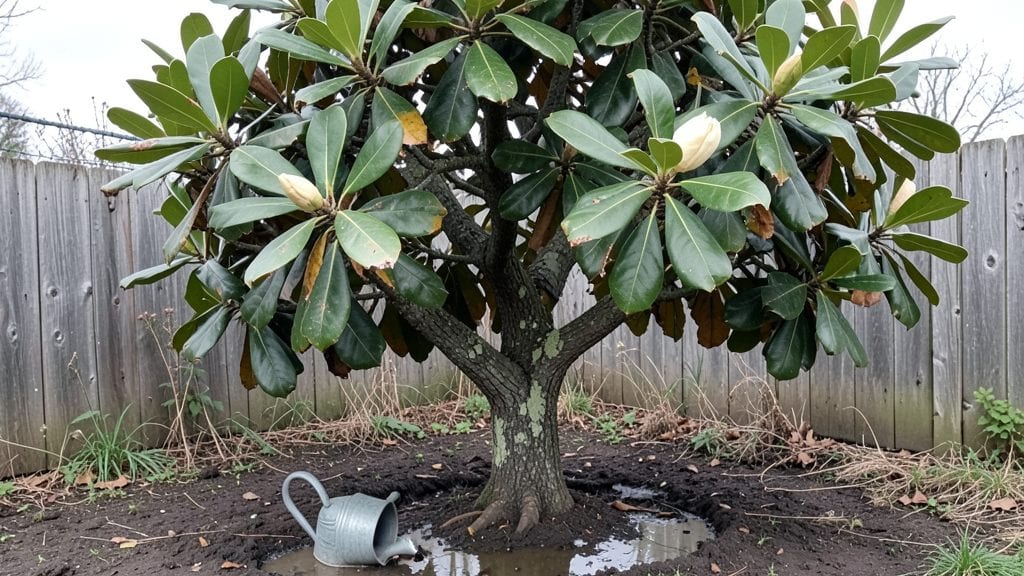
When your magnolia tree’s leaves turn yellow and droop despite your best efforts, overwatering is likely the culprit. 🌱 I’ve seen this happen more than I’d like—especially after heavy rains or when well-meaning gardeners can’t resist checking soil moisture too often.
The good news? Magnolias are tough once you fix the root issues, and the recovery process is simpler than you’d think.
Here’s the thing—magnolias hate soggy roots. Too much water cuts off oxygen, inviting root rot and suffocating the plant from the ground up. You’ll spot the problem through mushy brown roots, wilting even when the soil feels damp, or leaves that yellow from the bottom up.
The fix starts with cutting back watering to once a week (or less in rainy seasons) and amending the soil with compost or sand to improve drainage.
Within a few weeks, you’ll notice new growth pushing through, and the leaves will firm up again. Prune any dead branches to redirect energy, and keep an eye out for fungal spots—a sign the rot might still linger.
With patience, your magnolia will bounce back stronger, and you’ll learn to trust the soil’s natural rhythm instead of overcompensating.
For severe cases where the trunk feels soft or the tree leans unsteadily, it’s time to call in an arborist. But for most overwatered magnolias, this 3-step fix works like a charm—no fancy tools or expensive treatments needed. Let’s get those roots breathing again.
Root Causes Of Overwatering
When your magnolia tree starts wilting despite a soggy soil base, the issue likely stems from one—or several—of these common environmental and human factors. Understanding the science behind them will help you diagnose and correct the problem before it’s too late.
Magnolias thrive in well-draining soil, but compacted or clay-heavy ground traps excess moisture around roots. Without proper aeration, water pools instead of seeping away, suffocating roots in a waterlogged environment.
- Why it happens: Clay or loamy soils naturally retain water, while heavy foot traffic or construction can compress the soil, reducing porosity.
- Signs: Puddles forming after rain, a musty soil smell, or roots exposed at the surface (a sign of upward pressure from trapped water).
- Actionable fix: Amend soil with organic matter (compost or peat moss) or install French drains to redirect excess water.
Magnolias are drought-tolerant once established, but enthusiastic watering—especially during rainy seasons—can drown roots faster than you think. Overwatering disrupts the oxidation process in soil, starving roots of oxygen and triggering anaerobic conditions, where harmful bacteria thrive.
- Why it happens: A common misconception is that "more water = healthier trees." However, magnolias prefer deep but infrequent watering (1–1.5 inches per week) rather than daily shallow soaks.
- Signs: Yellowing leaves, leaf drop, or a spongy, mushy root system when inspected.
- Actionable fix: Let the top 2–3 inches of soil dry out between waterings. Use a moisture meter for precision.
While rain is natural, prolonged downpours (especially in humid climates) can saturate the soil beyond a magnolia’s tolerance. Without intervention, roots suffocate, and fungal diseases like Phytophthora take hold, rotting the root structure.
- Why it happens: Heavy rainfall combined with poor drainage creates a hydrophobic layer (water-repellent soil crust), preventing absorption and increasing runoff.
- Signs: Leaf scorch, stunted growth, or mushrooms sprouting at the tree’s base (a red flag for root rot).
- Actionable fix: Install a swale or berm around the tree’s drip line to divert excess water. Mulch with wood chips to improve soil aeration.
Potted magnolias are especially vulnerable because containers lack natural drainage pathways. Without proper care, water accumulates at the bottom, leading to root asphyxiation and nutrient deficiencies.
- Why it happens: Small pots or those without drainage holes trap moisture, while evaporation is slower in larger containers, keeping soil damp for extended periods.
- Signs: Roots circling the pot, wilting despite wet soil, or a foul odor from the pot’s base.
- Actionable fix: Repot in a container 20% larger with drainage holes and use a fast-draining mix (e.g., 60% potting soil, 30% perlite, 10% sand). Water only when the top inch is dry.
Pro Tip: 🔍 Test your soil’s moisture level by thrusting a screwdriver into the ground—if it slides in easily, you’re overwatering. If it resists, your tree’s thirsty!
Revive Your Tree With These Fixes
Now that you know the signs and root causes of an overwatered magnolia, it’s time to take action! The good news is that magnolias are resilient—with the right steps, you can nurse them back to health.
Below, we’ll break down practical solutions tailored to the most common causes of overwatering, plus prevention tips to keep your tree thriving long-term.
If your magnolia’s roots are suffocating in soggy soil, immediate drainage improvements are critical. Here’s how to act:
🔥 Step 1: Stop Watering & Let Soil Dry
- Pause all watering for at least 5–7 days to allow saturated soil to evaporate.
- If the ground is muddy or puddles form after rain, wait until it’s bone-dry before proceeding.
- Pro Tip: Use a moisture meter or stick your finger 2–3 inches deep—if it’s damp, hold off.
🍳 Step 2: Improve Drainage with Soil Amendments
Overwatering often means compacted or clay-heavy soil.
Loosen it up: - Dig around the root zone (first 12–18 inches) with a shovel or garden fork to break up compacted layers. - Mix in organic matter: - 50% garden compost or well-rotted manure - 30% perlite or coarse sand (for grit) - 20% peat moss or coconut coir (to retain some moisture without suffocating roots) - 💡 Pro Tip: Avoid fresh mulch—it can hold too much moisture.
Stick to 2–3 inches of shredded bark or pine straw once the soil is dry.
👨🍳 Step 3: Elevate the Root Zone (If Needed)
If your magnolia sits in a low-lying area or has poor natural drainage, consider:
- Mounding soil around the base to create a slight slope (1–2 inches higher than the surrounding ground).
- Installing French drains or drainage tiles if water pools chronically.
- ⚠️ Warning: Never pile soil against the trunk—keep it 3–4 inches away to prevent rot.
🥘 Step 4: Encourage Root Recovery with Fungicides (If Severe)
If root rot has set in (black, mushy roots or foul smells), act fast:
- Apply a copper-based fungicide (like Copper Sulfate) to the soil to fight fungal growth.
- Use hydrogen peroxide (3%) as a soil drench (1 part peroxide to 10 parts water) to oxygenate roots.
- 🌡️ Pro Tip: Repeat fungicide treatment every 2–3 weeks until new growth appears.
If the issue is too-frequent watering (even with good drainage), reset your schedule:
🔥 Step 1: Water Deeply, Less Often Magnolias hate shallow, frequent drinks.
Instead: - Water deeply 1–2 times per week (depending on climate) to encourage deep root growth. - Aim for 1–1.5 inches of water per session—soak the soil until it drains 4–6 inches down. - 🎯 Pro Tip: Use a soaker hose or drip irrigation to deliver water slowly at the base.
🍳 Step 2: Check Soil Before Watering
- Stick your finger 2 inches deep—if it’s dry, water; if moist, wait.
- Morning is best—watering in the evening can trap moisture on leaves, inviting disease.
- ✨ Pro Tip: Group magnolias with other thirsty plants (like camellias or azaleas) to create a micro-climate that retains just enough moisture.
👨🍳 Step 3: Mulch Strategically
- Apply 2–3 inches of mulch (wood chips, pine straw) 3–4 inches away from the trunk.
- Mulch regulates soil temperature and reduces evaporation, but never pile it against the bark.
- 🔥 Pro Tip: Refresh mulch annually—old mulch breaks down and can become water-logged.
If your magnolia was planted too deep or in a root-bound pot, it’s struggling to access oxygen:
🔥 Step 1: Check Planting Depth
- Healthy magnolias should have the root flare (where roots meet trunk) visible above soil level.
- If planted too deep, carefully dig around the base and expose the flare.
Gently tease out compacted soil and replant at the correct level. - ⚠️ Warning: Never disturb roots more than necessary—this stresses the tree.
🍳 Step 2: Loosen Root-Bound Roots (For Container-Grown Trees)
If your magnolia came in a large pot, roots may be circling:
- Remove the tree from its container and gently separate roots with your hands.
- Trim any girdling roots (those wrapping around the trunk) with sterilized pruners.
- 💡 Pro Tip: Soak the root ball in water for 20–30 minutes before replanting to reduce transplant shock.
👨🍳 Step 3: Choose the Right Spot Next Time
Magnolias need:
- Full sun to partial shade (6+ hours of sunlight).
- Well-draining, slightly acidic soil (pH 5.0–6.0).
- Space to grow—mature magnolias can reach 20–30 feet wide!
Once your magnolia is on the mend, lock in these habits to prevent future overwatering:
✅ Install a rain gauge near your tree to track natural water input—adjust your watering accordingly. ✅ Use a moisture sensor (like a soil moisture meter) to avoid guesswork. ✅ Avoid compacting soil—walk around the base instead of stepping near the trunk. ✅ Prune dead branches in late winter to reduce water loss and improve airflow. ✅ Monitor local weather—if heavy rains are forecasted, skip watering for a week.
Final Thought: Patience is key—reviving an overwatered magnolia can take several weeks to months, depending on how severe the damage is. Stay consistent with drainage fixes, and your tree will bounce back with stronger roots and lush foliage! 🌿💚
Frequently asked questions
How can I tell if my magnolia tree has root rot from overwatering?
Check for mushy, brown roots that smell foul when pulled gently from the soil. Healthy roots are firm and white or tan. If you see blackened, slimy roots or mushrooms growing at the base, root rot has likely set in from prolonged waterlogging.
Will my magnolia tree recover if I stop watering immediately?
Yes, but recovery depends on how severe the damage is. Stop watering entirely for 5–7 days to let saturated soil dry out, then resume with deep, infrequent watering. If root rot has spread, you’ll need to improve drainage and possibly apply fungicide to help recovery.
Can I use hydrogen peroxide to save my overwatered magnolia?
Mix 1 part 3% hydrogen peroxide with 10 parts water and pour it into the soil around the roots. This oxygenates the roots and helps combat fungal growth. Repeat every 2–3 weeks until you see new growth.
How often should I water my magnolia after fixing overwatering issues?
Water deeply 1–2 times per week, aiming for 1–1.5 inches of water per session. Always check soil moisture first—stick your finger 2 inches deep. If it’s dry, water; if moist, wait. Adjust based on rainfall and seasonal conditions.
What’s the best mulch to use for an overwatered magnolia?
Use 2–3 inches of shredded bark or pine straw, keeping it 3–4 inches away from the trunk. Avoid fresh mulch, which can hold too much moisture. This helps regulate soil temperature and reduces evaporation while preventing compaction.