
Watering
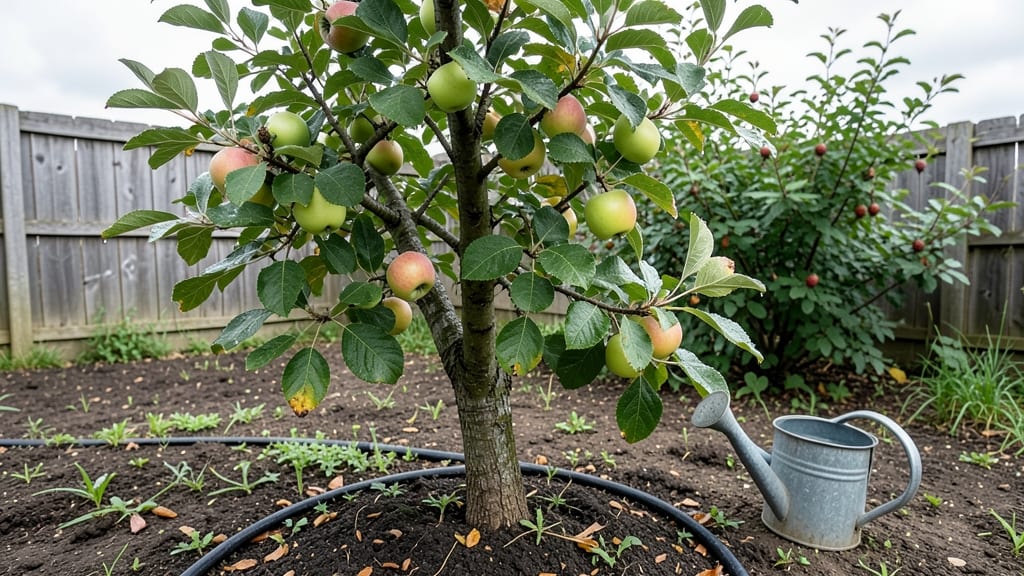
Watering an apple tree properly means giving it deep, infrequent soaks—not light sprinkles—that reach roots 12 inches down or deeper.
Most gardeners drown their 🍎 by watering every few days, thinking more is better. But shallow watering trains roots to stay near the surface, making your tree vulnerable to drought and poor fruit production. The secret? A science-backed schedule that matches your tree’s age, season, and soil.
Young trees need more frequent watering—once a week in summer—but mature trees can go 10-14 days between deep drinks. I’ll break down the exact routine for your zone, plus how to tell if you’re over- or under-watering before it’s too late.
Skip the guesswork and learn how to hydrate your apple tree for bigger harvests and fewer stressed leaves, no matter your soil type or climate.
Apple tree watering frequency by season: expert schedule for optimal growth
Watering an apple tree isn't about daily drizzles—it's about deep, infrequent soaks that encourage strong root growth. Young trees (1-3 years) need consistent moisture to establish roots, while mature trees (4+ years) develop deeper roots that store water.
The key? Seasonal adjustments based on temperature, rainfall, and tree age. Overwatering suffocates roots, while underwatering stresses fruit production, so balance is everything.
Your watering schedule should shift with the seasons: spring and summer demand frequent deep watering, while fall and winter require minimal moisture. Climate plays a role too—drought-prone areas need 20% more water than humid regions.
Always water in the early morning to reduce evaporation and fungal risks. Let's break down the month-by-month routine for both young and mature trees.
🌱 Did You Know? A mature apple tree's roots can extend 3-4 feet deep, meaning surface watering only wets the top inch of soil—wasteful and ineffective. Always aim for 15-20 gallons per tree during deep watering sessions.
Here’s your seasonal watering schedule, tailored for both young and mature apple trees in USDA Zone 6a. Adjust for your local climate—add 1-2 extra waterings in extreme heat or drought.
⚠️ Pro Tip: Always check soil moisture before watering. Stick your finger 3 inches deep—if it feels dry, it's time to water. If damp, wait another day.
In spring, young apple trees need weekly deep watering (15-20 gallons) to support new root growth and bud development. Mature trees, with their established root systems, can handle slightly less frequent watering—every 10-14 days with 20-30 gallons.
This is when you’ll see the most active growth, so don’t skimp. Monitor soil moisture closely; clay soils stay damp longer than sandy soils.
Summer is the most critical watering period for apple trees, especially during fruit development. Young trees should be watered every 5-7 days, while mature trees need every 7-10 days. Increase frequency during heatwaves—if the ground feels bone-dry by 10 AM, water immediately.
Aim for deep soaks that reach 12-18 inches down. Shallow watering encourages shallow roots, which struggle during drought.
As fall approaches, reduce watering frequency to prepare your apple tree for dormancy. Young trees can handle bi-weekly watering (10-15 gallons), while mature trees only need monthly deep watering (20 gallons).
Stop fertilizing by late summer to avoid stimulating new growth before winter. This helps the tree harden off naturally. Mulch heavily (3-4 inches) to retain moisture and insulate roots.
Winter watering is minimal but essential. Young trees need monthly light watering (5
5 Critical signs your apple tree needs water (and when to ignore them)
Your apple tree’s leaves might look wilted, but not all droop means drought. Midday wilting is normal—apple trees naturally conserve water during heat.
The real red flags appear when leaves stay limp into the evening or when the bark pulls away from the trunk. Understanding these signs prevents overwatering, which can suffocate roots just as much as drought. Let’s break down the key indicators and when to act.
First, check the soil before assuming thirst. Visual cues like curled leaf edges or brown tips on young leaves signal dehydration, but mature trees often hide stress. The finger test is foolproof: stick your finger 2-3 inches deep.
If soil feels drier than a slightly damp sponge, it’s time to water. For young trees, this test should happen every 3-5 days in summer.
🌱
How Often to Water an Apple Tree
- Young Trees (1-3 years): Deep watering every 5-7 days in summer, 10-15 gallons per session. Reduce to bi-weekly in spring/fall.
- Mature Trees (4+ years): Every 10-14 days in summer, 20-30 gallons per session. Cut back to monthly in winter.
- Drought Recovery: Soak deeply 2x/week for 2 weeks, then return to normal schedule. Monitor for leaf scorch (brown edges).
- Overwatering Signs: Yellowing leaves, mushroom growth at base, or roots exposed above soil. Stop watering immediately.
- Clay Soil Adjustment: Increase watering frequency by 30%—clay holds moisture but drains poorly. Test with the finger test 1 inch deeper.
One of the most common mistakes is mistaking heat stress for dehydration. Apple trees often droop in afternoon heat but perk up by morning. To test, gently tug a leaf—if it snaps easily, it’s overly dry.
If it bends without breaking, the tree is conserving water normally. Morning wilting paired with crispy leaf edges? That’s a clear call to water.
For drought-stressed trees, recovery isn’t just about water. Deep soaking (6+ inches) encourages roots to grow downward where moisture lingers. Pair this with a 2-inch layer of mulch to lock in humidity.
If your tree’s leaves turn yellow with green veins, it’s likely overwatered—stop watering and let the soil dry 2 inches deep before resuming.
💧
Remember, apple trees hate soggy roots. If your soil stays wet for more than 3 days, you’re overdoing it. The key is consistency over frequency: better to water deeply once a week than lightly every day.
For young trees, drip irrigation near the drip line (where roots spread) mimics natural rainfall patterns and reduces waste.
Finally, seasonal adjustments matter. In winter, reduce watering to monthly light soaks—dormant trees need far less. Spring and fall are prime times to test soil moisture and adjust. By tuning into these signs, you’ll avoid both drought stress and root rot, keeping your tree productive for decades. 🌳